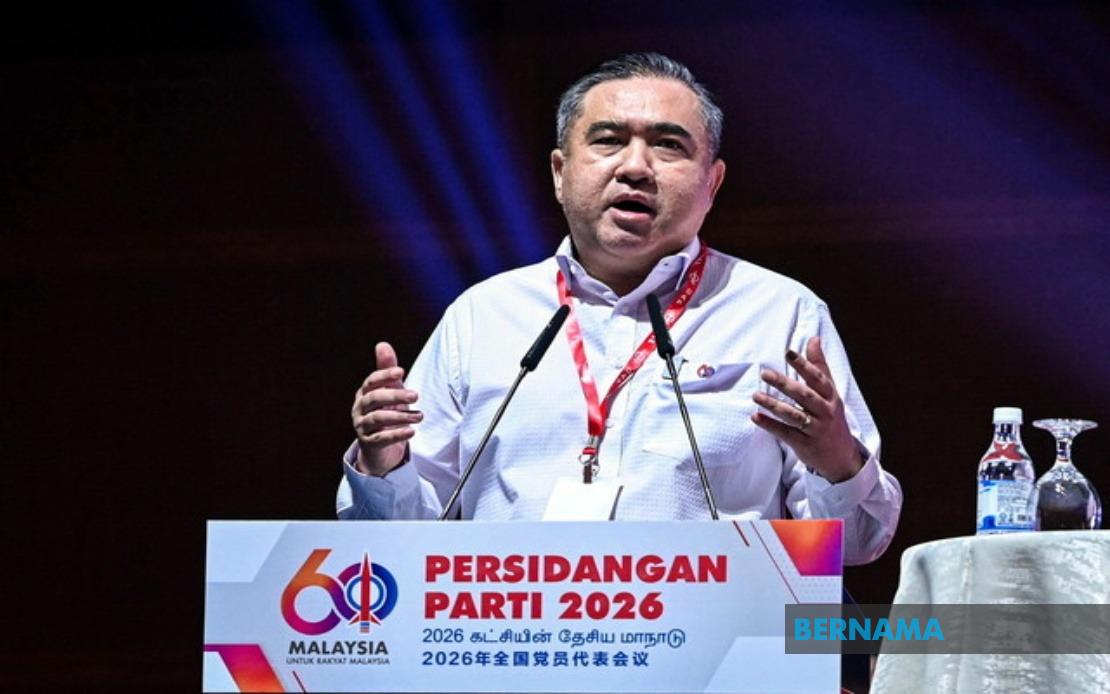
The Democratic Action Party has reaffirmed its commitment to Malaysia's unity government arrangement, voting decisively at its 2026 Party Conference to maintain its partnership through the completion of the current parliamentary term. The decision, announced at the Putrajaya International Convention Centre, reflects the party leadership's confidence in the coalition's ability to deliver on its agenda and suggests relative stability in a political landscape that has been marked by considerable flux over recent years.
The motion to remain in government was tabled by DAP secretary-general Anthony Loke during proceedings at the national party conference, with delegates casting their votes through secret ballot rather than the customary voice or show-of-hands method. This procedural choice underscores the party's intention to lend the outcome maximum legitimacy, particularly given the significance of the decision for DAP's strategic positioning in Malaysian politics. The emphasis on transparent voting mechanisms reflects lessons learned from previous party divisions and reflects broader democratic practices gaining currency within major Malaysian political organisations.
The voting figures painted a picture of substantial internal consensus. Of the 2,106 ballots cast, 1,857 delegates voted to continue the government partnership, representing 88.2 percent of those present at the conference. Only 242 delegates voted in favour of leaving the coalition, with seven ballots spoilt. Conference Speaker Cha Kee Chin confirmed that approximately 4,264 delegates from 1,704 branches nationwide were registered to participate, indicating that roughly half of eligible members attended the conference session.
DAP's institutional presence within the federal cabinet and ministerial apparatus remains substantial, providing the party with tangible leverage and responsibility within government operations. Transport Minister Anthony Loke's portfolio carries particular significance given infrastructure's centrality to national development. Complementing his position are ministers Steven Sim in Entrepreneur and Cooperatives Development, Gobind Singh Deo overseeing the Digital portfolio, Nga Kor Ming managing Housing and Local Government, and Hannah Yeoh in the Prime Minister's Department handling Federal Territories matters. This distribution of portfolios across diverse policy domains reflects DAP's positioning as a comprehensive partner within the ruling coalition rather than a minor player confined to peripheral concerns.
Beyond the five cabinet positions, DAP maintains influence through seven deputy ministerial appointments that extend the party's reach into government implementation machinery. Teo Nie Ching's Communications role, Chan Foong Hin's Agriculture and Food Security position, and Wong Kah Woh's Education portfolio represent significant junior ministerial appointments. Finance deputy minister Liew Chin Tong holds particular importance given his portfolio's cross-cutting implications, whilst M. Kulasegaran's placement in the Prime Minister's Department handling Law and Institutional Reform reflects DAP's involvement in core governance structures. Additional deputies in Women, Family and Community Development and Youth and Sports demonstrate the party's spread across social policy dimensions.
For Malaysian readers and regional observers, DAP's decision to remain embedded within the government coalition carries implications extending beyond the party's immediate interests. The party has emerged as a stabilising force within Malaysia's complex political architecture, and its commitment to seeing out the parliamentary term through 2028 provides policy continuity for initiatives spanning transport infrastructure, digital transformation, and housing development. This stability matters particularly for investors and businesses that require predictability in regulatory environments and government priorities.
The strong majority backing for the party leadership's decision also indicates that despite Malaysia's fractious political culture, some organisations retain sufficient internal discipline and shared strategic vision to take binding collective decisions. DAP's secret ballot mechanism, whilst more cumbersome than traditional methods, enhanced the legitimacy of the outcome and likely discouraged factional pressure tactics that might have fragmented the vote. This procedural maturity distinguishes DAP from some other Malaysian political organisations and may explain its capacity to maintain coalition discipline.
From a Southeast Asian perspective, DAP's decision reflects the broader search for political stability across the region's established democracies. Malaysia's experiment with unity government coalitions has alternated with periods of intense factional competition, and each decision point carries regional significance. DAP's commitment to completing the parliamentary term suggests confidence that the coalition model, whilst imperfect, provides preferable outcomes to the alternative of frequent electoral contests that exhaust public patience and destabilise investor confidence.
The voting outcome also reflects DAP's evolution from a party primarily defined by opposition rhetoric to one comfortable exercising substantive governance responsibilities. The party's ministers and deputy ministers are not peripheral figures but occupy portfolios directly affecting citizens' daily lives and economic opportunities. This transition from advocacy to administration represents a meaningful maturation of Malaysia's political system, even as challenges around institutional independence and governance quality persist.
Looking forward, DAP's continued presence in government provides opportunities to advance specific policy priorities whilst also creating obligations to share responsibility for broader coalition outcomes, including any unpopular measures or economic adjustments that may become necessary. The party's internal consensus around staying the course suggests its leadership believes the trade-offs inherent in coalition membership remain worthwhile through 2028, even accounting for potential electoral costs at the ballot box.

