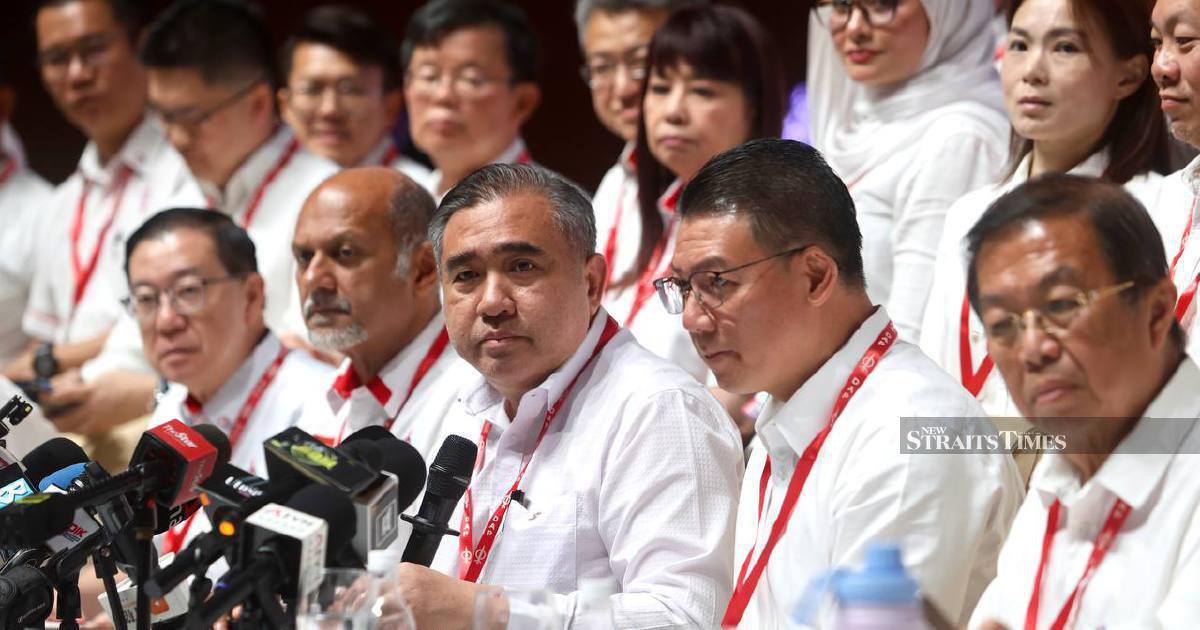
The Democratic Action Party has reinforced its dedication to sustaining cooperation with Umno at the federal level, even as the coalition grapples with significant strain following the controversial discharge not amounting to an acquittal granted to Barisan Nasional chairman Datuk Seri Ahmad Zahid Hamidi. The statement from DAP leadership underscores the calculated pragmatism underpinning Malaysia's current ruling arrangement, where ideological differences must be set aside to maintain governmental stability.
The decision to grant Zahid a DNAA on multiple corruption charges has triggered considerable disquiet within DAP's ranks, with party members and supporters questioning whether the ruling government is selectively applying the law based on political considerations. This discontent reflects deeper anxieties about judicial independence and the appearance of impunity for politically connected figures, concerns that resonate powerfully among urban, educated voters who form DAP's core constituency. The tension reveals fault lines within the Pakatan Harapan coalition that assumed federal power in 2018 with a mandate for reform and accountability.
Yet DAP's leadership has concluded that abruptly severing ties with Umno would prove more damaging than maintaining the current uneasy partnership. The calculus here involves recognising that a coalition collapse would hand the initiative back to Umno and its allied parties, potentially returning to power a grouping that DAP views as anathema to its reform agenda. In Malaysia's fractious parliamentary landscape, where seat numbers remain finely balanced and defection is an ever-present risk, coalitions must sometimes absorb significant internal pressure to remain intact. The alternative—fresh elections or a government reshuffle favouring the opposition—appears worse from DAP's perspective.
This pragmatic decision carries implications for Malaysian politics more broadly. It demonstrates that even substantial disagreements on governance principles and justice can be subordinated to the arithmetic of parliamentary survival. For voters who expected the 2018 change of government to herald a new era of transparent institutions and equal treatment before the law, the sight of DAP accepting Zahid's DNAA while remaining in government inevitably feels like a betrayal. The party faces the uncomfortable position of maintaining public solidarity with coalition partners while permitting internal criticism to continue festering.
The DNAA itself requires explanation for those unfamiliar with Malaysia's legal framework. Unlike a full acquittal, which exonerates a defendant and prevents retrial, a discharge not amounting to an acquittal allows prosecutors to potentially reactivate charges at a later date, though such action is rare. Zahid's case involved dozens of corruption charges, making the DNAA decision particularly significant given the scale of allegations he faced. The decision was greeted with scepticism by anti-corruption campaigners and DAP supporters who questioned whether someone with such a serious charge history should continue leading Barisan Nasional.
Umno's position throughout this episode has been to stress that Zahid has been vindicated and that the legal process has run its course. The party views the DNAA as a victory and sees continued criticism as partisan attacks aimed at weakening its leadership. From Umno's perspective, DAP's willingness to maintain the coalition despite internal complaints validates the correctness of the decision. This divergence in interpretation—DNAA as vindication versus DNAA as an inadequate accountability mechanism—will likely persist as a source of friction.
The broader context involves the peculiar architecture of Malaysia's current politics, where the Pakatan Harapan coalition that promised reform now includes Umno itself, the very organisation it fought against before 2018. Umno rejoined the federal government in 2020 following intra-coalition tensions and has since become a dominant presence, particularly after the appointment of Datuk Seri Ismail Sabri as Prime Minister and subsequently Datuk Seri Anwar Ibrahim. Within this framework, DAP occupies an uncomfortable middle position—powerful enough to influence policy but insufficiently strong to dominate decision-making.
For Southeast Asian observers, Malaysia's experience demonstrates the challenges facing young democracies attempting to balance institutional reform with political stability. DAP's dilemma encapsulates this tension: standing firm on accountability principles risks destabilising government and handing power to opponents who might prove even less scrupulous, while compromising on those principles erodes the moral authority that justified removing the previous administration. There are no clean solutions, only the perpetual negotiation of competing goods and lesser evils.
Looking forward, DAP will likely continue managing this balancing act through selective criticism of government actions while maintaining coalition participation. Party leaders will emphasise other achievements—policy initiatives, representation of marginalised groups, pressure for transparency in specific areas—as justification for their continued involvement. Meanwhile, party members and activists will nurse disappointment at the gap between 2018 campaign promises and current governmental realities. This simmering internal tension may resurface periodically, particularly if future decisions appear to prioritise coalition stability over genuine accountability. How DAP ultimately resolves this contradiction will influence not only Malaysian politics but regional perceptions of how coalitions can navigate fundamental disagreements.

