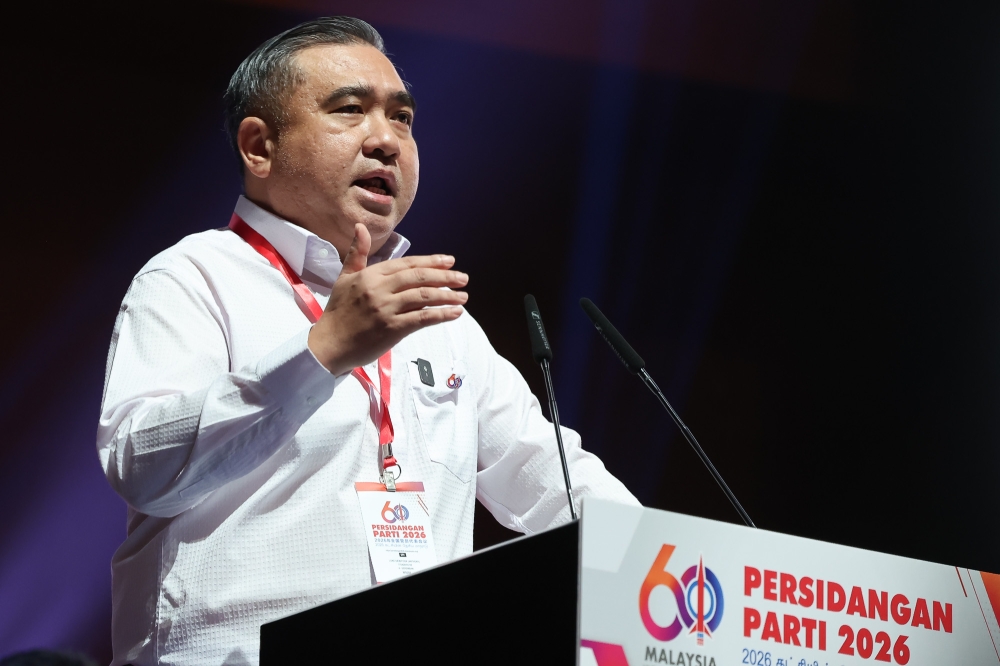
The Democratic Action Party confirmed its unequivocal support for Prime Minister Datuk Seri Anwar Ibrahim's commitment to repeal the Universities and University Colleges Act, marking a significant alignment within the ruling coalition on what has long been a contentious issue for democratic reformers and student advocates across Malaysia. Transport Minister Anthony Loke, speaking in his capacity as a senior DAP figure, made clear that the party views the repeal not as an isolated legislative change but as part of a more expansive reform programme aimed at liberalising Malaysia's institutional and legal framework.
The AUKU, formally known as the Universities and University Colleges Act 1971, has remained one of the most restrictive pieces of legislation governing campus life in Southeast Asia. The law effectively prohibits students from engaging in political activity, joining trade unions, or organising assemblies without official permission, measures that were originally introduced during a different era of Malaysian governance. For decades, student activists, human rights organisations, and opposition parties have campaigned for its removal, viewing the restrictions as fundamentally incompatible with democratic principles and freedom of expression.
Anwar Ibrahim's earlier announcement that his administration would pursue the repeal represented a significant shift in government policy, signalling a departure from the cautious approach of previous administrations. The Prime Minister had framed the move as part of a broader commitment to institutional reform and democratic renewal, recognising that outdated restrictions on campus activity were increasingly at odds with regional and global standards for university autonomy and student rights. By securing explicit backing from DAP, a party that has consistently championed civil liberties and democratic reform, Anwar has consolidated support from the progressive wing of his coalition.
Loke's statement that reforms must extend beyond the simple repeal of AUKU reveals important tensions and ambitions within the ruling coalition. The Transport Minister's insistence on a more comprehensive approach suggests that DAP and potentially other coalition partners view this moment as an opportunity to recalibrate several institutional frameworks simultaneously. This could encompass changes to related legislation governing public assembly, freedom of association, and campus governance structures that are intertwined with AUKU enforcement mechanisms.
The timing of this declaration carries strategic significance for Anwar's administration. By moving ahead on a reform that appeals strongly to younger voters, urban middle-class constituencies, and civil society organisations, the government reinforces its reformist credentials while differentiating itself from the approach taken during previous administrations. University students and campus communities represent a demographic segment that has historically been difficult for the government to mobilise, yet passionate about institutional change.
However, the push for broader reforms hints at potential complexity in implementation. While repealing AUKU itself might be relatively straightforward from a legislative standpoint, comprehensive reforms touching multiple laws and institutional arrangements could face resistance from various quarters, including sections of the civil service, security establishment, and conservative political factions. The government would need to navigate these pressures while maintaining coalition unity among parties with varying reform agendas.
Different coalition partners may have distinct priorities regarding what should be reformed alongside AUKU. DAP's emphasis on comprehensive change may reflect concerns that a standalone repeal could prove ineffective if complementary restrictions remain embedded in other legislation or enforced through administrative channels. This approach prioritises systemic change over symbolic gestures, a distinction that matters significantly for delivering tangible freedoms on university campuses.
For Malaysian students, the potential implications extend beyond campus politics. Removing restrictions on political engagement in universities could reshape the broader landscape of youth political participation and activism. Universities have traditionally served as incubators for political movements in Malaysia, and liberalising campus regulations could energise civic participation among younger generations, with consequences for electoral politics and policy advocacy that extend well beyond education.
The regional context adds another dimension to this reform trajectory. Several Southeast Asian countries have moved toward greater campus autonomy and student freedoms in recent years, and Malaysia's continuation of strict restrictions had made it an outlier. Aligning Malaysian law with regional norms could also enhance the country's attractiveness as a higher education destination, potentially benefiting domestic institutions in competition for international students and academics.
Implementation challenges remain substantial. Beyond the legislative process, repealing AUKU will require administrative adjustments across multiple government agencies, retraining of campus security personnel, and the development of new institutional protocols. University administrations will need guidance on how to accommodate previously prohibited activities while maintaining operational order. These practical questions could prove more contentious than the legislative vote itself.
The DAP's full-throated endorsement provides Anwar with valuable political cover for pursuing reforms that might otherwise attract criticism from conservative quarters. Having a major coalition partner publicly committed to the measure enhances the government's ability to frame the change as representing broad consensus rather than partisan initiative. This backing also signals to civil society organisations monitoring the reform process that there is genuine coalition commitment to implementation, not merely symbolic policy.
Looking forward, the success of AUKU repeal and accompanying reforms will likely become a benchmark for assessing Anwar's administration's credibility on institutional transformation. Student groups, civil society, and opposition parties will scrutinise both the legislative process and its actual impact on campus life. If implemented thoroughly and complemented by genuine institutional reforms, this could represent a significant moment in Malaysia's democratic evolution. If circumvented through administrative resistance or incomplete implementation, it may become another symbol of reform promises that failed to materialise.

