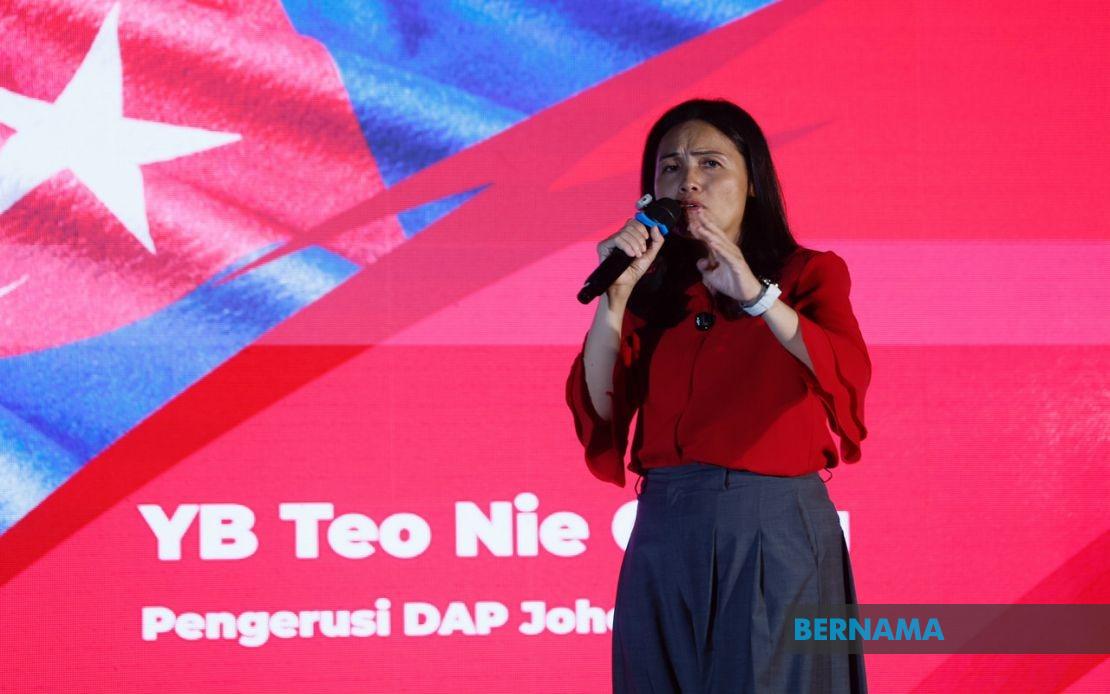
DAP Johor has pledged to undertake a thorough investigation into the causes behind its disappointing performance in the 16th Johor state election, during which it relinquished control of four previously held constituencies. Party chairman Teo Nie Ching announced the commitment in a statement acknowledging the electoral outcome and signalling the party's determination to learn from the reversal.
The party's review will focus on dissecting the specific circumstances that led to defeats in seats such as Jementah and Tangkak, among others that the opposition coalition contested. This methodical approach reflects DAP's recognition that understanding the granular reasons behind each loss—rather than accepting a broad narrative of underperformance—will be essential for charting a credible recovery strategy. The exercise extends beyond the four seats DAP held and lost, encompassing other battlegrounds where the party fielded candidates but fell short.
Teo, who also serves as Deputy Communications Minister in the federal government, acknowledged that the party carries responsibility for systemic weaknesses that need correction. Her candid admission that DAP has "shortcomings to fix" represents an unusually direct recognition of electoral failure from opposition leadership, signalling an intent to move beyond defensive posturing into substantive organisational reform. The message conveyed through the election results, she suggested, is unambiguous: the party must elevate its performance across multiple dimensions.
A striking pattern emerged from the voting data between the 2022 and 2024 Johor elections. Constituencies such as Johor Jaya and Perling had demonstrated support for Perikatan Nasional candidates in 2022, but this support shifted decisively toward Barisan Nasional in the more recent poll. Although the Pakatan Harapan coalition—of which DAP is the dominant member—managed to increase its overall vote share in both seats, the margin fell short of what was required to secure victory. This voter realignment suggests a more complex electoral landscape than simple opposition-versus-government dynamics; it indicates fluidity and volatility in coalition preferences that the opposition must navigate more skilfully.
Barisan Nasional's commanding performance underscores the extent of DAP's struggle. The ruling coalition retained every seat it previously occupied and expanded that dominance substantially, ultimately capturing 48 of the 56 state assembly seats available. This near-total control leaves Pakatan Harapan with a marginal foothold of just eight seats, a result that effectively excludes the opposition from meaningful legislative influence in Malaysia's second-largest state by population and economy. For DAP, which has positioned itself as a progressive, urban-oriented force in Malaysian politics, the outcome in Johor represents a significant setback in a state where the party has historically sought to build influence.
The scope of DAP's losses was comprehensive. The party failed to retain four of its previously held constituencies and lost seven additional seats it had contested, bringing the total number of contests yielded to 11 of the 17 seats the party stood for. This 65 percent defeat rate across DAP's slate suggests that existing party machinery, campaign strategies, and ground organisation proved insufficient to withstand the electoral tide, particularly in constituencies where the party had established earlier victories.
Johor's electoral outcome extends beyond DAP's specific difficulties. Perikatan Nasional, which had positioned itself as a significant alternative force in the 2022 state election, failed to translate its earlier vote-getters into any state assembly representation. Parti Bersama Malaysia, Parti Sosialis Malaysia, MUDA, and Parti Orang Asli Malaysia similarly drew a blank, as did six independent candidates. This consolidation of political representation into two dominant coalitions—Barisan Nasional and, to a lesser extent, Pakatan Harapan—suggests a narrowing of electoral options for Johor voters and a rejection of splinter movements and newer political entrants.
Teo's statement extended beyond internal criticism to include formal acknowledgment of voter participation and gratitude for those who supported the party. The recognition of voter turnout and the appreciation for every vote received, while procedurally courteous, also reflects DAP's understanding that retaining the confidence of its remaining supporters is crucial during a period of retrenchment. The party's explicit respect for the electoral mandate given to Barisan Nasional, coupled with congratulations extended to the winning coalition, demonstrates an acceptance of the democratic outcome despite the severity of the loss.
The DAP leadership's emphasis on continuing nation-building efforts and fighting for people's rights, despite the electoral reversal, suggests the party intends to maintain a forward-looking posture rather than adopting a defensive crouch. This framing attempts to separate electoral performance from the party's broader policy contribution and advocacy mission. However, the credibility of such claims will depend substantially on the quality of the promised review and the concrete reforms that emerge from it.
For Malaysian politics more broadly, DAP's struggle in Johor reflects wider questions about opposition viability in state-level contests where Barisan Nasional retains significant structural advantages and organisational depth. The party's apparent loss of ground compared to 2022, when Perikatan Nasional captured votes in constituencies like Johor Jaya and Perling, raises questions about whether opposition coalition strategies adequately account for regional variations in voter sentiment and local political dynamics. The promised comprehensive review will likely generate internal debates about campaign messaging, candidate selection, grassroots mobilisation, and the coherence of opposition unity at state level.
The implications for Southeast Asian observers lie in the demonstration that even parties with strong credentials in progressive constituencies and urban areas can face significant electoral challenges when local factors, incumbent advantages, and coalition dynamics work against them. DAP's acknowledgment of its need for improvement, while potentially painful for party leadership, may ultimately strengthen the party's strategic positioning if the promised review generates substantive organisational and tactical reforms.

