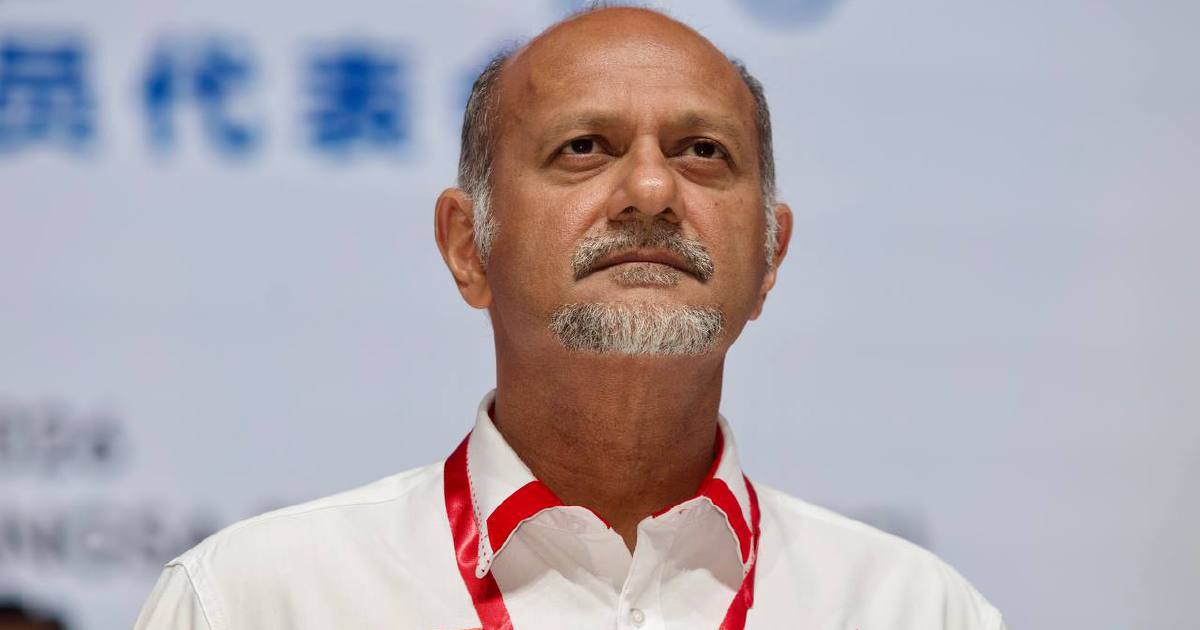
The Democratic Action Party has intensified pressure on the Pakatan Harapan-led administration to pursue more ambitious structural changes, with party chairman Gobind Singh Deo calling for accelerated institutional and economic reforms during remarks in Putrajaya. Coming at a pivotal moment for the coalition government that has held office since late 2022, the appeal signals growing concerns within the ruling alliance about the pace of transformation promised to voters in the lead-up to the general election.
Gobind's intervention reflects deeper anxieties circulating through Malaysia's political establishment regarding whether the current administration has sufficiently addressed the systemic issues that fueled public discontent over preceding decades. The DAP, as a key component of the unity government and a party with substantial support among urban, educated voters, occupies a strategic position to influence policy direction. By publicly calling for stronger measures, the party is simultaneously managing internal expectations among its base while signalling to Prime Minister Datuk Seri Anwar Ibrahim that further inaction risks alienating coalition partners.
The timing of this appeal carries particular significance. With roughly eighteen months potentially remaining before the next general election cycle becomes inevitable, the unity government faces mounting pressure to demonstrate concrete achievements in areas where previous administrations stumbled. Economic growth has remained modest by regional standards, unemployment among graduates persists as a concern, and public frustration with bureaucratic inefficiency continues to simmer. These accumulated pressures create an opening for political opponents to exploit, making reform efforts critical to the coalition's electoral prospects.
Institutional reform encompasses multiple dimensions that Malaysian policymakers have long identified as necessary but often shelved due to political sensitivities or resistance from entrenched interests. Strengthening the independence of the judiciary, improving transparency in government procurement, reducing corruption within the civil service, and modernizing regulatory frameworks all fall within this broad category. Each represents a challenge that requires not merely policy pronouncements but sustained political will and willingness to confront powerful stakeholders who benefit from the status quo.
The economic dimension of the reforms DAP advocates involves structural adjustments that could determine Malaysia's competitiveness over the coming decade. This includes questions about labour productivity, digital infrastructure investment, skills development aligned with emerging industries, and the transition toward higher-value manufacturing and services sectors. Regional competitors including Singapore, Vietnam, and Thailand have made substantial progress in several of these areas, creating benchmarks against which Malaysian performance is increasingly measured.
Within the broader context of Southeast Asian geopolitics and economics, Malaysia's development trajectory matters not only domestically but regionally. The country's stability and economic vitality influence investment flows, labour migration patterns, and the region's overall economic dynamism. A Malaysian government that fails to implement meaningful reforms risks triggering capital flight, talent emigration, and diminished regional influence precisely when regional rebalancing and competition for investor confidence intensify.
DAP's positioning as reformer has both electoral and governing implications. The party benefits from appearing responsive to constituent demands for better governance while avoiding the appearance of complicity in governmental stasis. Simultaneously, party leaders must navigate the tension between ambitious advocacy and the practical constraints of coalition governance, where consensus-building often requires compromise on preferred solutions. This dynamic has historically complicated DAP's role in previous governing arrangements, and similar patterns appear evident in the current coalition structure.
The unity government's broader coalition encompasses not only DAP but also parties with different constituencies and priorities, creating inevitable friction points. Parties drawing support from different demographic groups, geographic regions, and socioeconomic backgrounds naturally prioritize different reform agendas. Religious and cultural sensitivities also inject complexity into discussions about institutional modernization. Navigating these internal divisions while pursuing coherent reform strategy represents an ongoing governance challenge for Anwar's administration.
Among Malaysian business communities and foreign investors, the appetite for institutional and economic reform remains robust. Multinational corporations evaluating Southeast Asian investment increasingly scrutinize governance indicators, regulatory predictability, and rule-of-law metrics. Domestic entrepreneurs likewise recognize that business confidence and willingness to undertake long-term investment depend partly on perceived government commitment to creating more efficient, transparent institutional environments. From this perspective, DAP's public advocacy aligns with pressures emanating from Malaysia's productive sectors.
The opposition coalition, meanwhile, has positioned itself as critics of what they characterize as gradualism and insufficient reform momentum under current leadership. Political opposition to the unity government maintains its ability to exploit public disappointment should governance improvements fail to materialize tangibly. This competitive dynamic creates both opportunity and urgency for ruling coalition members including DAP to demonstrate measurable progress on institutional and economic fronts before the next electoral cycle arrives.
Looking forward, the coming months will reveal whether DAP's public statements translate into concrete policy initiatives or remain largely rhetorical positioning. The effectiveness with which the Anwar administration responds to such pressure will significantly influence not only the coalition's electoral prospects but also Malaysia's medium-term economic and institutional trajectory. The gap between reform rhetoric and implementation has historically undermined Malaysian governments, making credible follow-through essential for the ruling alliance's political sustainability.

