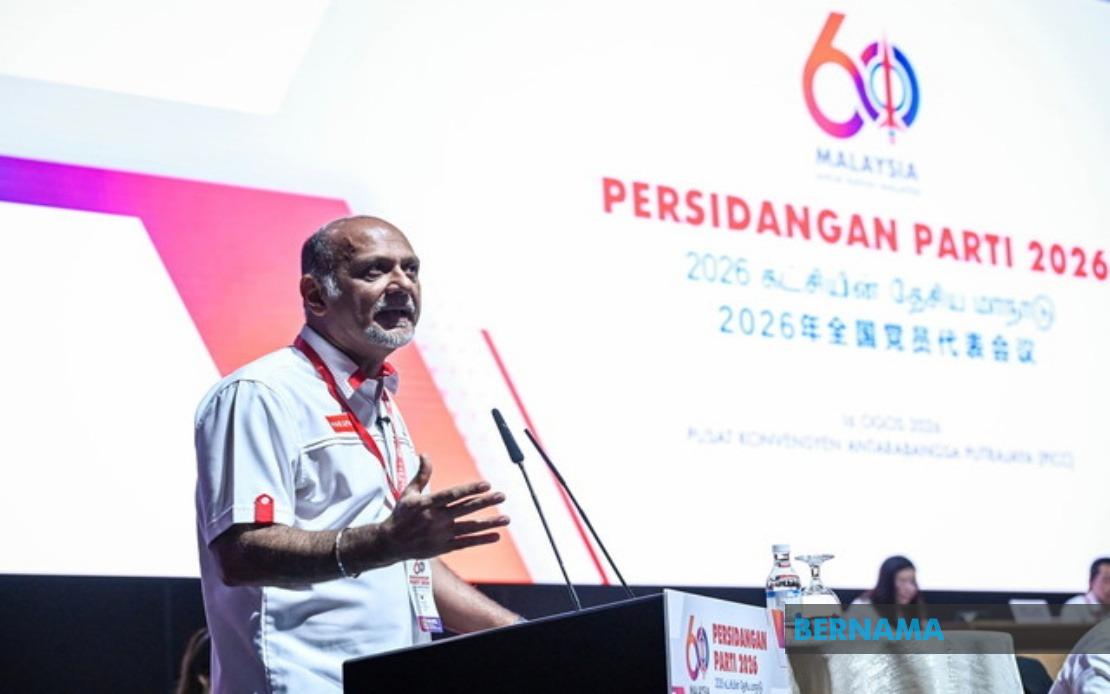
The Democratic Action Party has embarked on a period of introspection following disappointing results in the recent state elections, signaling that the party intends to fundamentally reconsider its positioning within Malaysia's shifting political terrain. Speaking at the DAP Party Conference 2026 held in Putrajaya on August 16, national chairman Gobind Singh Deo framed the electoral outcome not as a defeat to be buried, but as a catalyst for honest evaluation of the party's trajectory and relevance. The timing of this reckoning is significant, arriving after three and a half years of DAP participation in the multi-party Unity Government arrangement, a period that has yielded both substantial policy victories and, plainly, electoral losses that cannot be ignored.
Gobind's remarks to assembled party delegates reflected a candour about the gap between ambition and electoral reality. He acknowledged that the people's verdict in the recent contests has prompted the party to reassess its forward momentum and chart a course better calibrated to contemporary political conditions. This openness to course correction distinguishes DAP's leadership from parties that might respond defensively to setbacks. The party chairman stressed that accepting electoral outcomes transparently, while simultaneously learning from them, represents a mature approach to governance and party management. His message implicitly rejected both triumphalism about past achievements and paralysis in the face of present challenges.
The most significant strategic shift Gobind articulated concerns the nature of the reforms DAP pursues while part of a coalition government. Rather than pursuing the party's full manifesto unilaterally, he argued that DAP must prioritize reforms capable of commanding consensus among all coalition partners. This represents a notable departure from the ambitions DAP held in opposition and during the opening months of the Harapan administration. The logic is pragmatic: legislative changes that can be agreed upon by PKR, Amanah, and the other government components are more likely to be enacted and sustained than aspirational pledges that cannot clear the coalition threshold. This reorientation reflects the grinding reality of coalition politics, where ideological purity often yields to incremental progress.
Yet within this framework of coalition pragmatism, DAP is not abandoning the institutional reform agenda entirely. Gobind proposed convening a special parliamentary sitting to debate and approve amendments to several cornerstone laws. Chief among these is the Security Offences (Special Measures) Act 2012, known as SOSMA, legislation that civil rights advocates across Southeast Asia have criticized as conferring excessive detention powers on state authorities. Alongside SOSMA amendments, the proposed package includes revisions to the Peaceful Assembly Act 2012, a law that advocates argue restricts legitimate protest rights. Additional proposals encompass separating the roles of Attorney General and Public Prosecutor, long a goal of those seeking to insulate law enforcement from political interference, and instituting a two-term limit on the Prime Minister's tenure.
These institutional reforms address concerns that resonate beyond DAP's traditional constituency. Observers across Malaysia and the region recognize that governance quality depends substantially on institutional restraints that prevent power concentration. By advancing this agenda, even in circumscribed form, DAP positions itself as champion of structural transformation that transcends everyday partisan advantage. The challenge, of course, is whether coalition partners will genuinely support amendments that might constrain executive authority broadly construed. The success or failure of these institutional initiatives will substantially determine DAP's effectiveness in the remaining years of the 16th Parliament term.
Parallel to institutional reform, Gobind signaled that the government must attend more deliberately to economic pressures confronting ordinary Malaysians. He acknowledged that the leadership has not fully grasped the economic hardships experienced by workers, traders, and households struggling with inflation, employment instability, and rising living costs. This recognition suggests DAP intends to push the government toward more robust measures addressing the cost of living crisis. The framing is significant: rather than attributing economic distress to global factors beyond government control, Gobind's remarks imply that the administration can and should do substantially more to alleviate citizen burdens. This signals potential tension within the coalition over economic policy direction, with DAP likely to advocate for interventionist measures that other coalition members might resist.
Gobind also stressed that political stability serves Malaysia's economic interests by attracting foreign investment, which in turn generates employment. This argument attempts to reconcile DAP's reform agenda with the imperative of maintaining a functioning government. The implication is that constant political turbulence, institutional paralysis, or coalition collapse would harm the very people whose economic welfare DAP seeks to improve. This reasoning creates pressure on the party to remain invested in the government's success, even when frustrated by coalition constraints on the reform pace. It also suggests that DAP's leadership recognizes that Malaysia's position in regional and global competition for investment capital depends on demonstrating effective, stable governance.
The conference itself carried considerable symbolic weight beyond the discussion of policy direction. Taking place this year concurrent with the 60th anniversary of DAP's establishment in 1966, the gathering provided occasion for reflection on the party's historical evolution from opposition movement through periods of governmental exclusion to current participation in the ruling coalition. This historical arc illuminates both opportunities and dangers facing the party. Opportunities lie in translating governmental access into tangible reforms that vindicate decades of advocacy. Dangers emerge from the prospect that coalition participation, without corresponding electoral mandate growth, might gradually hollowed out the party's activist base and ideological distinctiveness.
The most dramatic moment of the conference, however, involved the motion that secretary-general Anthony Loke was expected to table regarding whether DAP should remain in the government bloc through the end of the 16th Parliament term or withdraw from the coalition. Some 4,264 delegates from eligible branches would determine the outcome through secret ballot following debate. This procedural formality conceals genuine uncertainty within the party about continued coalition participation. While withdrawal appears unlikely given the significant offices DAP members hold within the government, the fact that such a motion required formal debate and balloting indicated that grassroots frustration with coalition constraints has accumulated to notable levels. The secret ballot format, designed to protect delegates from pressure, suggests leadership acknowledgment that honest sentiment might differ from publicly stated positions.
For Malaysian observers and regional analysts, DAP's reassessment carries implications extending beyond the party itself. The Democratic Action Party represents the strongest progressive voice within the current government, and therefore the primary check on authoritarian institutional drift. If DAP's institutional reform agenda stalls due to coalition obstruction, confidence in the government's commitment to genuine democratic deepening would diminish accordingly. Conversely, if DAP succeeds in advancing key institutional amendments despite coalition heterogeneity, this would demonstrate that Malaysia's plural government model can deliver meaningful transformation. The party's ability to navigate coalition politics while maintaining reform momentum will substantially shape Malaysia's governance trajectory through the next parliamentary term and beyond.

