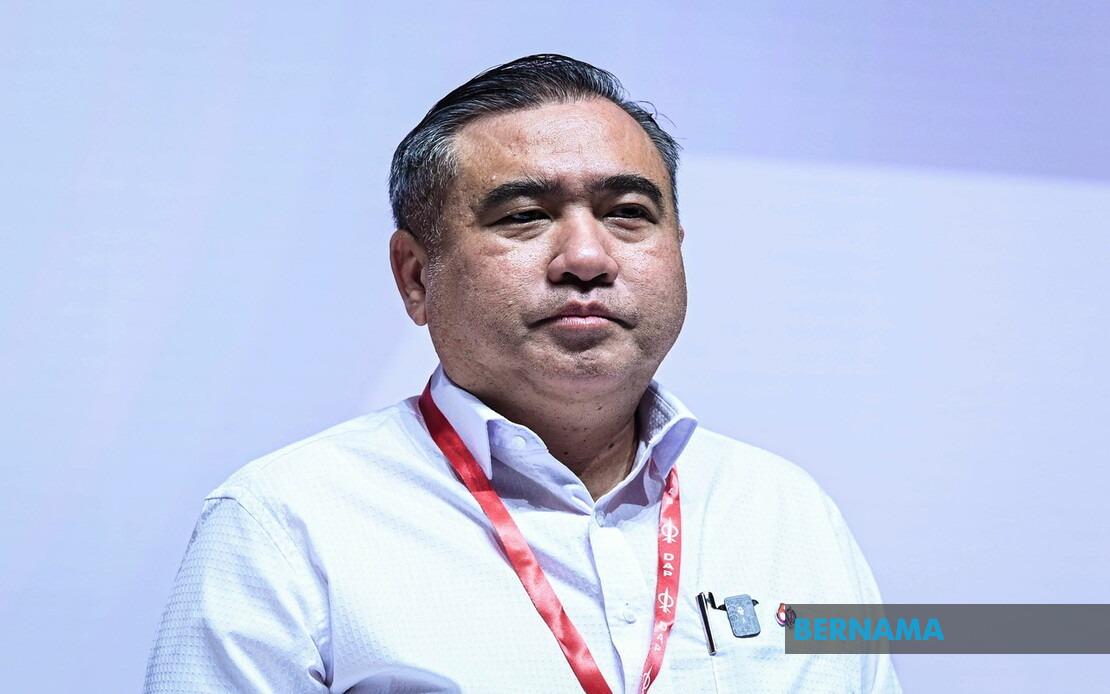
The Democratic Action Party has reaffirmed its commitment to the governing Unity Government following its 2026 Party Conference at the Putrajaya International Convention Centre, where delegates voted decisively to stay the course despite mounting criticism of ministerial performance. Though the outcome was never seriously in doubt, the internal debate revealed significant frustration within the party's rank-and-file over what many perceive as a cautious and reactive approach to governance that fails to match the boldness promised during the 2023 general election campaign.
Secretary-general Anthony Loke announced that the party will formally channel these grassroots demands for stronger government action through Cabinet discussions, treating the delegates' feedback as a fresh mandate for the leadership negotiating position within the coalition. The motion to remain in the Unity Government secured 88 per cent support, with 1,857 delegates voting to stay compared to 242 voting to depart and seven spoilt ballots cast out of 2,106 total papers issued. While the supermajority appears overwhelming on paper, the near-12 per cent opposition reflects underlying tensions that extend beyond DAP into broader Pakatan Harapan sentiment about the constraints and compromises of coalition governance.
Loke took particular care to emphasise that no retaliatory measures would be levelled against the 242 delegates who voted against remaining in government, framing the outcome as a straightforward expression of democratic principle rather than a decisive settling of accounts. He repeatedly stressed the importance of respecting both the majority decision and minority viewpoint, a rhetorical stance that acknowledges the real divisions within the party while projecting unity for public consumption. This balance is critical for DAP, which must maintain credibility with its own base—urban, educated, reform-minded voters who elected the party partly on promises of transformative change—whilst navigating the political reality of coalition governance with parties that often resist rapid institutional change.
The secretary-general pushed back against opposition accusations that DAP is leveraging the party conference to impose its own agenda on the Prime Minister, arguing instead that the reforms under discussion represent genuinely shared commitments agreed across Pakatan Harapan and the broader Unity Government framework. He pointed specifically to several key initiatives: the separation of the Attorney-General and Public Prosecutor roles, a constitutional amendment to limit prime ministerial tenure to two consecutive terms, and renewed anti-corruption efforts. These represent foundational governance changes that reflect DAP's historical emphasis on institutional checks and balances, yet they have moved slowly through the coalition machinery, frustrating party activists who wonder why legislative majorities have not translated into faster implementation.
The tension between DAP's grassroots expectations and coalition reality reflects a broader challenge facing Malaysia's governing arrangements. The party sits in Cabinet as a junior coalition partner to Pakatan Harapan-aligned leaders who themselves negotiate constantly with non-aligned or previously opposition-affiliated parties within the Unity Government framework. This layered coalition structure means that even initiatives with genuine cross-coalition buy-in move at the pace of the slowest or most hesitant participants, and controversial reforms can be indefinitely postponed through procedural manoeuvring or quiet pressure from alliance partners concerned about political fallout in their own constituencies.
Loke's framing of the delegates' concerns as party "aspirations and feedback from our grassroots" signals that DAP intends to use this internal mandate as political capital in upcoming Cabinet and coalition discussions. The party is essentially saying to its supporters: we have heeded your demands and will press the government harder on these issues. Simultaneously, Loke's emphasis on shared agreements aims to remind coalition partners that DAP is not acting unilaterally but advancing commitments already formally endorsed. This dual messaging suggests the party recognises it must maintain pressure on performance whilst avoiding the appearance of destabilising the coalition through excessive demands.
For Malaysian observers and regional analysts, the DAP conference outcome underscores the fragility and complexity of the current governing coalition. A genuine, vigorous internal party debate resulting in an 88 per cent endorsement might appear robust, yet the 12 per cent dissent and the broader context of delegates calling for "more decisive and assertive" government suggest real frustration with the pace and direction of institutional reform. This reflects a wider trend in Southeast Asian democratic politics, where younger, urban, reform-minded constituencies increasingly expect rapid visible change once their parties gain executive power, whilst governing realities impose slower timelines and require accommodation of diverse political interests.
The specific reforms DAP is championing—attorney-general and prosecutor separation, prime ministerial term limits, anti-corruption—are institutional changes that most democratic observers would characterise as sensible governance improvements. Yet their slow implementation raises questions about whether the current coalition arrangement can genuinely deliver transformative reform or whether it is structurally inclined toward stability over change. DAP's role as the most explicitly reform-focused partner in the coalition places it in an awkward position: it can claim credit for initiating these initiatives, but it cannot unilaterally accelerate them, and delays risk eroding its credibility with the electorate.
Looking ahead, Loke's promise to convey delegates' feedback through Cabinet channels is a test case for DAP's actual influence within the governing arrangement. If the party can demonstrate tangible progress on the promised institutional reforms over the next year or two, it validates the decision to remain in government and work for change from within. Conversely, if these initiatives stall or are significantly diluted through coalition negotiations, DAP risks facing renewed criticism at future party conferences from delegates questioning whether the party sacrificed its independence and reform agenda for the privileges of ministerial office.
The international dimension also merits consideration. Southeast Asian democracies are increasingly scrutinised for whether they can deliver institutional improvements and anti-corruption measures whilst maintaining political stability. Malaysia's experience with the Unity Government represents a significant attempt to build a pro-democracy, reform-minded coalition across traditional rival groups. The degree to which that coalition can produce concrete, visible institutional changes whilst avoiding internal fracture will influence regional perceptions of democratic governance capability in Southeast Asia and may shape how other regional parties approach similar coalition-building exercises in forthcoming electoral cycles.
For Malaysian readers particularly, the DAP conference outcome matters because it determines whether the party will aggressively advance its governance agenda or adopt a quieter, more accommodative approach to coalition management. The 88 per cent mandate provides Loke and his Cabinet ministers with political cover to push harder on reform issues, yet success will depend on whether they can construct sufficient broader coalition consensus for each initiative. The delegates have spoken; the question now is whether the party leadership can convert that internal momentum into external political progress.

