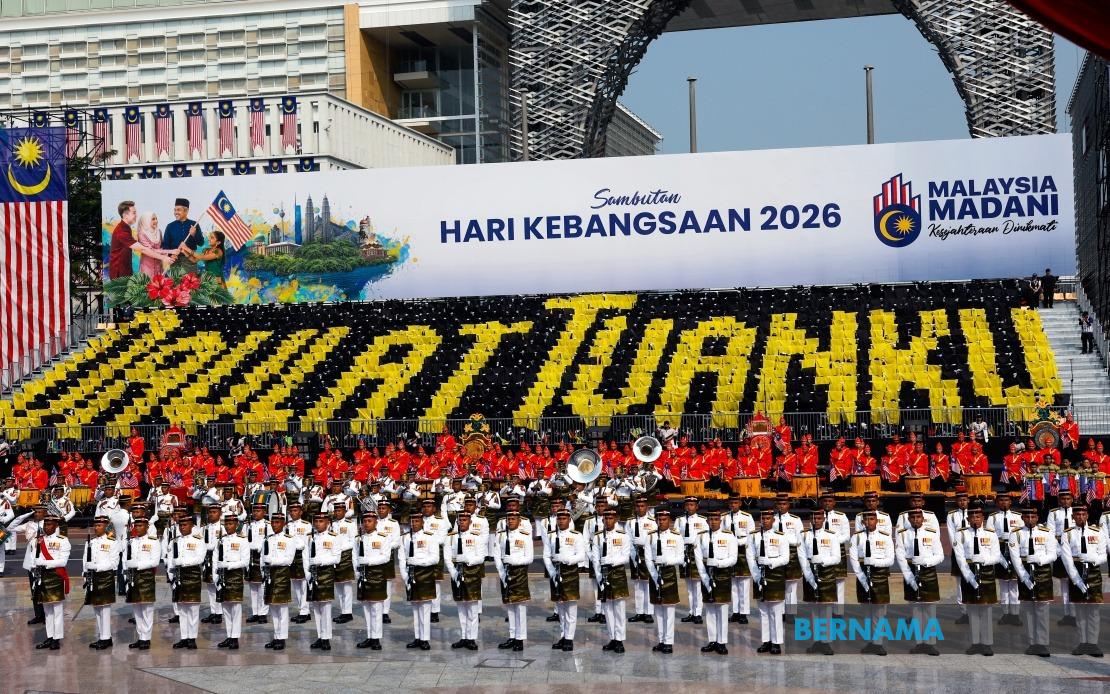
Dataran Putrajaya stands ready to transform into a showcase of national pride as Malaysia prepares to celebrate its 69th National Day tomorrow, with His Majesty Sultan Ibrahim, King of Malaysia, and Her Majesty Raja Zarith Sofiah, Queen of Malaysia, expected to grace the occasion. Prime Minister Datuk Seri Anwar Ibrahim and Cabinet members will also be present at the event, which begins at 8:00 am and will draw thousands of participants across diverse sectors of Malaysian society. The gathering represents far more than a ceremonial affair, serving as a platform to reinforce the bonds of unity and patriotism that define the nation's multicultural fabric.
The celebration operates under the unifying banner of "Malaysia MADANI: Kesejahteraan Dinikmati" (Malaysia MADANI: Shared Prosperity Enjoyed), a theme that reflects the government's emphasis on inclusive economic and social development across all communities. This conceptual framework moves beyond traditional independence commemoration to highlight the tangible benefits of nationhood and the collective aspirations that guide Malaysia's path forward. The thematic approach underscores how national celebration in contemporary Malaysia increasingly intertwines patriotism with measurable improvements in citizens' quality of life, addressing concerns that have resonated across both urban and rural communities.
The scale of tomorrow's spectacle reveals the logistical complexity required for such major national events. Organisers have assembled 10,819 parade participants distributed across 76 contingents, supported by 22 marching bands that will provide musical accompaniment throughout the procession. The parade will feature 11 specially designed float vehicles, 328 military and civilian assets spanning land, naval, and air components, 112 working animals integrated into various contingents, and notably, 22 electric vehicles that underscore Malaysia's commitment to environmental sustainability and technological modernisation. This composition reflects a deliberate effort to showcase the breadth of national institutions and values within a single cohesive narrative.
The opening ceremony will commence with "Gema Inovasi MADANI", a performance coordinated by the National Department for Culture and Arts that fuses traditional percussion with contemporary artistic innovation. This production will deploy 150 musical instruments and an impressive 700 traditional and innovative kompang (frame drums) to create a sonic tapestry representing Malaysia's ethnic diversity. The choice to centre the opening around percussion instruments carries symbolic weight, as these instruments have historically served as vehicles for cultural expression across Malay, Chinese, Indian, and indigenous communities. By showcasing traditional music through a lens of modern artistic direction, the performance articulates how Malaysia's cultural heritage remains vital and evolving rather than static or ceremonial.
Parade participants encompassing statehood and military components will include contingents from the National Resilience Leadership Academy and the National Defence University of Malaysia (UPNM), alongside participants from the National Service Training Programme (PLKN). These youth-focused institutions represent the machinery through which Malaysia cultivates a generation versed in national values and civic responsibility. The inclusion of cadet officers from military academies carries particular significance for Malaysian readers, as these institutions have long served as incubators for leadership across both defence and civilian sectors. Their prominent placement in the parade reinforces continuity between Malaysia's defence heritage and future governance.
A notable contingent will comprise national athletes and medallists from the Glasgow 2026 Commonwealth Games, carrying forward the narrative of Malaysian sporting excellence on both regional and international stages. This inclusion reflects how contemporary national celebrations increasingly integrate sports achievements as symbols of national capability and pride, particularly resonant for a nation that has invested heavily in developing elite athletic programmes. The positioning of athletes alongside military and civilian participants establishes a conceptual equivalence between different forms of national excellence and contribution.
The economic and public well-being component incorporates Malaysia's private sector in unprecedented ways for National Day celebrations, featuring prominent companies including Munchy's Malaysia, ZUS Coffee, Siti Khadijah Apparel Sdn Bhd, MR. D.I.Y Group (M) Berhad, and Carsome Sdn Bhd. This deliberate inclusion of private enterprises within the patriotic narrative reflects a broader shift in how Malaysian government frames economic activity as intrinsically connected to national development. For business-minded readers, this signals official endorsement of the private sector's role in advancing Malaysia MADANI objectives, potentially influencing corporate social responsibility positioning and brand-nation alignment strategies throughout 2026 and beyond.
Public safety and order will be represented through the Malaysia Civil Defence Force, Road Transport Department, and Malaysian Fire and Rescue Department, highlighting the often-invisible infrastructure through which the state maintains civil order and protects citizen welfare. These agencies rarely feature prominently in public discourse, yet their inclusion in a major national celebration underscores official recognition of their contributions to daily national functioning. The Johor Military Force, the oldest military unit in Malaysia, will also participate, bringing historical continuity and a reminder of how Malaysia's military heritage extends back through colonial and pre-independence periods into the present day.
The Visit Malaysia Year 2026-2027 campaign will be showcased through elaborately designed floats displaying tourism assets, biodiversity, and cultural artefacts from Malaysia's diverse regions and communities. This integration of tourism promotion within patriotic celebration reflects how modern Malaysian governance increasingly views nation branding and economic activity through an integrated lens. For readers in the tourism and hospitality sectors, tomorrow's parade effectively represents a statement of tourism priorities and regional positioning as Malaysia approaches the 2026-2027 campaign period.
Malaysian airlines AirAsia, Malaysia Airlines, Batik Air, and Air Borneo will contribute to the procession, while the animation studio Les' Copaque will deploy characters Upin and Ipin as cultural ambassadors resonating particularly with younger and family audiences. This blend of aviation industry and popular culture represents deliberate efforts to ensure the celebration transcends demographic and interest-based divisions, making patriotic expression accessible and appealing across age groups and socioeconomic categories.
The human graphics performance will feature 1,500 students from 36 Selangor schools arranged in carefully choreographed formations synchronised to music, demonstrating the level of youth mobilisation and coordination required for such spectacles. This element carries particular significance for Malaysian educators and parents, as it represents substantial investment in ensuring younger generations participate actively rather than passively consuming the celebration. The coordination required across multiple schools underscores logistical planning at state and federal levels.
The celebration will conclude with an airshow featuring Royal Malaysian Air Force fighter jets executing aerial manoeuvres above Dataran Putrajaya, providing a dramatic visual affirmation of Malaysia's defence capabilities before concluding at approximately 10:00 am. The theme song "Aku Berjanji" (I Promise), composed and performed by renowned musician Faizal Tahir, will anchor emotional resonance throughout the celebration, providing a musical touchstone for national memory and patriotic sentiment.
Practical considerations have prompted health advisories from Communications Minister Datuk Seri Fahmi Fadzil regarding N95 face masks due to current haze conditions, with organisers distributing masks to over 10,000 participants. Simultaneously, substantial road closures affecting Putrajaya's Core Island beginning August 30 at 5:00 am through August 31 at 6:00 pm will impact five major bridges—Seri Wawasan, Seri Saujana, Seri Gemilang, Putra, and Seri Ehsan—requiring residents and visitors to utilise alternative routes and public transport. These practical arrangements underscore the real-world complexity of hosting large-scale national events in Malaysia's administrative capital.

