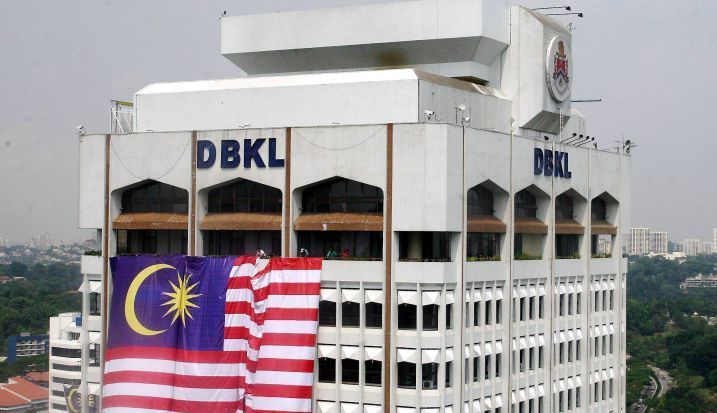
Kuala Lumpur City Hall (DBKL) has escalated its enforcement action against gated neighbourhood security measures, serving a two-week removal notice on Taman Desa Phase 1 Residents Association (TDP1RA) for facial-recognition scanners and boom gates positioned across public thoroughfares without municipal authorisation. The deadline represents a critical juncture in a prolonged regulatory conflict between the association and City Hall over community access controls and road closure permissions within the residential enclave.
Enforcement officers from DBKL marked the facial scanners at Guard Posts 1 and 4 with red notices on Thursday, 27 August, simultaneously affixing yellow enforcement tape to both the scanning apparatus and associated boom-gate infrastructure. The formal notices cited violation of Section 70 of the Street, Drainage and Building Act 1974, establishing that the installations proceeded without requisite approval from the Kuala Lumpur mayor. This legal framework provides DBKL with explicit authority to compel removal of unauthorised street obstructions that impede public access and movement.
A DBKL spokesperson confirmed that City Hall's legal department had been consulted prior to issuing the enforcement notice, underscoring the deliberate and procedurally sound nature of the action. "We put up the notices today and have given them two weeks from today to remove the obstructions. If they fail to do so, DBKL will remove them. We hope they do the right thing," the official stated, indicating that municipal compliance officers stand ready to undertake removal operations should the residents association decline voluntary compliance within the specified timeframe.
The current enforcement action culminates a series of administrative interactions spanning several months between municipal authorities and the residents association. On 17 August, following an inspection visit, DBKL determined that TDP1RA had failed to rectify non-compliance issues despite receiving an additional 30-day period to align the guarded-neighbourhood scheme with City Hall's regulatory requirements. This determination prompted a formal written order on 18 August directing the association to fully restore vehicular access at Guard Posts 2, 5, and 6, dismantle unapproved physical structures, and reinstate unobstructed public access across all affected road corridors.
The underlying regulatory dispute originated earlier in the year when DBKL, in correspondence dated 5 March, initially advised that the closed-circuit television camera system and facial-recognition authentication apparatus had been deployed without municipal consent. The residents association's failure to respond satisfactorily to this initial directive triggered successive rounds of enforcement communications, demonstrating DBKL's progressive hardening of its compliance stance following months of apparent non-cooperation.
Community resistance to the access restrictions crystallised into organised protest on 24 August, when more than 40 residents—predominantly seniors aged 50 and above—gathered at Gate 5 along Jalan Desa Ria to voice objections against the neighbourhood's vehicular access limitations. The specific gate remains permanently sealed to motor traffic and is kept locked to foot traffic until 6 o'clock in the morning, creating substantial inconvenience for early-morning exercisers. Residents articulated that this closure arrangement compels those seeking access to the neighbourhood's public park to navigate an extended detour route along congested thoroughfares, undermining public health objectives and safety.
The resident protesters raised additional substantive concerns regarding the facial-recognition technology itself, characterising the biometric authentication requirement as an invasive surveillance measure that fundamentally contradicts expectations of privacy within residential communities. Beyond privacy considerations, participants warned that the physical barriers introduced by the access-control infrastructure could critically impede emergency response times for ambulances and fire services attempting to reach residents during medical or safety emergencies. These objections reflect growing societal concerns about biometric data collection and the potential consequences of physical access impediments on emergency service efficacy.
TDP1RA president Frank Yeh has previously maintained that the association operated within established procedural frameworks and secured overwhelming resident endorsement, citing that 81 per cent of residents approved the security enhancement initiative. This claim of democratic mandate represents the association's primary justification for implementing the access-control measures despite lacking formal municipal authorisation. However, the DBKL enforcement action indicates that internal community consensus, regardless of majority support levels, cannot substitute for compliance with municipal planning and street-use regulations applicable to all neighbourhoods within the city.
The Taman Desa situation encapsulates a broader tension within Malaysian urban governance between residents' aspirations for enhanced security and controlled neighbourhood environments against municipal obligations to preserve public access rights and prevent private entities from effectively privatising public infrastructure. DBKL's enforcement position reflects established legal principles that public roads constitute shared community resources that cannot be selectively restricted based on individual neighbourhood preferences. The facial-recognition dimension adds contemporary complexity, as residents and civil society groups increasingly scrutinise biometric systems' deployment in civilian spaces without transparent consent or regulatory oversight frameworks.
The two-week deadline imposes immediate operational consequences for both the residents association and DBKL, requiring the association either to mobilise rapid compliance or prepare legal resistance strategies. Should TDP1RA decline voluntary compliance, municipal enforcement removal operations would likely attract media attention and potentially embolden similar enforcement actions against other gated communities across Kuala Lumpur that operate comparable unauthorised access-control infrastructure. Conversely, DBKL's demonstrated willingness to enforce municipal regulations sends a clear signal that guarded-neighbourhood schemes must operate within approved parameters or face municipal intervention.
This episode illustrates the governance challenges facing Malaysian cities as rapid suburban expansion and demographic changes drive residential communities to implement security measures that may conflict with existing legal frameworks. Future resolution may require dialogue between DBKL, residents associations, and residents themselves to establish clear, transparent guidelines permitting neighbourhood security enhancements while preserving public road access and implementing oversight mechanisms for biometric surveillance technologies. The Taman Desa case will likely establish important precedent for how Malaysian municipalities balance community safety aspirations against regulatory compliance and public access preservation in coming years.

