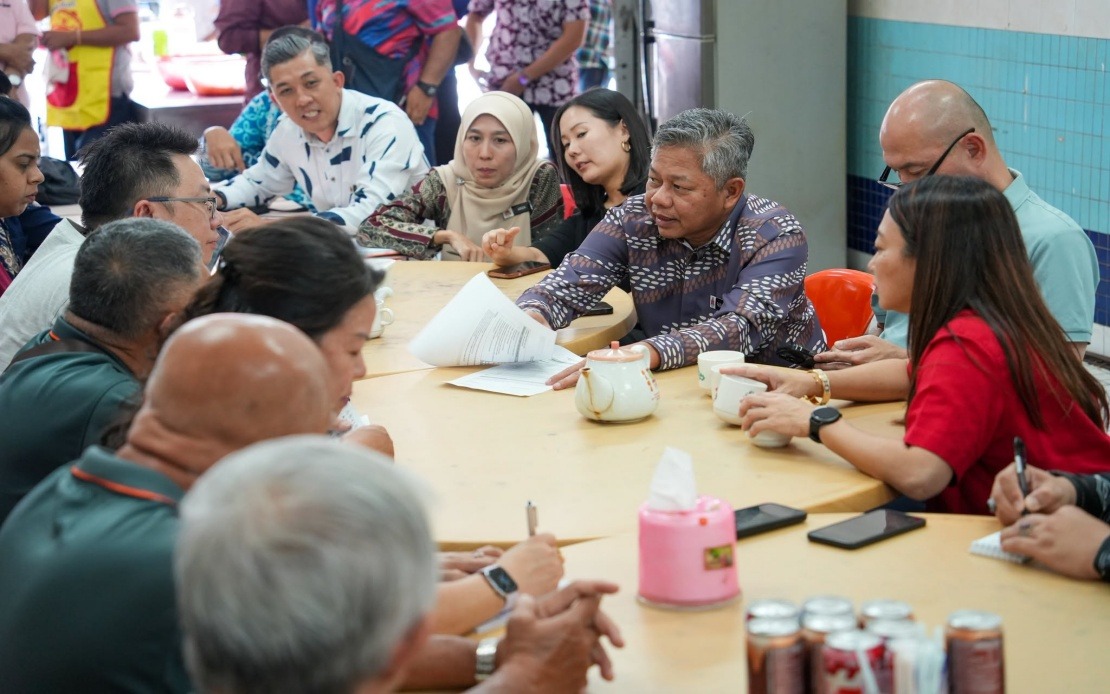
Kuala Lumpur City Hall (DBKL) has unveiled a package of three operational reforms designed to reduce bureaucratic friction and create a more welcoming climate for traders across the capital. The initiatives represent a significant shift in how the municipal authority engages with the business community, signalling a commitment to balancing regulatory oversight with entrepreneurial flexibility. These changes follow consultations with major industry associations and reflect broader government objectives to enhance business-friendly governance in Malaysia's largest metropolitan area.
The first component targets outdoor dining, a sector that expanded considerably during pandemic lockdowns and has become economically important to many establishments. DBKL has established a standardised monthly permit fee of RM30 per set of tables and chairs placed on five-foot ways—the sheltered walkways found throughout Kuala Lumpur's older commercial districts. This flat-rate structure replaces what traders have described as inconsistent or opaque pricing, offering predictability for operators seeking to expand their seating capacity. Applications are processed through DBKL's branch offices, organised by parliamentary constituency, ensuring that decisions take into account site-specific factors such as location suitability and walkway width. Critically, approval remains conditional on maintaining unobstructed pedestrian passage, wheelchair accessibility, and clear routes for emergency vehicles—requirements that acknowledge public safety cannot be compromised for commercial convenience.
The second reform streamlines the approval pathway for minor building works that do not alter structural integrity. Common projects falling under this category include tile replacement, ceiling work, and cosmetic renovations. Rather than navigate multiple approval stages, applicants need only complete a simple form and notify their respective DBKL branch. This direct-issuance approach acknowledges that low-risk modifications pose minimal public safety concern and warrant expedited handling. By removing unnecessary procedural layers, DBKL aims to reduce processing timelines while maintaining compliance standards. The decentralisation to branch level also reduces dependency on centralised review bodies and empowers local officers with clear decision-making authority, potentially accelerating approvals across the city.
The third measure addresses a longstanding frustration among food and beverage operators: the extended closure period following hygiene-related enforcement actions. Under the new framework, premises ordered shut for hygiene violations may be considered for reopening as soon as 24 hours after cleaning has been completed, provided that DBKL conducts an inspection confirming all food safety and sanitation standards have been met. This represents a marked acceleration from previous practice, where reopening could take considerably longer. The reform recognises that rapid closure and prolonged shutdown can devastate small operators, particularly hawkers and informal vendors with minimal cash reserves. However, DBKL's statement emphasises that reopening is not automatic; inspection confirmation remains mandatory, ensuring that streamlined procedures do not erode food safety safeguards.
The initiatives emerge from engagement sessions between Hannah Yeoh, the Minister in the Prime Minister's Department (Federal Territories), DBKL Mayor Datuk Seri Fadlun Mak Ujud, and representatives of key business associations. Notably, consultations involved the Selangor and Kuala Lumpur Chinese Coffee Shop and Tea Shops Owners' Association, a veteran organisation representing predominantly ethnic Chinese café and restaurant proprietors. A separate dialogue with the Malaysian Muslim Restaurant Owners' Association (PRESMA) last April focused specifically on food premises challenges, particularly reopening procedures. These structured consultations underscore that the reforms are not executive whim but evidence-based responses to documented operational grievances affecting multiple business communities.
The broader policy framework emphasises standardisation and process clarity. DBKL notes that uniform procedures, transparent requirements, and consistent enforcement reduce scope for discriminatory or arbitrary application by individual officers. This address a persistent complaint from traders across Southeast Asia: that ambiguous regulations and discretionary enforcement create opportunities for corruption or favour-based decision-making. By codifying expectations and establishing branch-level standardisation, DBKL aims to build trader confidence that permit approval depends on objective criteria rather than personal connections or informal payments. Such transparency also reduces administrative burden on officers, who no longer must interpret vague guidelines case-by-case.
For Malaysian and regional business observers, these reforms signal a subtle but significant policy reorientation. Rather than viewing traders purely as subjects of regulation requiring compliance, DBKL acknowledges them as economic participants whose operational efficiency contributes to Kuala Lumpur's vitality. The RM30 monthly rate for outdoor seating, while modest in absolute terms, demonstrates willingness to quantify and cap permit costs—a practice that mitigates the hidden or escalating fees that informal traders often face. The expedited minor works approval recognises that capital-constrained small businesses cannot absorb extended project timelines without hardship. And the 24-hour hygiene-related reopening pathway balances legitimate public health concerns with acknowledgment that indeterminate closures function as de facto penalties disproportionately affecting marginal operators.
These measures also carry implications for the broader Southeast Asian regulatory environment. Malaysia has historically positioned itself as business-friendly compared to some regional peers, yet complaints persist about inconsistent municipal enforcement. Kuala Lumpur's reforms, if effectively implemented, provide a template for other Malaysian cities and potentially influence regional best practices. The formalisation of outdoor seating, in particular, addresses a phenomenon common across Southeast Asian cities where informal street commerce operates in regulatory grey zones. By integrating outdoor dining into a transparent permit system rather than tolerating it as extralegal activity, DBKL creates a middle path between blanket prohibition and unregulated informality.
Implementation success will depend on adequate officer training and anti-corruption safeguards. DBKL's commitment to standardised processes only yields benefits if branch officers consistently apply the same criteria. Variations in interpretation or selective enforcement would undermine the transparency objective and perpetuate trader grievances. The municipal authority has acknowledged this challenge, noting that standardisation facilitates officer duties and reduces interpretative differences during implementation. Whether monitoring mechanisms—such as internal audits, public complaint procedures, or trader feedback systems—are sufficiently robust remains to be seen. Transparent publication of approval decisions and processing timelines could further reinforce accountability.
The food safety dimension warrants particular attention given Malaysia's regulatory complexity and federal-state jurisdiction over health matters. The 24-hour reopening provision applies only after DBKL inspection confirms compliance, but unclear coordination between municipal authorities, state health departments, and federal food agencies could create bottlenecks. Traders may face reopening approval from DBKL but continued restrictions from health authorities, creating confusion about permissible operations. Clarifying inter-agency communication and establishing clear responsibility lines will be essential to realising the reform's intended benefits.
Looking forward, the initiatives merit evaluation against baseline metrics: average approval timelines, trader satisfaction, compliance rates, and hygiene outcomes. DBKL should establish transparent reporting on permit approvals and fee collection, allowing external stakeholders to assess whether reforms translate into genuine operational relief or represent symbolic gestures without practical impact. Regional observers will watch whether Kuala Lumpur's approach influences other municipalities and whether subsequent phases of reform address additional trader concerns, such as licence processing or enforcement consistency.

