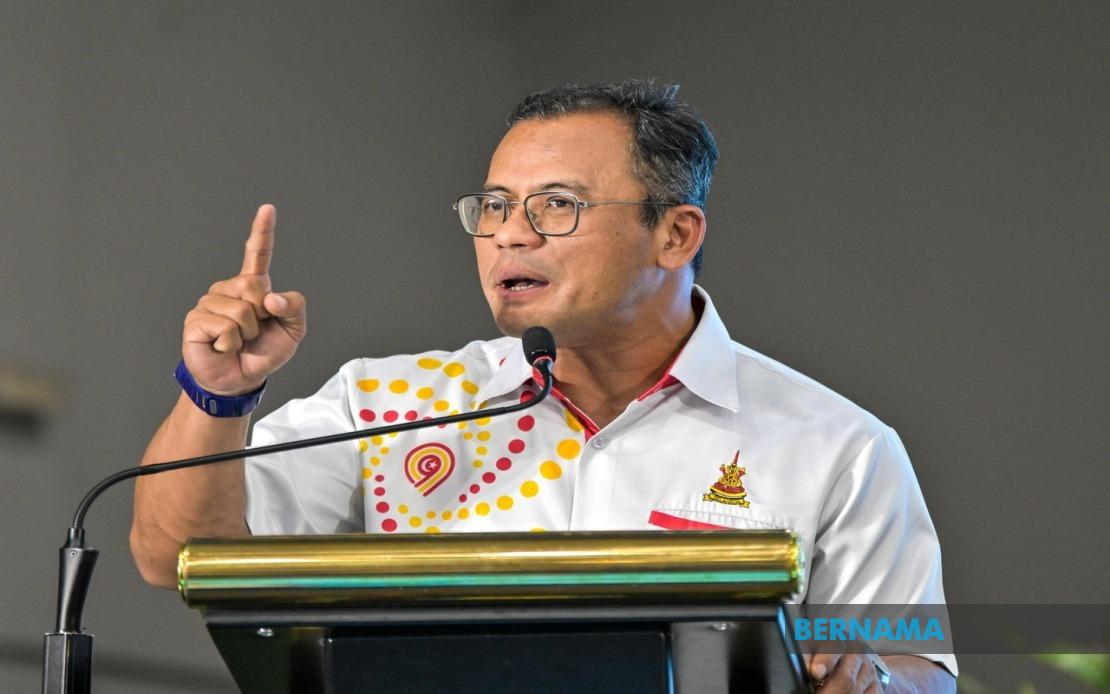
Selangor Menteri Besar Datuk Seri Amirudin Shari has underscored the critical importance of comprehending the Rukun Negara beyond surface-level familiarity, asserting that meaningful engagement with the national principles is fundamental to building enduring racial harmony and safeguarding the nation from the corrosive effects of identity politics. Speaking after inaugurating a community programme in Kuala Lumpur, Amirudin articulated a vision where Malaysians move beyond rote learning of the five principles to genuinely absorb their philosophical underpinnings and societal purpose.
The Selangor leader warned that citizens who simply memorise the Rukun Negara's tenets without grasping their intended message risk becoming disconnected from the unifying values these principles were designed to embed in the national psyche. This distinction between superficial knowledge and substantive understanding carries profound implications for how effectively the nation can resist attempts to weaponise religious and political differences. Amirudin contended that without this deeper comprehension, Malaysians remain vulnerable to manipulation by those seeking to exploit communal sensitivities and stoke sectarian discord.
Central to Amirudin's argument is the concern that identity politics—the mobilisation of ethnic, religious, or cultural identity for political advantage—poses an acute threat to Malaysia's social fabric. He positioned comprehensive knowledge of the Rukun Negara as an inoculation against such divisive tactics, suggesting that citizens equipped with genuine understanding of the principles would be better positioned to recognise and reject attempts to fragment society along factional lines. This reflects broader anxieties within Malaysia's political establishment about the instrumentalisation of religious and communal grievances.
Amirudin illustrated his thesis by examining the principle concerning belief in God, demonstrating how surface-level interpretation could miss the document's deeper integrative intent. Rather than viewing this principle as a rigid religious doctrine that privileges certain faiths or creates hierarchies among believers, Amirudin reframed it as a foundation for mutual respect and coexistence among Malaysia's religiously diverse population. When understood in this holistic manner, he argued, the Rukun Negara transforms from a set of discrete commandments into a cohesive framework promoting peaceful pluralism.
The Menteri Besar also addressed recent controversy surrounding the incorporation of the Rukun Negara's preamble and objectives in official ceremonial readings. Critics had accused the government of altering the foundational document, potentially undermining its established form and meaning. Amirudin categorically refuted these allegations, characterising the initiative instead as a restoration project aimed at reconnecting Malaysians with principles that have faded from collective consciousness. He framed the expansion of readings as a clarification rather than a modification, bringing historical context and stated aims back into public discourse.
Emphasising that the government harbours no intention to rewrite or fundamentally alter the Rukun Negara itself, Amirudin stressed that highlighting the preamble and objectives serves to illuminate the cohesive purposes animating each principle. He pointed specifically to the first objective—emphasising unity among Malaysians of diverse racial and ethnic backgrounds—as evidence that the Rukun Negara's architects envisioned a document transcending particularistic identities in service of common nationhood. This historical grounding provides legitimacy to contemporary efforts to revive awareness of these founding ideals.
The timing of Amirudin's remarks reflects broader political currents within Malaysia regarding the role of national founding principles in contemporary governance and public discourse. As Malaysian society has grown more polarised along ethnic and religious lines in recent years, there has been renewed emphasis from political leaders and civil society advocates on invoking the Rukun Negara as a unifying touchstone. Amirudin's intervention represents part of this broader movement to reactivate the document as a living reference point rather than historical artefact consigned to textbooks.
For regional observers, Malaysia's sustained struggle to operationalise its foundational principles amid rising communal tensions offers instructive lessons about the challenges confronting multiethnic democracies in Southeast Asia. The Rukun Negara was formulated in the immediate aftermath of the 1969 racial riots, embodying a hard-won social contract among diverse communities. Amirudin's advocacy for deeper engagement with these principles implicitly acknowledges that this consensus requires constant renewal and reaffirmation across generations increasingly distant from the historical trauma that motivated the original compact.
The Deputy National Unity Minister Yuneswaran Ramaraj and local representatives present at the event underscored the cross-party and grassroots commitment to this agenda, though implementation challenges persist. State-level initiatives like the MADANI Kita Bersama Komuniti Ampang Jaya programme represent attempts to translate abstract principles into tangible community engagement, testing whether structured dialogue and educational outreach can effectively counter divisive identity politics at the neighbourhood level.
Amirudin's insistence that understanding must precede advocacy suggests a recognition that merely repeating platitudes about unity without cultivating genuine comprehension of their significance may prove counterproductive. In an era when political actors across the ideological spectrum invoke the Rukun Negara to validate competing agendas, there is arguably a pressing need to rehabilitate shared understanding of what these principles actually mean and what they demand of citizens and government alike. The challenge lies in achieving this revival without rendering the document hostage to contemporary political contests.

