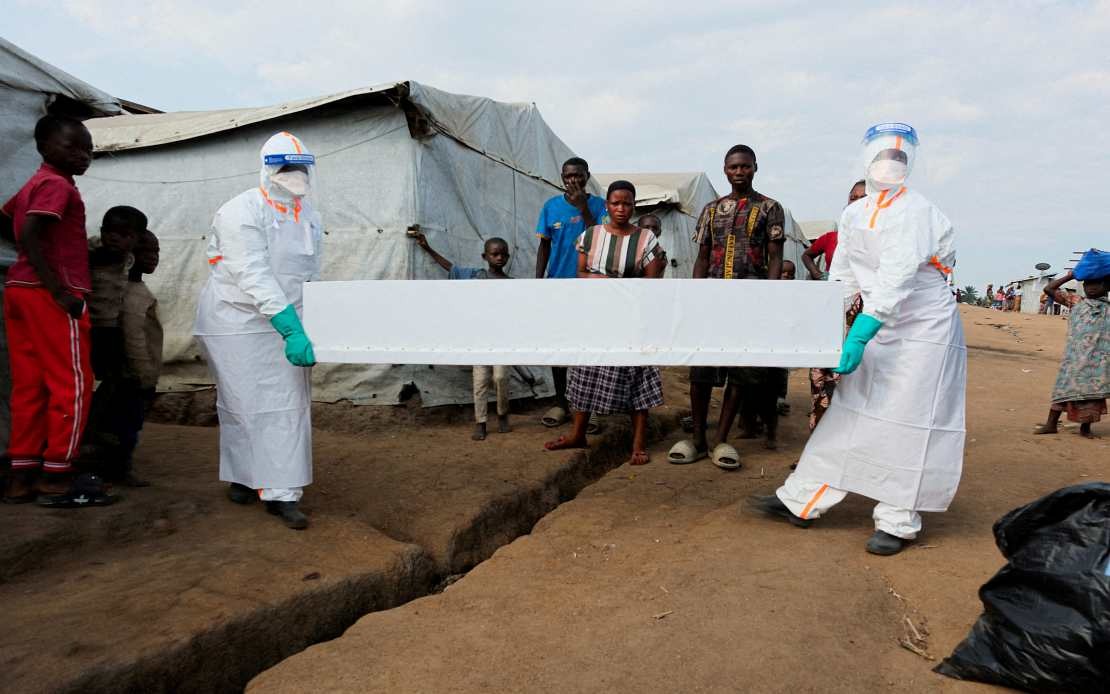
The Ebola epidemic ravaging the Democratic Republic of Congo has reached a critical milestone, with confirmed cases now exceeding 1,000 as the outbreak entered its second month of transmission. Health authorities reported that as of Sunday, 1,003 laboratory-confirmed cases had been recorded, accompanied by 254 fatalities, translating to a mortality rate of 25.3 per cent since the health emergency was formally declared on May 15. This grim threshold underscores the rapidly escalating nature of the crisis and raises alarm bells across the African continent about the trajectory of the viral spread.
The outbreak's concentration in three provinces—Ituri, North Kivu, and South Kivu—has created a complex epidemiological landscape that strains already fragile health infrastructure across the conflict-affected eastern region. Health Minister Roger Kamba acknowledged the challenging operational environment, noting that while recovery numbers have shown modest improvement, the ability to track and monitor known contacts of infected individuals has deteriorated. At present, approximately 365 patients remain hospitalized or isolated for observation and treatment, while at least 100 individuals have successfully recovered and been discharged, suggesting that with proper medical intervention, survival remains achievable despite the disease's notorious lethality.
The Africa Centres for Disease Control and Prevention has issued a stark warning that distinguishes the current outbreak from previous episodes in terms of potential severity. Analysts at the continental health body cautioned that if transmission patterns continue unabated, the Democratic Republic of Congo could experience casualties far exceeding those recorded during the catastrophic 2014-2016 West African epidemic, which devastated Guinea, Liberia, and Sierra Leone and claimed more than 11,000 lives across those nations. This comparison carries profound implications not merely for the affected regions but for global public health architecture, as it suggests the virus could establish transmission chains that overwhelm regional containment measures if intervention falters.
For Southeast Asian observers, including Malaysian public health officials and epidemiologists, the Congo outbreak presents a cautionary narrative about the fragility of disease surveillance networks in regions grappling with concurrent security challenges. The Democratic Republic of Congo's ongoing internal conflicts have created ungoverned spaces where the virus circulates with minimal oversight, complicating response efforts and enabling human-to-human transmission chains to propagate unchecked. Similar vulnerabilities exist across Southeast Asia, where pockets of instability, refugee populations, and informal settlement areas could theoretically provide comparable conditions for viral amplification should an exotic pathogen establish a foothold.
The Democratic Republic of Congo's Health Ministry has nevertheless maintained that response mechanisms remain operational, with teams conducting active case investigations, epidemiological surveillance, and prevention campaigns in affected communities. These ground-level interventions—though resource-constrained—represent the critical interface between outbreak containment and exponential escalation. Health officials emphasize that intensified community communication, accelerated diagnostic testing, and improved case management protocols continue to form the backbone of their containment strategy, though the crossing of the 1,000-case threshold suggests these measures, while necessary, may be insufficient without additional external support and investment.
A significant scientific development has emerged from collaborative research between Uganda's Department of National Health Laboratory and Diagnostic Services and the Democratic Republic of Congo's Institute of National Biomedical Research. These institutions have identified the circulating strain as Ebola Bundibugyo, a critical finding that indicates the current outbreak stems from a fresh wildlife spillover event rather than representing a resurgence of an earlier epidemic that had lurked undetected within animal populations or persisted cryptically in human hosts. This determination reshapes understanding of outbreak origins and suggests that environmental or behavioral factors have recently increased the probability of zoonotic transmission, raising questions about what ecological shifts or human-animal interface changes may have triggered this particular spillover.
The identification of Bundibugyo rather than other Ebola variants such as Zaire carries epidemiological implications that remain only partially understood. While historical data indicates that Bundibugyo typically presents with somewhat lower case fatality rates compared to certain other variants, the 25.3 per cent mortality observed in this outbreak remains devastating and reflects both the virus's inherent pathogenicity and the limitations of available medical countermeasures in resource-constrained settings. The variant's zoonotic origin underscores the persistent threat posed by wildlife reservoirs, particularly in regions where deforestation, habitat encroachment, and hunting practices bring human populations into increasingly intimate contact with animal hosts.
From a regional security and economic perspective, the Democratic Republic of Congo's ongoing health crisis carries implications for neighboring Southeast Asian nations through multiple pathways. Should the outbreak expand geographically beyond current epicenters, it could disrupt regional trade networks, prompt implementation of travel restrictions, and trigger humanitarian responses that strain already-limited international health assistance budgets. Moreover, the outbreak serves as a stress test for African and global surveillance architectures that theoretically should detect and contain emerging threats before they metastasize into pandemics. Performance during this episode will inform future pandemic preparedness assumptions across the Indo-Pacific region.
The response coordination challenges evident in the Democratic Republic of Congo underscore why Malaysia and other Southeast Asian nations maintain robust biosecurity frameworks and early warning systems. The convergence of conflict, weak governance, limited healthcare capacity, and high viral transmission potential in equatorial Africa creates conditions fundamentally different from those prevailing in most Southeast Asian contexts. However, the principle that emerging infectious diseases recognize no borders remains immutable, making international cooperation and burden-sharing essential components of any sustainable containment strategy.
As the Democratic Republic of Congo's outbreak continues to evolve beyond the symbolic 1,000-case mark, health authorities face mounting pressure to scale up interventions while the window for preventing further geographic spread narrows. The Health Ministry's emphasis on community engagement and contact tracing reflects recognition that technical medical interventions alone cannot arrest transmission chains rooted in social networks and behavioral patterns. Success will require sustained international support, adequate funding mechanisms, and unwavering commitment to surveillance even as media attention inevitably wanes in favor of other crises, a pattern that historically has undermined outbreak response efforts during crucial windows of opportunity.

