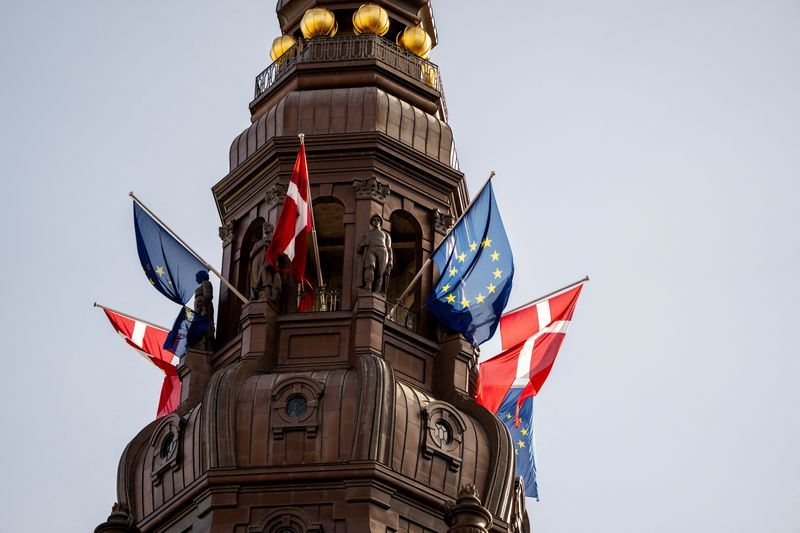
Denmark's government has stepped into a pivotal European Court of Justice dispute, filing written arguments in support of Belgium's position against a coalition of technology companies challenging media compensation rules. The intervention, announced by the Culture Ministry on Monday, underscores growing concern among EU member states about protecting domestic news industries from what they view as exploitative tech platform practices.
At the heart of the dispute lies Belgium's implementation of Article 15 of the Digital Single Market Directive, a provision designed to ensure that technology companies compensate publishers when their content appears on digital platforms. The case, colloquially known as the Streamz case, was initiated in 2023 by Streamz, Google, Meta, Spotify, and Sony, who contend that Belgium's interpretation of the EU directive conflicts with broader European law and infringes upon their commercial freedoms.
Denmark's decision to participate in the oral hearings scheduled for July 6 and 7 reflects the government's conviction that the outcome will fundamentally shape how European media houses can defend their intellectual property rights in the digital economy. Rather than viewing this as an isolated Belgian matter, Copenhagen recognises that a ruling favouring the technology companies could establish legal precedent affecting all member states and their respective news industries. This recognition places the intervention within a broader Nordic strategy to preserve journalistic business models as digital platforms continue to dominate content distribution.
The Danish government's primary focus during the court proceedings will centre on ensuring that technology giants remain accountable for compensating publishers whenever their articles or other journalistic material appear on corporate platforms. This argument addresses a fundamental asymmetry in the digital media landscape: technology companies accumulate substantial advertising revenue and user engagement through news content they neither produce nor financially support. Denmark's position argues that such arrangements constitute an unjust enrichment of platforms at the expense of news organisations that bear the costs of professional journalism.
Culture Minister Zenia Stampe articulated the stakes with particular clarity, asserting that permitting tech companies to exploit media content without compensation inflicts direct damage on Danish journalism and, by extension, on democratic discourse itself. Her statement reflects a concern shared across Scandinavia and much of Europe that undermining the financial viability of news operations weakens investigative journalism and threatens the information ecosystems that sustain democratic participation. When publishers struggle financially, newsrooms shrink, foreign correspondents are withdrawn, and investigative capacity diminishes—consequences that extend far beyond the media industry itself.
Denmark's intervention strategy emphasises pressing the European Court of Justice to establish clearer boundaries around publishers' rights and to articulate precisely what obligations technology platforms bear when distributing journalistic material. This focus on judicial clarity serves multiple purposes: it would provide concrete legal standards for national courts interpreting the DSM Directive, reduce uncertainty for both publishers and platforms, and create enforceable benchmarks that member states can implement consistently. Without such clarity, individual countries might attempt divergent approaches, potentially fragmenting the EU's digital single market.
The intervention represents only one front in Denmark's broader engagement with digital copyright and intellectual property issues affecting media companies. The government has also participated in separate proceedings concerning the legality of Google's use of press material to train artificial intelligence systems. This dual engagement illustrates how technology companies' practices increasingly intersect multiple legal and policy domains simultaneously—from direct content licensing through to the derivative use of published material in machine learning applications. Each domain presents distinct challenges for protecting publisher rights while accommodating legitimate innovation.
For Southeast Asian observers, Denmark's intervention carries instructive lessons about defending media industries within globalised digital ecosystems. Many nations in the region face analogous pressures as technology platforms dominate content distribution while contributing minimally to journalism financing. The European approach, centred on regulatory intervention and legal rights protection rather than market forces alone, offers a contrasting model to the largely unregulated dynamics characterising digital media in many Asian countries. As regional governments consider their own policies toward technology companies and media sustainability, the outcomes of cases like Streamz may influence regulatory thinking.
Belgium's original implementation of Article 15 attempted to force platforms to negotiate licensing fees with publishers or face potential blocking of content. The tech companies' challenge to this approach reflects their broader strategy of resisting statutory payment obligations across multiple jurisdictions. A defeat in the ECJ would substantially weaken their position in other member states considering similar measures. Conversely, a victory would likely embolden tech companies to challenge comparable provisions elsewhere, potentially creating a chilling effect on regulatory ambition throughout the EU.
Denmark's participation signals that smaller member states with significant media industries view this case as consequential for their own regulatory sovereignty and capacity to protect domestic publishers. The Nordic countries have historically prioritised media pluralism and journalistic quality as public goods worthy of policy protection. By intervening in European proceedings rather than relying solely on national-level advocacy, Denmark amplifies its voice and contributes to framing the legal principles that will govern digital media markets across the continent for years to come.

