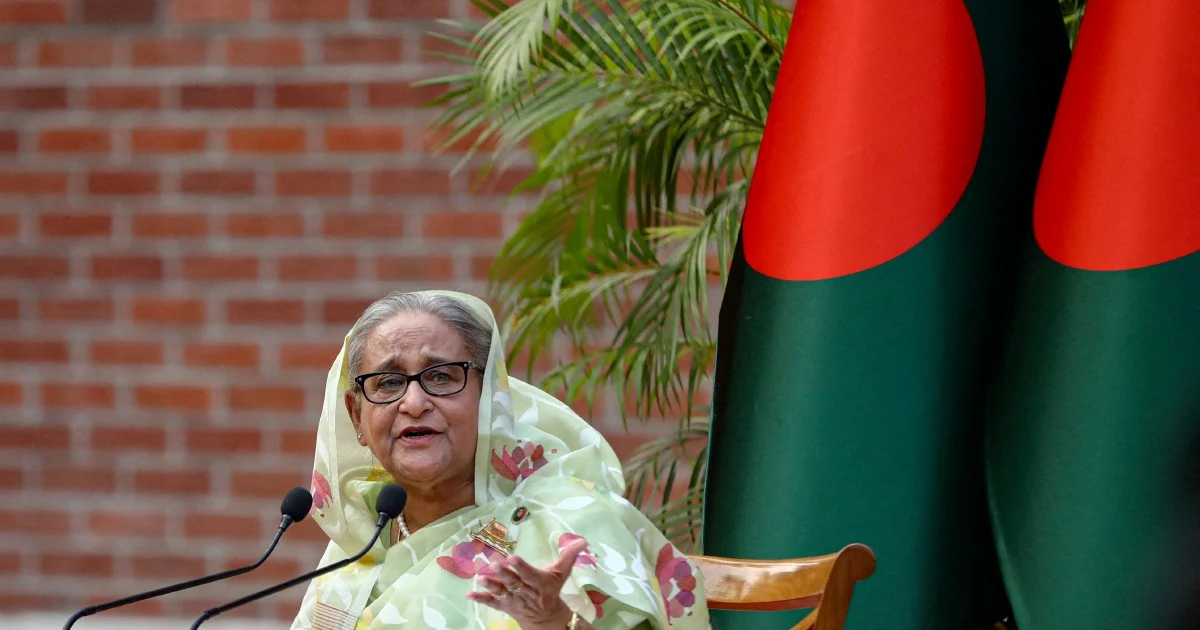
Sheikh Hasina, Bangladesh's ousted Prime Minister currently residing in India, confronts a stark ultimatum as she contemplates returning home: imprisonment awaits her should she cross the border. A high-ranking government minister delivered this stark warning on Monday, directly contradicting Hasina's recent public statements to international media outlets in which she declared her intention to come back to the country in December and voluntarily present herself before the judicial system. The contradiction underscores the fractious political environment engulfing the South Asian nation following Hasina's departure earlier this year.
The timing of these conflicting signals reveals the precarious position Hasina occupies in Bangladesh's current political landscape. Her comments to international news organisations suggesting a December homecoming and courtroom surrender represented the first concrete indication of her plans since departing for India. However, the government's immediate dismissal of any possibility of her returning without facing detention demonstrates that her departure was far from a temporary measure, and that significant institutional barriers now stand between her and any potential return to her previous role. The warning from government circles effectively makes clear that her status has fundamentally shifted from that of a political leader to that of an accused person subject to criminal prosecution.
Bangladesh has experienced considerable upheaval in recent months, with Hasina's administration falling from power following widespread public discontent. The circumstances surrounding her exit and the subsequent establishment of an interim government structure have created a complex political environment where multiple factions jockey for influence and authority. The treatment of the former Prime Minister has become emblematic of broader struggles over accountability, justice, and the direction of the nation's political future. The interim authorities appear determined to signal that no figure, regardless of previous status, stands above the law in their vision for the country.
The judicial proceedings alluded to by Hasina remain opaque to outside observers, with limited information available regarding specific charges, the nature of alleged offences, or the anticipated timeline for any prosecution. Nevertheless, the government's unequivocal statement that imprisonment would result from her return leaves little room for ambiguity about the consequences she would face. This stance reflects a broader pattern in South Asian politics where defeated leaders frequently confront legal challenges after losing power—a phenomenon that has characterised transitions in neighbouring countries as well. The pattern raises questions about whether such prosecutions represent genuine accountability mechanisms or reflect the victors' desires to eliminate political rivals.
India's role in housing Hasina during her exile adds a regional dimension to the unfolding situation. Relations between Bangladesh and India, while historically significant, have periodically experienced strains rooted in historical grievances and contemporary disagreements. Hasina's presence in Indian territory has itself become a point of diplomatic sensitivity, particularly given the nature of her departure and the political circumstances surrounding it. The Indian government's willingness to provide refuge to a deposed leader typically reflects broader strategic considerations and established diplomatic relationships, though India has maintained official neutrality regarding Bangladesh's internal political processes.
The contradiction between Hasina's optimistic pronouncements about voluntary surrender and the government's categorical rejection of any clemency or negotiated resolution suggests either a profound miscalculation on her part or a deliberate communication strategy designed to frame her as reasonable and willing to submit to justice. Her suggestion that she would willingly face court proceedings could be interpreted as an attempt to maintain moral authority and international support despite her loss of formal political power. Conversely, the government's intransigence may reflect calculation that accepting her return would undermine their legitimacy or invite criticism from elements that oppose her return to influence.
For Malaysian observers, the Bangladesh situation offers instructive parallels regarding how Southeast Asian democracies navigate post-transition politics and the treatment of ousted leaders. Several Malaysian political figures have similarly faced legal challenges following electoral defeats, and the region has grappled with questions about whether such prosecutions serve justice or function as instruments of political revenge. The Bangladesh case illustrates both the risks faced by defeated leaders in South Asian contexts and the difficulties of achieving genuine national reconciliation when fundamental questions about accountability remain contested between competing power centres.
The practical mechanisms through which Hasina might attempt a return—whether through legal channels, international pressure, or negotiated settlement—remain unclear. Her statements suggest a belief that circumstances might change or that a public commitment to face justice might somehow alter the calculus facing her. However, the government's firm stance suggests such optimism may be misplaced. The situation reflects the broader difficulty democratic transitions face in balancing justice, reconciliation, and the restoration of normal political competition. Without mechanisms for genuine dialogue or negotiated settlement, Bangladesh risks entrenching divisions between supporters of the previous administration and those backing the current interim authorities.
Regional commentators suggest that Hasina's situation may influence the political behaviour of other South Asian leaders, potentially encouraging more determined efforts to retain power rather than accepting electoral defeat if imprisonment or severe legal jeopardy awaits them upon departure. Such dynamics can undermine democratic norms and institutional transitions by creating perverse incentives against peaceful power transfer. The Bangladesh case thus carries implications extending beyond the personal fortunes of one individual to encompass fundamental questions about how South Asian democracies manage leadership transitions and the relationship between electoral defeat and personal security for ousted officials.

