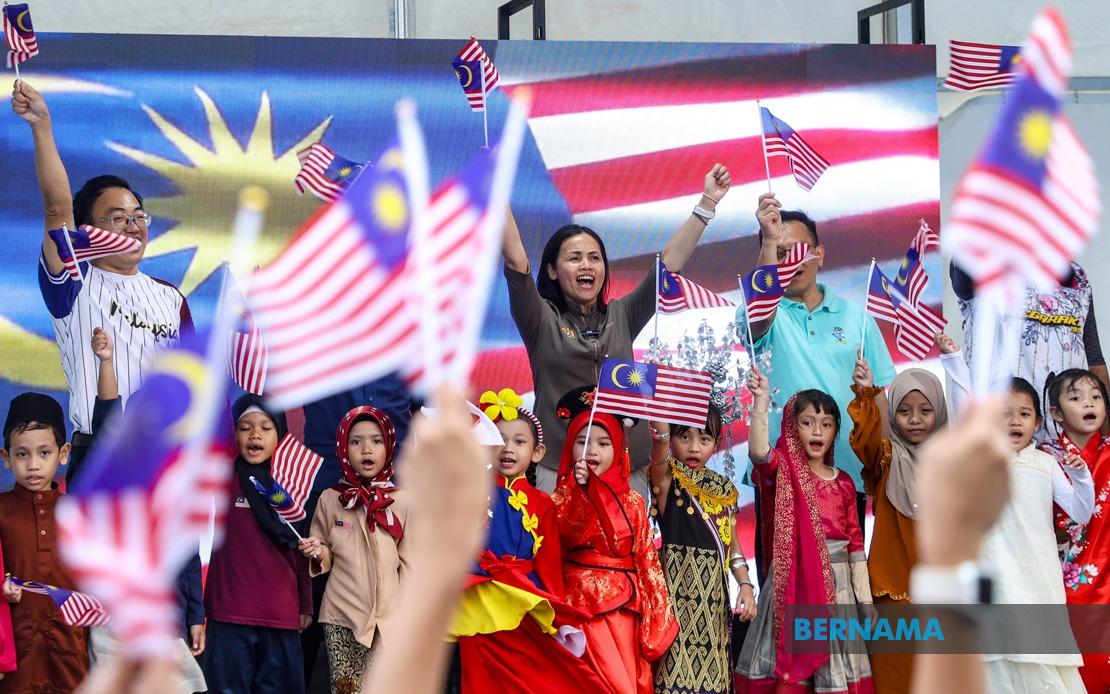
Deputy Communications Minister Teo Nie Ching has categorically denied allegations that have surfaced on social media linking her to gang-related activities and a motor vehicle accident currently under police investigation, describing the accusations as deliberately fabricated and designed to damage her reputation. Speaking at a public event in Kulai on Thursday, the DAP national vice-chairman characterised the claims as demonstrably false, attributing their spread to newly created accounts established with the explicit purpose of making unfounded allegations against her.
The allegations represent a concerning case of coordinated disinformation in Malaysia's digital landscape, where sophisticated social media tactics are being deployed to target political figures. Rather than presenting substantive evidence of wrongdoing, the accusers have relied on photographs of Teo in ordinary social settings with various individuals, then used these images to construct inflammatory narratives linking her to criminal enterprises. This approach highlights how easily innocent social interactions can be weaponised in the age of unrestricted social media sharing, where context is stripped away and allegations can spread rapidly without verification.
Teo's political career spans nearly two decades, during which she has represented her constituency for 13 years as an elected Member of Parliament. Over such an extended period in public life, any politician inevitably encounters numerous individuals from diverse backgrounds at official functions, community events, and social gatherings. The defence that such routine encounters have been misrepresented as evidence of criminal association is particularly pertinent given how common and unremarkable such interactions are in political work.
The police response to these allegations has already begun to establish the contours of an actual investigation into gang-related activities in the state. Johor's police leadership has already announced the arrest of 13 suspects in connection with organised crime activities, suggesting that law enforcement has identified legitimate targets for investigation. Teo's explicit invitation for police to conduct a thorough and impartial investigation demonstrates confidence in her innocence and reflects an appropriate trust in institutional processes over the court of social media opinion.
The strategic deployment of fake news to target political opponents represents a growing challenge for Malaysia's democracy and civil society. Teo's observations about the difficulty of containing misinformation once it spreads are borne out by practical experience—platform operators such as Meta typically retain control over account suspensions and content removal decisions, meaning that victims of coordinated campaigns often find themselves unable to act with sufficient speed to prevent reputational harm. This structural vulnerability creates opportunities for malicious actors to target individuals knowing that remedial action will inevitably lag behind the spread of false information.
The DAP leader has taken appropriate institutional steps to address the disinformation campaign by lodging formal complaints with both the Malaysian Communications and Multimedia Commission and the police, while also supporting related action taken by fellow party members. Senai assemblyman Wong Bor Yang similarly filed a police report against the defamatory posts, demonstrating a coordinated response from the party to these allegations. Such institutional engagement is essential for establishing an official record and enabling authorities to investigate the sources and motivations behind the campaign.
Teo's call for the public to exercise critical thinking before believing unverified social media claims addresses a fundamental challenge in combating misinformation—the tendency of many people to share content without verification. In an environment where false allegations can spread exponentially within hours, individual media literacy becomes a crucial defence mechanism. However, this burden cannot fall entirely on ordinary citizens; platforms themselves must invest in verification systems and take more aggressive action against coordinated inauthentic behaviour.
The incident underscores how political polarisation in Malaysia has been amplified by digital technologies that enable the rapid dissemination of unvetted claims. The creation of multiple new accounts specifically to attack a single individual suggests a deliberate, organised effort rather than spontaneous grassroots commentary. Such coordinated campaigns raise questions about who is funding and orchestrating these efforts, and whether there are political motivations behind the timing and targeting of these accusations.
For ordinary Malaysians navigating an increasingly complex information ecosystem, Teo's experience offers practical lessons about the importance of source verification, the prevalence of fabricated accounts designed purely for spreading disinformation, and the limitations of existing regulatory mechanisms in containing false claims. The case also demonstrates why social media literacy and critical consumption of online information have become essential skills in contemporary Malaysia, where political allegation and substantiated fact can become dangerously conflated in public discourse.
Moving forward, the police investigation will provide an opportunity to establish whether any actual evidence of criminal association exists or whether the allegations represent nothing more than a sophisticated disinformation campaign designed to exploit ordinary social interactions for political purposes. The transparency of that investigative process and the eventual outcomes will be instructive for how Malaysian institutions address similar challenges in the future, particularly as digital platforms continue to evolve and create new opportunities for coordinated manipulation of public opinion.

