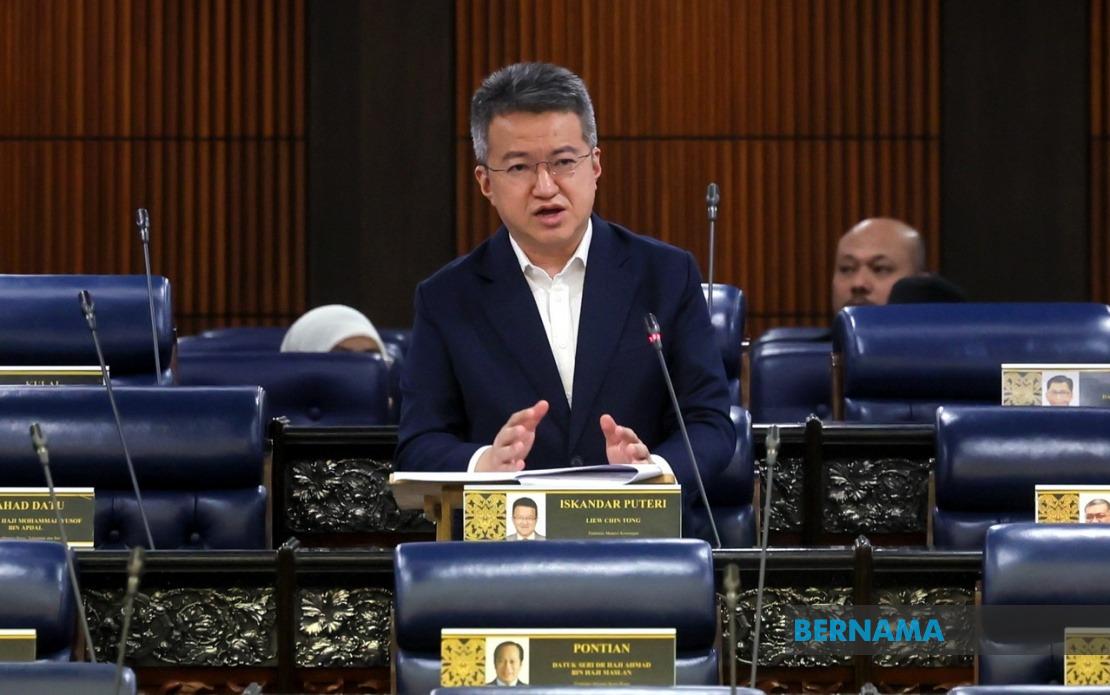
Deputy Finance Minister Liew Chin Tong categorically denied claims that fugitive businessman Low Taek Jho—better known as Jho Low—slipped into Malaysia alongside a Chinese delegation last year to conduct confidential discussions regarding the resolution of the 1Malaysia Development Berhad scandal. His brief denial came during parliamentary Question Time in response to a supplementary query from Syed Saddiq Syed Abdul Rahman of MUDA-Muar, which followed media reports suggesting such a clandestine meeting had occurred in late 2024 involving officials from the Ministry of Finance.
The allegation itself touches on one of Malaysia's most significant financial scandals in recent history. Syed Saddiq, drawing from published accounts, suggested that Jho Low had participated in secret negotiations aimed at structuring a repayment arrangement for stolen 1MDB funds. The prospect that Malaysia's most wanted financial fugitive could move about the country undetected, particularly to broker a settlement with government authorities, carries substantial implications for both national security and the credibility of enforcement agencies tasked with apprehending him.
In his substantive parliamentary remarks addressing the broader 1MDB recovery agenda, Liew outlined the government's continuing determination to pursue asset recovery through multiple legal channels. The administration is prosecuting both criminal charges and civil claims designed to reclaim funds siphoned from the development fund—a scheme that ultimately defrauded the nation of billions in ringgit. This multi-pronged approach reflects recognition that different judicial mechanisms serve different strategic objectives in dismantling the financial architecture constructed to launder stolen wealth.
The most visible recent success in this recovery effort came through the conviction of former Prime Minister Datuk Seri Najib Tun Razak. On December 26, 2025, the High Court handed down a 15-year prison sentence and levied a RM11.38 billion financial penalty against Najib following his conviction on twenty-five separate charges encompassing money laundering and abuse of power in pursuit of bribes connected to 1MDB. This landmark judgment represented a culmination of years of investigation and litigation, establishing legal precedent for prosecuting high-level political figures implicated in financial crimes of this magnitude.
Beyond Najib's case, authorities are pursuing Datin Seri Rosmah Mansor in civil litigation, seeking recovery of approximately US$380 million—equivalent to roughly RM1.56 billion—allegedly deployed for acquisition of luxury commodities including designer handbags and jewellery using diverted 1MDB resources. These civil actions against family members and associates of the former administration demonstrate the government's determination to trace and retrieve assets purchased through misappropriated funds, regardless of the sophistication employed in disguising their origins.
The centrepiece of remaining enforcement efforts targets Jho Low himself, whom authorities identify as the principal architect orchestrating the original 1MDB embezzlement. Against Low, the government has initiated both criminal prosecution and a substantial civil claim demanding recovery of US$3.78 billion, approximately RM15.4 billion, representing his alleged proceeds from the scheme. That this figure dwarfs most other individual claims underscores Low's prominent role in conceptualising and executing the theft.
The broader financial devastation inflicted by the 1MDB scandal extends well beyond simple theft of government assets. According to Liew's parliamentary statement, the fraud has generated four distinct categories of economic harm to Malaysia. Direct financial losses represent only the most obvious injury—the actual sum of money stolen from state coffers. Equally consequential are opportunity costs, reflecting infrastructure projects, healthcare initiatives, and development programmes that never materialised because allocated capital was diverted into private accounts and shell companies.
Additionally, the government must contend with irrecoverable losses—funds already consumed, laundered through international banking systems, or converted into assets now beyond retrieval through legal action. Perhaps most intangible yet strategically damaging is the reputational injury sustained by Malaysia within global financial and diplomatic circles. The 1MDB scandal diminished investor confidence, complicated diplomatic relations, and cast a shadow over Malaysia's governance and regulatory frameworks during a critical period for Southeast Asian economic positioning.
The denial of Jho Low's clandestine entry into Malaysia must be understood within the context of this comprehensive recovery campaign. Should a fugitive of Low's profile genuinely have accessed Malaysian territory for negotiations, it would represent either a stunning failure of border security and intelligence operations or a controversial informal settlement process conducted without public knowledge. Either scenario would undermine public confidence in institutional capacity to pursue accountability and secure assets. Liew's emphatic rejection attempts to foreclose such damaging insinuations while maintaining momentum for more conventional legal recovery channels.
For Malaysian citizens and regional observers, the 1MDB saga remains a cautionary narrative about institutional vulnerability to sophisticated financial manipulation at the highest governmental levels. The conviction of Najib and sustained pursuit of other principals including Jho Low signal determination to establish consequences for large-scale corruption. Yet the fugitive status of Low himself—who has evaded international law enforcement across multiple jurisdictions—highlights the practical challenges confronting authorities even in documented cases with substantial evidence and sustained political will to prosecute. The alleged secret meeting, whether real or speculative, underscores how the unresolved aspects of this scandal continue generating uncertainty and demands for clarification on whether formal settlements have been contemplated outside established judicial processes.

