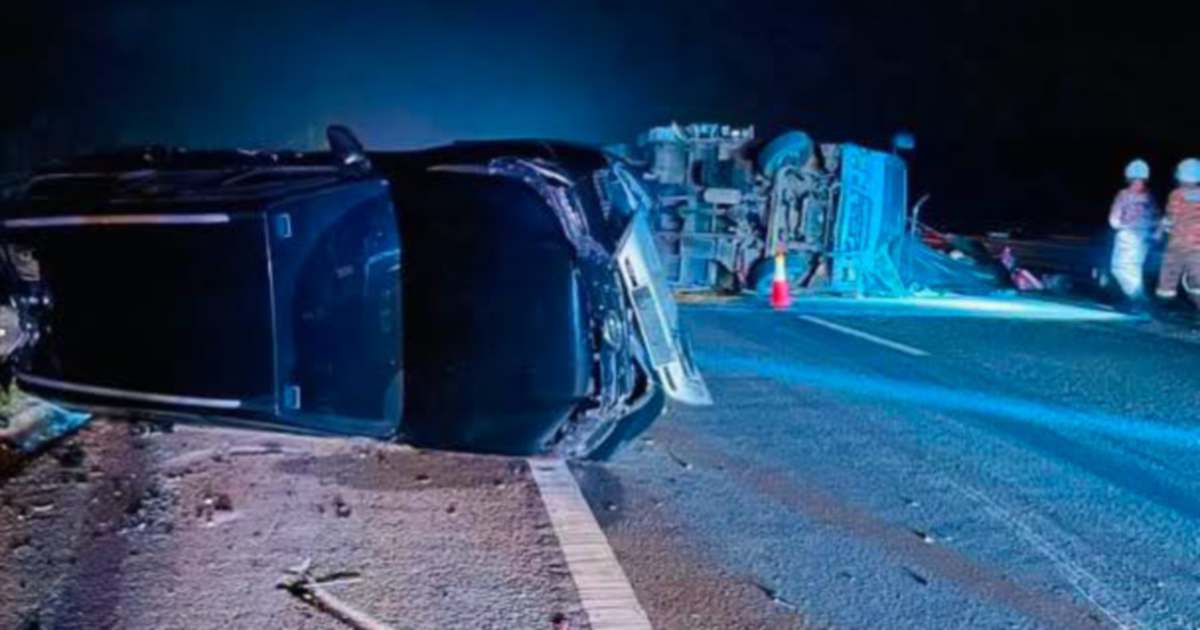
The Deputy Prime Minister's media contingent narrowly avoided serious harm when their convoy was caught up in a multi-vehicle incident on the East Coast Expressway near Maran, Pahang, in the pre-dawn hours. The accident, which left seven occupants injured across three vehicles at the Km144 marker of the expressway, highlighted the occupational hazards faced by journalists and media professionals who follow high-ranking government officials on official duties.
Three of the injured were media officers directly attached to the office of Datuk Seri Dr Ahmad Zahid Hamidi, who holds the position of Deputy Prime Minister. The fact that these communications professionals sustained injuries despite protective measures and modern vehicle safety features underscores how unpredictable road incidents can be, even on well-maintained highway corridors. The early morning timing of the collision—occurring in the dark when visibility is reduced and road conditions require heightened alertness—added another layer of risk to what may have been routine overnight travel.
The East Coast Expressway, stretching across Pahang, Terengganu, and Kelantan, remains a critical artery for both commerce and official government movement across the region. The expressway's Pahang section, which includes the Maran stretch where this incident occurred, experiences significant daily traffic volumes. Early morning hours, typically between midnight and dawn, see a particular blend of long-distance freight traffic, inter-state commuters, and official convoys, creating a complex traffic environment where collision risks can escalate if drivers are fatigued or road conditions deteriorate.
The involvement of media personnel in the accident raises questions about the duty of care extended to journalists and support staff who work in proximity to ministerial delegations. Media officers assigned to high-ranking officials often work under tight schedules and demanding conditions, travelling at irregular hours to cover ministerial announcements, site visits, and official events. The physical toll of such assignments—fatigue, irregular sleep patterns, and the pressure to maintain communication schedules—can indirectly influence safety outcomes on the road.
The fact that all three media officers escaped serious injury appears to be a matter of fortunate timing and possibly the safety features of modern vehicles. Three-vehicle collisions, particularly on expressways where speeds tend to be higher than on regular roads, typically carry elevated risk of severe injury or fatality. The nature and severity of injuries sustained by the other four accident victims—who were not identified as being part of the Deputy Prime Minister's team—remain unclear from initial reports, though their condition would help determine whether the incident should trigger broader road safety reviews.
Road safety on Malaysian expressways remains an area of ongoing concern for authorities and safety advocates. The East Coast Expressway, despite its relatively modern infrastructure, experiences periodic accidents that serve as reminders of the importance of speed compliance, vehicle maintenance, and driver fatigue management. Official delegations and media teams, despite their importance, are not exempt from the risks that all highway users face. The incident underscores the universal nature of road hazards and the need for consistent application of safety protocols regardless of passenger status or official position.
The timing and location of the Maran accident may prompt a review of standard operating procedures for ministerial convoys, particularly regarding nighttime travel on expressways. Route planning, vehicle spacing, speed management, and driver rest requirements are all factors that could be examined to prevent similar incidents. The East Coast Expressway Authority and relevant transport safety bodies may view this incident as an opportunity to strengthen guidelines for official motorcades and their support vehicles.
The broader Malaysian media community, which often covers government officials and ministers, would likely take note of this accident as a reminder of workplace safety considerations. Journalists and media support staff who follow officials face unique occupational hazards that go beyond typical newsroom assignments. The combination of tight deadlines, irregular schedules, and the need to travel with fast-moving motorcades creates an environment where safety risks require deliberate management and attention.
As investigations into the precise cause of the three-vehicle collision proceed, officials will examine factors including weather conditions, vehicle speeds, driver conditions, and any mechanical issues that may have contributed. Early morning expressway travel, particularly in Pahang where road sections can encounter mist and variable visibility, demands careful attention from all parties. The fortunate outcome for the Deputy Prime Minister's media team contrasts with the potential for more serious consequences, a reality that underscores why road safety remains a priority issue for Malaysian authorities and road users across the region.

