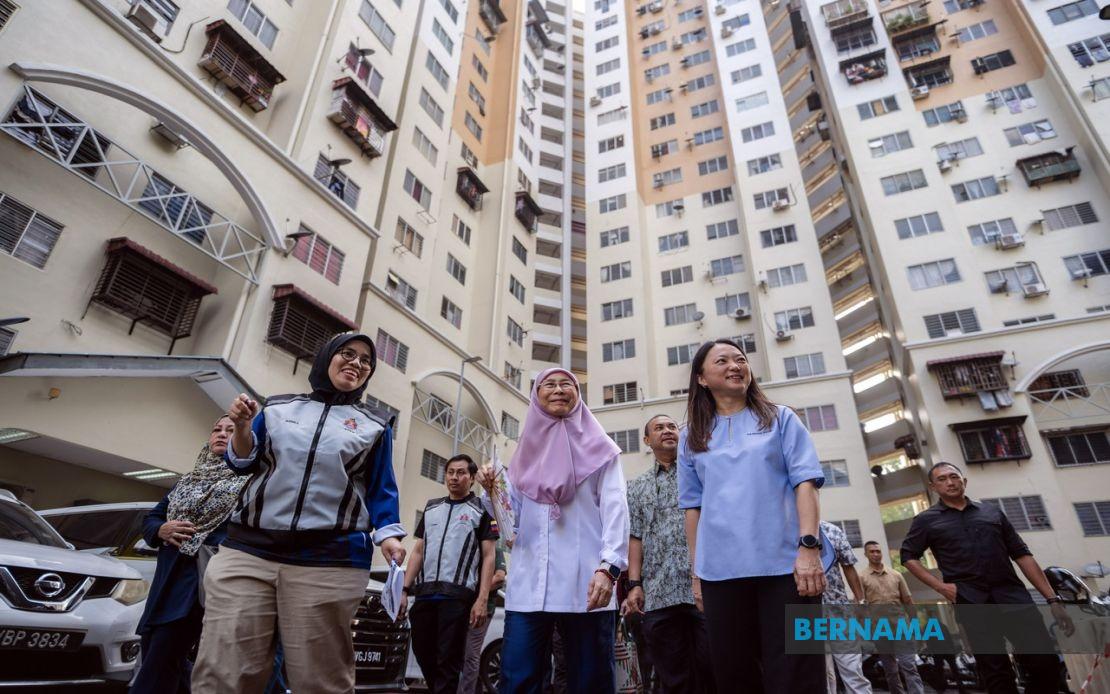
The Desa Tun Razak People's Housing Project in Kuala Lumpur has marked another milestone in the capital's public housing renewal drive with the completion of comprehensive upgrading works valued at RM9.6 million. The project, which serves more than 8,000 residents since its establishment in 1998, now stands as one of 22 completed upgrades among 61 planned PPR renovation initiatives across the capital.
The completion reflects the government's commitment to systematic, preventive maintenance rather than reactive repairs at public housing estates. Minister in the Prime Minister's Department (Federal Territories) Hannah Yeoh, who inspected the finished works, emphasised that the approach marks a significant departure from ad hoc maintenance practices that have historically plagued PPR facilities. The shift towards dedicated funding demonstrates recognition that deteriorating infrastructure compromises resident safety and quality of life, particularly in densely populated housing schemes where maintenance costs accumulate rapidly without strategic intervention.
The RM300 million allocation approved by the government this year represents unprecedented investment in PPR infrastructure across Kuala Lumpur. Yeoh highlighted that all of the capital's Members of Parliament collectively endorsed the funding strategy, signalling rare cross-party consensus on the necessity of upgrading public housing. This unity of approach suggests that the issue transcends typical political divisions, reflecting shared concern among elected representatives about the condition of housing facilities in their constituencies.
At Desa Tun Razak, the completed works addressed critical safety vulnerabilities exposed by fire incidents that plagued the development last year. The upgrading programme included installation of improved fire prevention systems and modernised electrical wiring infrastructure, representing investments targeted directly at resident protection. These measures acknowledge that older PPR buildings often contain outdated electrical systems prone to faults, and deficient fire safety apparatus that puts lives at risk. Resurfacing of roads within the development also improved accessibility and drainage, reducing hazards associated with deteriorated pavements.
The financial breakdown of expenditure at Desa Tun Razak reveals how renovation budgets are allocated across physical infrastructure. Kuala Lumpur Mayor Datuk Fadhlun Mak Ujud disclosed that RM7 million of the RM9.6 million total went to repainting works, enhancing the visual environment and applying protective coatings to building exteriors. A further RM1.68 million addressed fire prevention systems and electrical wiring upgrades, while nearly RM1 million funded road resurfacing. Complementary work on fire riser systems and drainage infrastructure rounded out the comprehensive scope of intervention.
The scale of this single project underscores the substantial investment required to bring ageing PPR facilities to acceptable standards. With 22 projects completed and 39 remaining from the original 61, the authorities are tracking to complete all upgrading works under the RM300 million allocation by year-end, according to Fadhlun's projection. This timeline assumes sustained momentum and absence of implementation bottlenecks, which in Malaysian infrastructure projects sometimes emerge unexpectedly. The overall investment amounts to approximately RM4.9 million per project on average, though individual circumstances vary considerably.
Beyond physical infrastructure, the authorities have identified secondary challenges requiring creative solutions. Parking shortages at Desa Tun Razak represent a persistent amenity problem in densely packed PPRs where original designs frequently underestimated resident vehicle ownership projections. The Kuala Lumpur City Hall announced plans to identify suitable vacant land for temporary parking areas, indicating that comprehensive upgrading extends beyond utilities and safety systems to encompass the broader residential experience. This pragmatic response acknowledges that infrastructure quality encompasses not merely structural safety but also daily convenience and resident satisfaction.
The involvement of elected representatives in the upgrading initiative reflects the political salience of PPR conditions. Bandar Tun Razak Member of Parliament Datuk Seri Dr Wan Azizah Wan Ismail used the completion event to appeal to residents for stewardship of upgraded facilities, emphasising that government investment will yield lasting benefits only through resident cooperation in maintaining improvements. Her message articulates a partnership model whereby authorities provide enhanced infrastructure whilst residents assume responsibility for preservation through care and protection of common areas and facilities.
This partnership appeal addresses a genuine challenge in PPR management: the tendency for newly upgraded facilities to deteriorate rapidly without community engagement in their upkeep. Cultivating a culture of collective responsibility for public and private property proves essential to extending the lifespan of improvements and maximising returns on government expenditure. Without such cultural reinforcement, even substantially upgraded housing schemes risk premature degradation, necessitating repeated cycles of expensive rehabilitation.
The Desa Tun Razak completion signals broader implications for Malaysian urban housing policy. The systematic approach to PPR upgrading contrasts with earlier periods of neglect that allowed public housing conditions to deteriorate significantly. This reversal reflects growing political recognition that adequate housing represents a fundamental governance responsibility, particularly regarding lower-income populations dependent on public provision. The cross-party parliamentary endorsement suggests this commitment may persist across electoral cycles, providing residents with confidence in sustained investment.
Looking forward, the remaining 39 PPR projects require maintenance of current implementation pace and continued budget allocation. The completion of 22 projects within the initial phase demonstrates feasibility, though the remaining work must navigate potential cost escalations and supply chain complications that increasingly characterise Malaysian infrastructure delivery. Success in completing the full programme by year-end would represent a notable achievement in public housing renewal, establishing a replicable model for other Malaysian cities with aging PPR stocks.
The Desa Tun Razak upgrading programme ultimately reflects a policy inflection point in Malaysian public housing governance. Rather than allowing PPR facilities to stagnate or decline, authorities have committed substantial resources to systematic renewal addressing safety, infrastructure, and amenity provision. This investment acknowledges that public housing, properly maintained, serves essential social functions whilst enhancing urban livability. The challenge ahead involves translating initial completion successes into sustained commitment and expanding successful models to address similar deficiencies across Malaysia's broader PPR estate.

