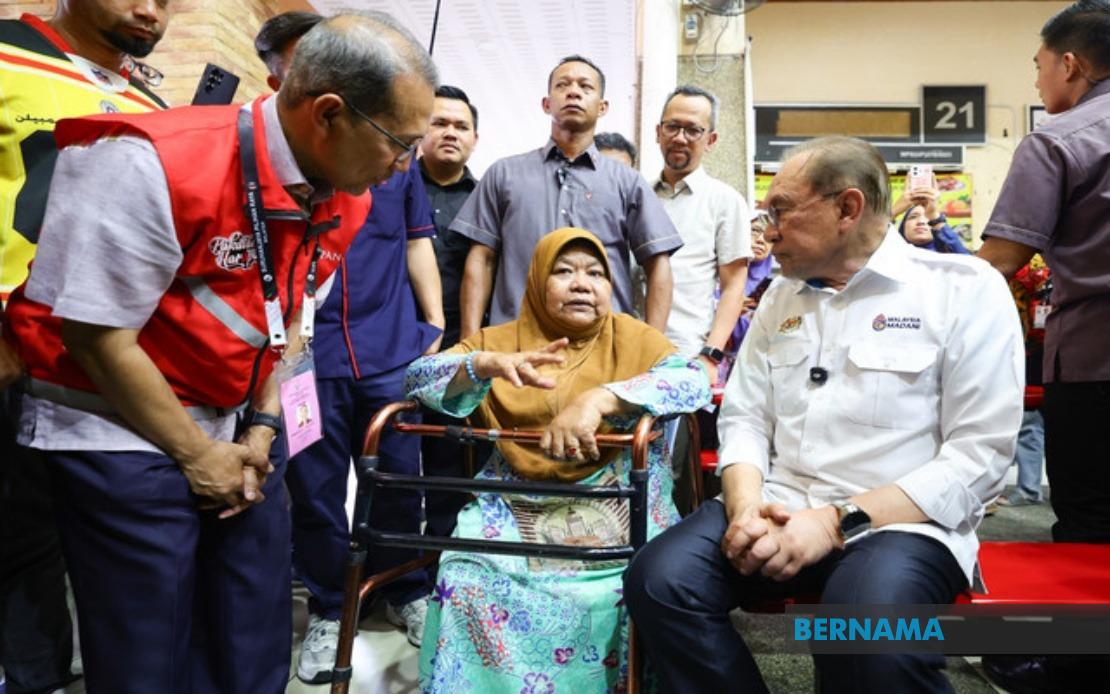
A 68-year-old woman with disabilities fulfilled a cherished ambition by riding her three-wheeled motorcycle through drizzle to meet Prime Minister Datuk Seri Anwar Ibrahim during a campaign stop in Negeri Sembilan. Despite losing her left leg in an accident three and a half decades ago, Jumaah Mohd Alif travelled from her home in Kampung Gedung Lalang to Benteng Ampangan, determined to shake the Prime Minister's hand and exchange words with the nation's leader. The encounter represented far more than a passing political moment for Jumaah—it symbolised the power of accessibility and inclusion when political leadership actively engages with ordinary Malaysians, particularly those facing physical challenges.
Jumaah's journey on wet roads underscores a persistent challenge facing persons with disabilities in Malaysia: the lack of adequate accessible infrastructure and transport options. Her choice to use a three-wheeled motorcycle, rather than public transport or a personal car, reflects the adaptive solutions many PwDs must devise when conventional alternatives fail them. For someone who has navigated life with a prosthetic limb for over three decades, the motivation to travel during inclement weather speaks to the depth of her aspiration. News of the Prime Minister's visit had reached Kampung Gedung Lalang through word of mouth among villagers—a reminder that engagement with rural and semi-rural communities often depends on informal networks rather than official communication channels.
The significance of this encounter extends beyond an individual success story. Jumaah's public appearance at the Benteng Ampangan rally brought visibility to the experiences of persons with disabilities in Malaysia, a demographic often marginalised in political discourse. She had previously only glimpsed the Prime Minister on television screens or from a distance, never imagining she would have the opportunity for direct personal interaction. This disparity between the mediated political experience available to most citizens and the possibility of face-to-face engagement highlights how political accessibility—both physical and symbolic—remains unequally distributed across Malaysian society.
During the campaign swing, Jumaah articulated a concern that resonates with millions of seniors and disabled Malaysians: the need for sustained government priority on welfare provision. Her remarks to the media reflected not merely personal grievance but a broader plea for institutional commitment to vulnerable populations. As Malaysia's population ages and the number of persons with disabilities increases, the adequacy of support systems becomes an urgent policy question. Senior citizens living in rural areas, particularly those with physical limitations, often face compounded challenges in accessing healthcare, social services, and economic opportunities.
Prime Minister Anwar Ibrahim's campaign visit to Negeri Sembilan occurred amid the state's electoral contest, with the 16th Negeri Sembilan state election scheduled for August 1. The Pakatan Harapan coalition, of which Anwar serves as chairman, sought to consolidate momentum through intensive grassroots engagement across the state. Campaign rallies in towns like Seremban and surrounding areas functioned both as political mobilisation events and as opportunities for direct constituent contact. Jumaah's presence at the Benteng Ampangan gathering contributed to what campaign organisers likely framed as authentic community representation and popular enthusiasm.
The timing of Anwar's Negeri Sembilan visit fell during a compressed electoral cycle. The Election Commission designated July 28 for early voting, allowing those unable to cast ballots on the main polling day to participate in advance. This two-tiered voting arrangement, while intended to facilitate participation, can present logistical difficulties for voters with mobility challenges or those residing in areas distant from designated early voting centres. Jumaah's initiative in personally travelling to meet the Prime Minister contrasted sharply with the limited accommodations typically available to voters with disabilities seeking to exercise their democratic rights.
The narrative of Jumaah's journey also illuminates the resilience embedded within Malaysian communities facing systemic obstacles. Her three-wheeled motorcycle, a common mode of transport for many working-class and rural Malaysians, served as both practical conveyance and symbol of adaptation. For decades, Jumaah has navigated a physical landscape not designed with her needs in mind, relying on ingenuity and determination to maintain independence and participate in community life. Her decision to brave wet weather and travel some distance to encounter the Prime Minister demonstrated the value placed on political engagement and democratic participation, even when institutional structures fail to facilitate such involvement adequately.
This encounter raises important questions about the state of disability inclusion in Malaysia's political and social spheres. While individual moments of political engagement offer emotional rewards and media interest, the underlying infrastructure supporting persons with disabilities remains fragmented and inadequate. Public transport systems, government buildings, and campaign venues frequently lack appropriate accessibility features. Employment discrimination, unaffordable assistive devices, and limited rehabilitation services continue to constrain opportunities for economic and social participation. Jumaah's triumphant meeting with the Prime Minister, while genuinely meaningful to her personally, occurs against a backdrop of systemic challenges that affect millions of disabled Malaysians daily.
The implications of this encounter extend throughout Southeast Asia, where many nations grapple with similar questions about disability inclusion and social policy. Malaysia, as a regional economic leader, has the capacity to establish higher standards for accessibility and support systems benefiting persons with disabilities. Yet the continuing necessity for a 68-year-old woman with a prosthetic limb to undertake a challenging motorcycle journey merely to meet her nation's leader suggests substantial progress remains necessary. Political commitment expressed through symbolic encounters must translate into concrete policy reforms: enhanced accessibility standards, improved social security provisions, employment protections, and healthcare access.
Looking forward, Jumaah's experience offers a template for political leaders seeking genuine engagement with marginalised communities. Meeting constituents in their own neighbourhoods, acknowledging their specific challenges, and committing to substantive policy responses requires more sustained effort than campaign rally appearances. The Negeri Sembilan state election campaign, like electoral contests throughout Malaysia, presents opportunities for candidates and established politicians to address disability inclusion directly. Whether such encounters catalyse meaningful policy change or remain isolated feel-good moments depends on follow-through and institutional commitment extending far beyond the voting booth.
For Jumaah, the encounter will remain a cherished memory, a moment when the machinery of state briefly recognised her individual humanity and aspirations. Yet for Malaysia's broader project of inclusive development, the more important question concerns whether such personal moments can generate momentum toward systemic transformation benefiting all persons with disabilities and elderly citizens facing similar barriers to full participation in political and social life.

