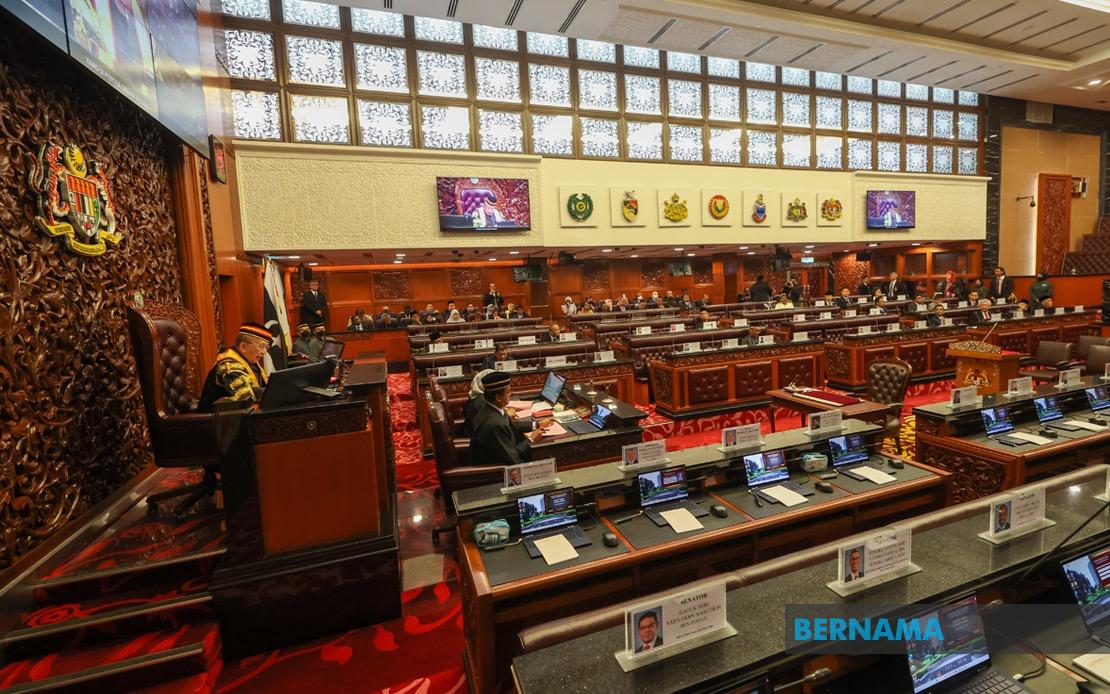
Malaysia's Dewan Negara has concluded its Second Meeting of the Fifth Session of the 15th Parliament following a 10-day sitting that ended on August 4, with legislators giving approval to the National Trust Fund (KWAN) Bill 2026 and the Statistics Bill 2026. The two legislative measures, tabled respectively by Deputy Finance Minister Liew Chin Tong and Deputy Economy Minister Datuk Mohd Shahar Abdullah, represent the government's commitment to modernising institutional frameworks governing public finance and national data collection. The KWAN Bill aims to reinforce governance structures surrounding the National Trust Fund by introducing stricter protocols for fund withdrawals, addressing longstanding concerns about transparency and discipline in managing these strategic reserves. Meanwhile, the Statistics Bill establishes a refreshed legal foundation for Malaysia's statistical infrastructure, equipping government agencies with contemporary tools needed to collect, manage and disseminate data in an increasingly digital economy.
The parliamentary sitting, which commenced on July 20, functioned as a comprehensive forum for discussing broad economic policy direction and the government's response to emerging challenges affecting Malaysia's development trajectory. Legislators examined measures designed to shore up national governance quality, ensure long-term fiscal sustainability, enhance economic competitiveness, bolster energy security and facilitate inflows of foreign capital into priority sectors. The breadth of issues deliberated underscores the government's recognition that Malaysia faces multifaceted pressures requiring coordinated policy responses across several domains simultaneously.
Early in the sitting, government officials informed the Dewan Negara that appropriate safeguarding measures would be deployed to shield public welfare and sustain economic growth in light of escalating geopolitical turbulence in West Asia. The government outlined a three-pronged approach encompassing securing reliable access to essential commodities, preventing inflationary pressures from eroding household purchasing power, providing targeted support to vulnerable industries and fortifying the broader economic architecture against external shocks. This reassurance proved timely given regional tensions and their potential spillover effects on global energy markets and supply chains that Malaysia depends upon.
Prime Minister Datuk Seri Anwar Ibrahim addressed parliamentary concerns regarding the Retirement Fund (Incorporated) (KWAP) performance, advocating for balanced assessment of the institution's track record. KWAP reported net profits of RM12.9 billion, demonstrating robust financial performance as a pension administrator. However, the Prime Minister acknowledged that KWAP's investment in eFishery, which faced operational difficulties, had yielded valuable strategic insights informing future investment protocols. The candid discussion reflected a maturing institutional culture willing to examine both successes and setbacks transparently.
State postal operator Pos Malaysia featured in parliamentary discourse concerning its structural transformation agenda designed to reverse mounting operational losses. The government explained that the company intends pursuing network optimisation, accelerating adoption of digital service channels and exercising rigorous financial discipline. Deliberations also centred on establishing a dedicated Postal Service Fund as a sustainable long-term financing mechanism, signalling government commitment to preserving Malaysia's postal infrastructure despite digital disruption threatening conventional mail services globally.
Energy security emerged as a dominant theme during the July 23 sitting, with government ministers briefing legislators on measures to strengthen Malaysia's energy resilience. Officials outlined preliminary assessment of establishing a strategic petroleum reserve, examining fiscal requirements, operational logistics, governance arrangements and comparative international approaches. The discussion reflected heightened awareness that energy independence and supply reliability constitute critical foundations for sustained economic development in an uncertain geopolitical environment.
The 20-year fuel supply agreement recently concluded with Russia figured prominently in energy discussions, with Economy Ministry officials characterising the arrangement as complementary to Malaysia's National Energy Transition Roadmap (NETR) objectives. The agreement encompasses petrol, diesel, crude oil and natural gas supplies, positioning Russia as a diversified source of energy commodities. This strategic diversification away from traditional suppliers reflects Malaysia's pragmatic approach to securing reliable energy access while pursuing longer-term sustainability goals.
Investment inflows continued commanding legislative attention, with government data revealing that approved Japanese capital investments in Malaysia's electrical and electronics sector reached RM10.5 billion spanning 46 projects between 2021 and 2025. These investments are projected to generate 9,009 employment opportunities, reinforcing Malaysia's positioning as an attractive destination for high-technology manufacturing within Southeast Asia. The E&E sector remains strategically vital for Malaysia's industrial development aspirations and global competitiveness.
Government assertions regarding Malaysia's economic competitiveness featured prominently during the July 27 proceedings, with Deputy Economy Minister Mohd Shahar Abdullah assuring the chamber that Malaysia remains positioned to achieve placement among the world's 12 most competitive economies by the conclusion of the 13th Malaysia Plan (13MP). This outlook appears supported by Malaysia's improved standing in the 2026 World Competitiveness Ranking (WCR), suggesting that structural reforms and productivity enhancements are yielding measurable results. Enhanced competitiveness metrics carry significant implications for attracting investment and creating quality employment.
Development Financial Institutions received legislative scrutiny regarding performance accountability frameworks. Bank Negara Malaysia announced plans to introduce a new Performance Measurement Framework (PMF) for DFIs commencing July 1, 2027, establishing more rigorous evaluation standards encompassing developmental mandate fulfilment, measurable impact delivery, governance quality and operational efficiency. This institutional strengthening initiative reflects growing recognition that development finance requires sophisticated performance measurement mechanisms ensuring accountability while maintaining institutions' developmental missions.
Electric vehicle ecosystem advancement featured in deliberations concerning Malaysia's energy transition and automotive sector modernisation. The Ministry of Investment, Trade and Industry (MITI) outlined a strategy prioritising private sector participation in EV charging infrastructure expansion without imposing price controls on public charging services. As of May 31, Malaysia had deployed 6,416 public EV chargers nationally, representing steady progress toward electrifying transport networks. The private-sector-led approach suggests confidence in commercial viability of EV charging expansion.
Fiscal discipline and reform constituted recurring themes throughout the sitting, with Finance Ministry officials reporting that federal fiscal deficits had narrowed for the fifth consecutive year following implementation of comprehensive economic and fiscal reforms. Federal debt remained within statutory limits despite persistent global economic uncertainties. Deputy Finance Minister Liew highlighted that expenditure controls during the first half of 2024 achieved approximately RM5 billion in spending restrictions without compromising essential public service delivery. These achievements suggest the government's fiscal consolidation efforts are progressing while maintaining critical social and infrastructure investments.
The Dewan Negara President concluded the Second Meeting of the Fifth Session of the 15th Parliament, with reconvention details to be announced subsequently. The sitting underscored Malaysia's comprehensive policy engagement addressing interconnected challenges of fiscal sustainability, energy security, investment attraction and economic competitiveness, while maintaining institutional development and public welfare as priority considerations.

