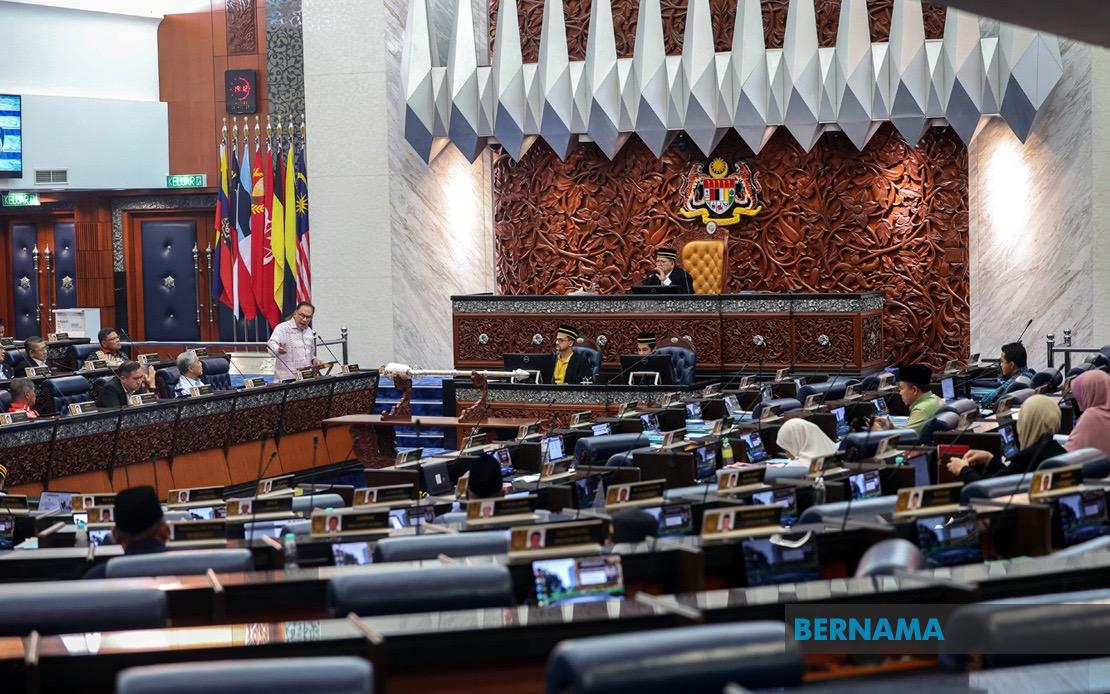
Parliament has given its backing to a significant fiscal manoeuvre, approving the channelling of RM14.5 billion in remaining proceeds from Malaysian Government Investment Issues directly into the Development Fund. The motion passed by majority voice vote on July 15 represents the government's mechanism for separating capital expenditure from operational costs within its borrowing framework, a critical distinction under Malaysia's fiscal rules.
The underlying context involves Malaysia's total MGII issuance estimated at RM95 billion across 2026, a borrowing programme divided among multiple fiscal objectives. Deputy Finance Minister Liew Chin Tong outlined the allocation during parliamentary debate, explaining that RM55 billion addresses the refinancing of existing MGII obligations coming due, while RM2 billion partially covers redemptions of Malaysian Islamic Treasury Bills, the shariah-compliant short-term instruments in the government's debt portfolio. The remaining RM38 billion slots into financing the projected 2026 fiscal deficit, though this component operates separately from the Development Fund transfer being approved.
The mechanics of the transaction reveal a narrower net position than headline figures suggest. Between January and May 2026, the government issued RM40 billion in new MGII. However, RM25.5 billion of this amount served to refinance maturing obligations rather than raise fresh capital. This leaves RM14.5 billion in net proceeds available for genuine new development spending, the figure now formally transferred to the Development Fund and subject to parliamentary oversight.
Malaysia's constitutional and legislative framework mandates distinct treatment of different expenditure categories. Operating expenses—salaries, administrative costs, routine services—must be covered entirely from tax revenue and government income, leaving no room for borrowing. Development expenditure, encompassing infrastructure projects, capital investments, and long-term asset creation, remains eligible for financing through government securities, MGII, and external borrowings. This structural separation aims to ensure that recurrent spending remains sustainable within the revenue base while permitting borrowing for nation-building investments that theoretically generate future returns.
The Development Fund itself operates as a receptacle for multiple funding streams beyond MGII proceeds. Transfers from the Consolidated Revenue Account, repayments of previous development loans, and various development-related receipts all feed into this account, creating a diversified financing pool for capital projects across federal, state, and federal territory domains. By centralising these resources, the government attempts to coordinate development spending and ensure transparency in capital allocation.
Deputy Minister Liew addressed a substantive concern raised during debate regarding potential "crowding out" effects in Malaysia's domestic financial market. When the government issues large volumes of securities, institutional investors such as the Employees Provident Fund and the Retirement Fund Incorporated may redirect capital from private sector investments toward government debt, potentially reducing credit availability and investment returns for businesses. Liew countered this concern by noting that the government has been progressively reducing new borrowing year on year, suggesting a declining trend rather than escalation in market pressures.
Furthermore, Liew framed government securities issuance as providing essential investment opportunities for major Malaysian financial institutions. Without domestic government debt markets offering competitive returns, large institutional funds might relocate capital overseas, depriving Malaysia of crucial long-term investment and potentially weakening demand for ringgit-denominated assets. This dynamic underscores a central tension in emerging market finance: maintaining fiscal discipline while preserving adequate domestic investment opportunities to anchor currency stability and financial system depth.
The parliamentary motion addresses only January to May 2026 MGII issuances; the government signalled intent to seek approval for remaining months' proceeds—June through December 2026—during the next parliamentary sitting. This staged approach distributes parliamentary scrutiny across multiple sittings, preventing one omnibus decision from obscuring the full-year fiscal picture. It also accommodates the practical reality that complete annual issuance projections may adjust based on revenue performance and borrowing requirements.
For Malaysian readers and regional observers, this transaction illuminates how the federal government operationalises its development agenda within formal fiscal constraints. The RM14.5 billion quantum, while substantial, represents measured capital formation rather than unrestricted spending. The approval process demonstrates parliamentary engagement with technical fiscal mechanics, though substantive debate focused narrowly on refinancing breakdown and crowding-out risks rather than the strategic merits of specific development projects funded from this pool.
The MGII instrument itself—marketed as an investment vehicle offering potentially attractive returns—has become integral to Malaysia's domestic debt management architecture. By maintaining regular issuances and channelling proceeds transparently through parliamentary approval, authorities seek to build confidence among institutional investors and retail subscribers. The ringgit-denominated nature of these securities anchors foreign exchange stability and encourages portfolio diversification within Malaysia's asset markets.
Looking forward, the trajectory of government borrowing patterns bears watching across Southeast Asia's major economies. Malaysia's emphasis on reducing new borrowing volumes annually, if sustained, suggests fiscal consolidation rather than structural deficit expansion. However, achieving this trajectory while maintaining development investment momentum requires either revenue growth, efficiency gains in operational spending, or strategic prioritisation of capital projects with highest economic returns. The parliamentary approval process itself, by forcing regular debate and disclosure, creates institutional pressure toward fiscal discipline that pure executive discretion might not generate.
The Development Fund transfer ultimately represents a routine but important housekeeping function within Malaysia's fiscal machinery. Yet its very routine nature—handled through technical parliamentary motion with majority voice votes—underscores how deeply embedded borrowing and capital allocation frameworks have become within Malaysia's governance systems. Whether this institutional architecture effectively channels borrowed resources into development spending that meaningfully raises productivity and living standards remains a question for longer-term assessment.

