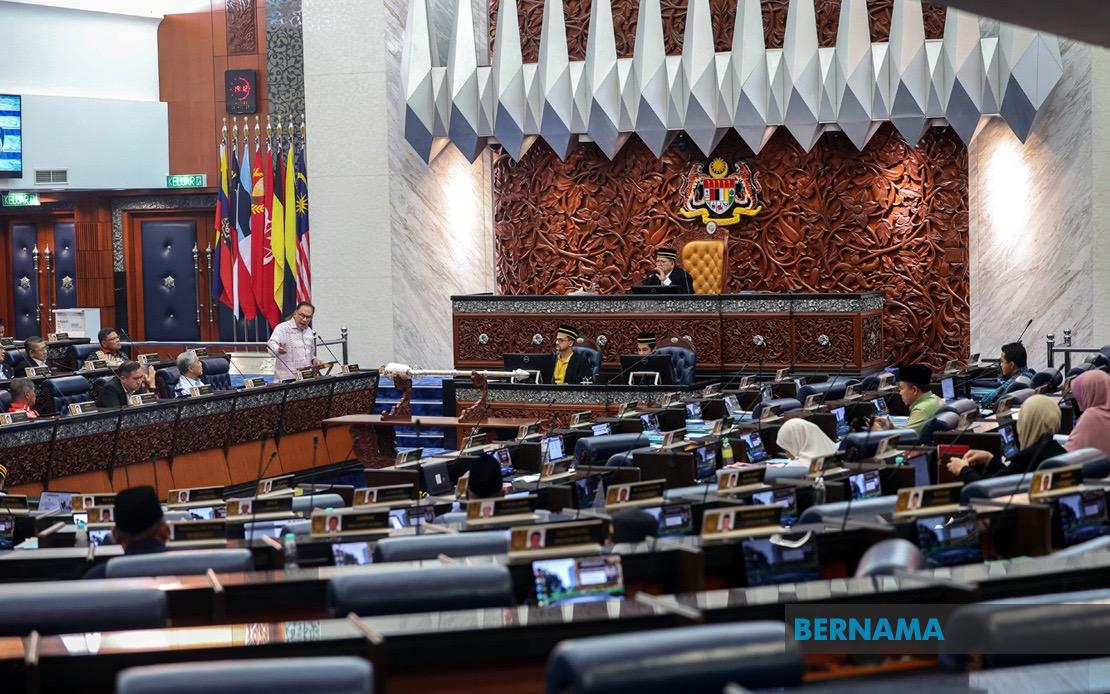
Parliament's lower house has given its backing to a reformed penalty framework within the Employment Insurance System (Amendment) Bill 2025, establishing graduated fines for companies that do not adequately notify the Social Security Organisation of available positions. The legislative action, completed on June 30 through majority voice vote, marks the culmination of parliamentary discussion involving representatives from both government and opposition parties, with 13 members contributing to deliberations before the measure advanced to approval.
The tiered fine structure addresses a longstanding compliance challenge within Malaysia's employment registration apparatus. Organisations failing to report vacancies will face an initial penalty of RM1,000, escalating to RM3,000 upon repeat breach and potentially reaching RM5,000 for persistent non-compliance. This progression emerged following refinement during the bill's journey through the upper chamber, which initially approved the revised language in March targeting Subsection 45F(4) of the original legislation.
Deputy Human Resources Minister Datuk Khairul Firdaus Akbar Khan characterised the adjustments as fundamentally rebalancing enforcement philosophy toward cooperative engagement rather than punitive action. His remarks stressed that the framework prioritises employer education and voluntary compliance, positioning the graduated penalties as measures of last resort rather than primary enforcement tools. This philosophical shift reflects growing recognition within government that sustainable compliance flows from clarity and support rather than deterrence alone, particularly given the diverse operational circumstances across Malaysia's business landscape.
The maximum penalty ceiling underwent substantial moderation during legislative refinement. The government's initial proposal contemplated fines reaching RM10,000, but extensive consultation with employer representatives and sector-specific engagement sessions led to the current RM5,000 ceiling, while the entry-level penalty was set at RM1,000. This calibration emerged from direct feedback gathered through PERKESO's advocacy initiatives across multiple industries nationwide, demonstrating how the legislative process incorporated practical concerns from the business community.
Crucially, the enforcement framework incorporates administrative safeguards intended to encourage voluntary correction before formal penalties apply. Companies receiving non-compliance notices will obtain opportunity periods enabling corrective action, with the government issuing compliance notices as an intermediary step before compound fines materialise. This graduated administrative approach acknowledges the practical reality that many compliance failures stem from ignorance or procedural confusion rather than deliberate evasion.
Parliamentary contributors emphasised the necessity for streamlined reporting mechanisms that do not impose excessive burden on enterprises, particularly smaller operations. The legislative debate recognised that the underlying objective—matching labour supply with demand to reduce unemployment and inform policy decisions—depends fundamentally on accessible, uncomplicated reporting systems. Without such infrastructure, even well-intentioned employers face barriers to compliance that arbitrary penalties cannot overcome.
Particularly significant concerns emerged regarding awareness gaps in rural and regional business communities. Members including Nurul Amin Hamid flagged potential compliance difficulties among enterprises in less urbanised areas, which may lack familiarity with notification obligations under the legislation. This observation points to a crucial implementation challenge: enforcement cannot succeed uniformly without accompanying capacity-building and communication efforts specifically tailored to regional contexts and smaller-scale operations frequently excluded from government engagement processes.
The legislative discussion also surfaced questions about employment transparency and equitable access. Syerleena Abdul Rashid stressed that government-administered job portals offering transparent advertising mechanisms would reinforce fair access principles, suggesting that the penalty framework functions most effectively when paired with positive incentives encouraging centralised job posting. This perspective links vacancy notification requirements to broader equity objectives rather than treating reporting as administrative formality disconnected from labour market fairness.
For Malaysian employers, this amendment introduces legal obligations requiring careful attention to compliance calendars and procedural requirements. The graduated penalty structure signals that initial oversights receive proportionate responses, yet persistent non-compliance carries escalating financial consequences reaching meaningful levels. Organisations would be prudent to audit current practices against notification requirements and establish internal systems ensuring timely reporting to PERKESO before the legislative framework takes operational effect.
The implications extend beyond individual compliance burdens toward systemic labour market efficiency. Accurate vacancy data collected through mandatory reporting mechanisms provides government agencies, researchers, and policymakers with empirical foundations for understanding employment dynamics, sector-specific challenges, and emerging skill mismatches. As Malaysia navigates post-pandemic economic recovery and competition for skilled talent, such information infrastructure becomes increasingly valuable for targeted policy intervention and workforce development programming.
From a regional perspective, Malaysia's approach positions the nation among Southeast Asian economies strengthening formal employment registration and labour market transparency. Neighbouring countries face similar challenges regarding informal employment arrangements and incomplete vacancy data, making Malaysia's legislative experience potentially instructive for regional peers considering comparable reforms. The emphasis on progressive penalties coupled with education and administrative safeguards offers a practical model balancing regulatory effectiveness with business consideration.
Implementation success will ultimately depend on PERKESO's capacity to communicate requirements clearly, provide accessible reporting platforms, and deliver technical assistance to struggling employers. The amendments' educational emphasis reflects sophisticated understanding that compliance cultures develop through supportive systems rather than enforcement severity alone. Whether the framework achieves its intended outcomes of improved labour market data and reduced employer non-compliance will emerge during the implementation period, likely revealing whether graduated penalties paired with administrative forbearance effectively motivates voluntary cooperation across Malaysia's economically diverse business environment.

