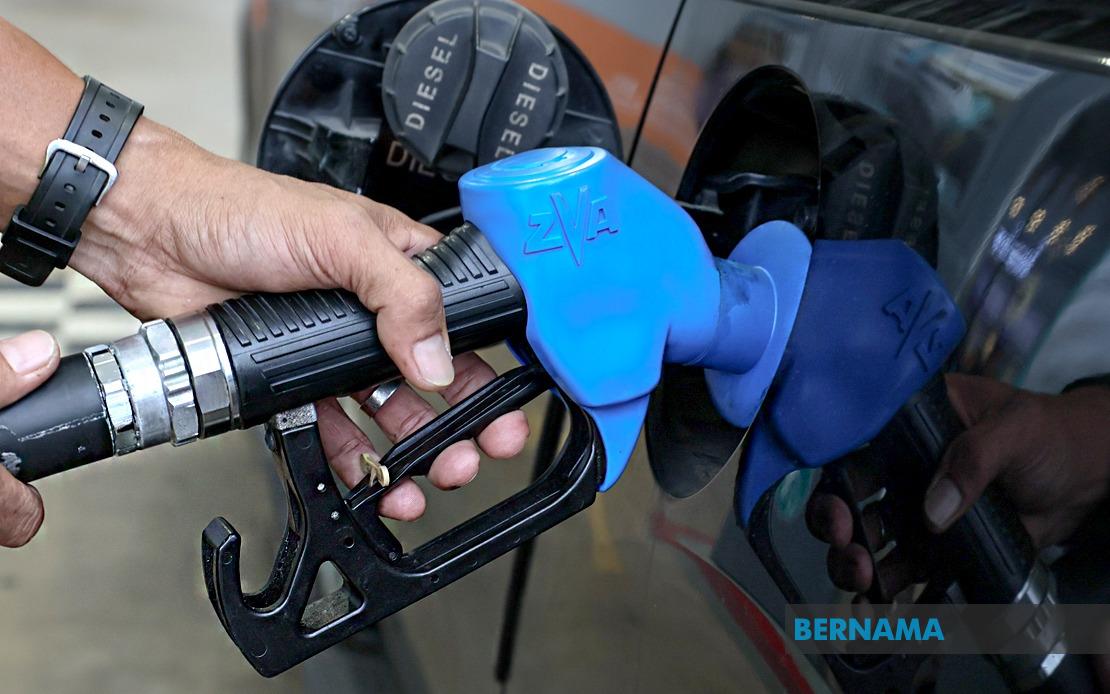
The government's decision to reduce subsidised diesel to RM2.10 per litre beginning in July represents a significant policy shift aimed at relieving pressure on Malaysia's transport and logistics sectors. Prime Minister Datuk Seri Anwar Ibrahim announced the move, which will be administered through the BUDI95 programme using MyKad verification, marking the latest step in the administration's subsidy rationalisation efforts. Currently, diesel remains priced at RM2.15 per litre in Sabah and Sarawak—a rate notably lower than the unsubsidised RM4.37 per litre available in Peninsular Malaysia—creating regional disparities that the new measure seeks to address.
Economists view the price reduction as a welcome development for businesses struggling with elevated operational expenses. Dr Nanthakumar Loganathan, professor of economics at Universiti Teknologi Malaysia's Faculty of Management, emphasises that fuel costs permeate virtually every sector of the economy, particularly those involved in basic food distribution and supply chains. Many traders have justified price increases by citing fuel expenditure as a primary cost driver, and the reduction offers potential relief across multiple industries. The announcement sends a signal to business associations that government intervention is targeting one of their most significant cost obstacles, though the economic impact will ultimately depend on whether traders respond by moderating retail prices.
The practical benefits extend throughout the supply chain into consumer-facing sectors. Agricultural products, fresh vegetables, and perishable goods transported via diesel-powered pickup trucks should theoretically experience reduced transport costs, which could translate into lower prices for shoppers. Dr Loganathan expressed optimism that the announcement would ripple through markets where diesel-dependent logistics form the backbone of distribution networks. However, realising these benefits requires coordinated action from retailers and wholesalers willing to pass savings to consumers rather than absorbing them as margin improvements.
A critical uncertainty shadows the policy's long-term sustainability. Global oil price volatility presents an ongoing challenge to maintaining the RM2.10 rate if international markets harden. Dr Loganathan cautioned that preserving this subsidy level during periods of rising crude costs would require the government to secure additional budgetary allocations. He suggested that diversifying fuel supply sources—potentially including arrangements with Russia or non-Arab producers—could help cushion Malaysia against price shocks. This dependency raises questions about whether the current ceiling represents a stable equilibrium or merely a temporary reprieve dependent on favourable international conditions.
The nationwide standardisation of diesel pricing, extending to Sabah and Sarawak, reflects a deliberate shift toward a more uniform subsidy architecture. Dr Novel Lyndon, political sociology professor at Universiti Kebangsaan Malaysia's Centre for Development, Social and Environmental Studies, characterises this as an effort to reduce geographic disparities that previously generated dissatisfaction and burdened consumers with location-dependent operating costs. The East Malaysian states had historically enjoyed lower fuel prices owing to geographical circumstances, logistics infrastructure constraints, and heavier reliance on land and river transport systems. Aligning prices signals a movement away from regionally-fragmented subsidy distribution toward a model ostensibly anchored to genuine need rather than administrative convenience.
However, implementing uniform pricing across economies with fundamentally different structures carries substantial risks, particularly for rural populations. Dr Lyndon cautioned that many communities in Sabah and Sarawak depend heavily on diesel transport for agricultural operations, fishing activities, goods movement, and basic mobility. If targeted support mechanisms fail to accompany the price alignment, small enterprises and rural workers may face squeezed margins and elevated living costs. The policy's success hinges on whether assistance schemes adequately compensate those most vulnerable to transport cost pressures, a requirement that extends beyond fuel pricing into broader social safety nets.
The incorporation of MyKad as the verification mechanism represents an institutional innovation intended to enhance subsidy targeting and integrity. Dr Mohd Afzanizam Abdul Rashid, chief economist at Bank Muamalat Malaysia, argues that this technological approach strengthens the system's effectiveness by directing benefits toward eligible recipients and simultaneously reducing leakages endemic to prior arrangements. The existing RON95 subsidy programme has demonstrated that MyKad-based verification can function reliably at scale, providing a template that government policymakers believe translates effectively to diesel distribution. Beyond subsidy efficiency, the system enables comprehensive data collection on fuel consumption patterns and supports efforts to counter fuel smuggling and illicit trading activities.
Public perception and communication strategy will substantially influence whether the policy achieves its intended objectives. Dr Lyndon underscores that citizens assess government performance not solely through individual price movements but by evaluating whether broader fiscal discipline translates into tangible improvements in essential services. Communities will scrutinise whether savings from subsidy rationalisation flow into infrastructure development, educational and healthcare provision, and cost-of-living relief programmes. The government faces a critical communications challenge in articulating how subsidy adjustments serve public welfare rather than merely constraining fiscal expenditure. This narrative dimension proves crucial for legitimating the policy and sustaining public confidence in institutional governance.
The policy's trajectory will depend substantially on execution quality and private sector cooperation. Retailers, wholesalers, and transport operators must genuinely transmit cost reductions downward through supply chains rather than capitalising on lower input expenses to expand profit margins. Equally, government agencies must demonstrate sustained commitment to maintaining the subsidy level even during periods of international price volatility. The experience of previous subsidy programmes suggests that maintaining political will amid budget pressures represents an ongoing challenge. For Malaysian consumers and businesses, the immediate impact appears moderately positive, though long-term sustainability remains conditional on factors extending beyond domestic policy control.

