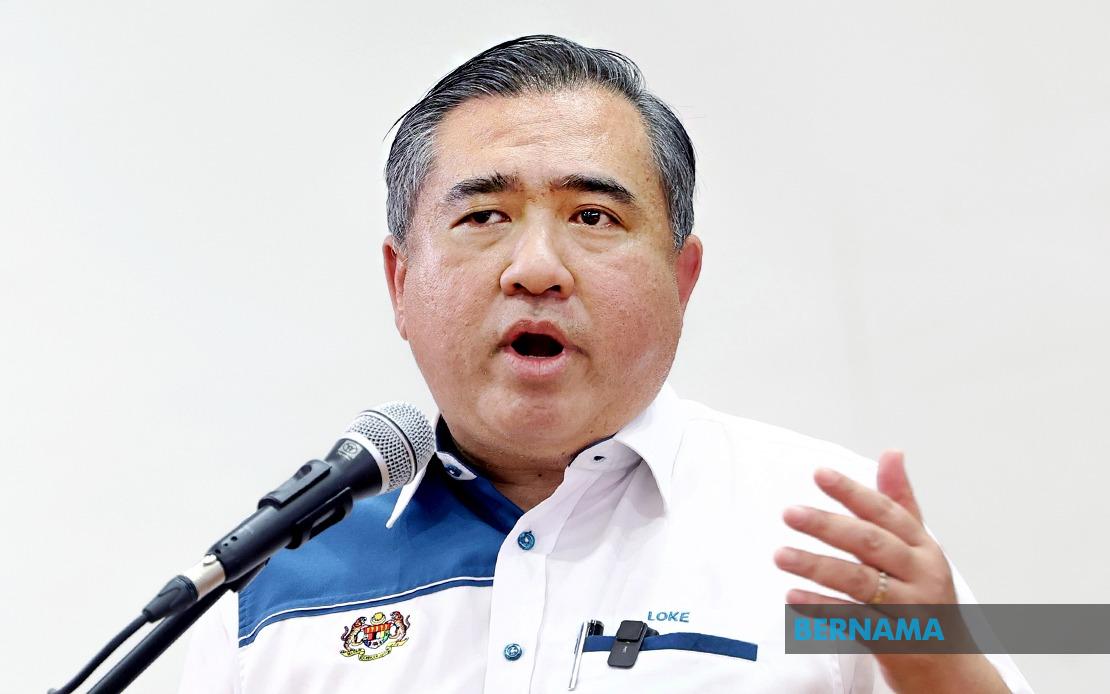
Transport Minister Anthony Loke has clarified that the Southern Shuttle's current reliance on diesel trains represents only an interim arrangement, with the rail service expected to transition to modern Electric Multiple Unit (EMU) trains within the next two to three years. Speaking from Johor Bahru, Loke emphasised that the decision to deploy existing diesel-powered rolling stock reflects a pragmatic approach to serving commuters immediately rather than forcing them to endure prolonged waiting periods for infrastructure upgrades that remain several years away from completion.
The Ministry of Transport has committed an annual subsidy ranging from RM11 million to RM15 million to support the Southern Shuttle, ensuring the service remains accessible and affordable for residents across the Johor region. This financial commitment underscores the government's determination to expand rail-based mobility options beyond the traditional corridors of Kuala Lumpur and Selangor, where public transport infrastructure has historically concentrated. By maintaining the service with available equipment, authorities can fulfil their broader objective of extending modern transit alternatives to communities that have traditionally relied on road networks.
The fundamental choice, as Loke articulated, centres on accepting a pragmatic interim solution or deferring service launch indefinitely. Waiting for the delivery and deployment of 10 new EMU train sets would push passenger service commencement beyond 2026 or 2027, leaving Johor residents without a viable rail alternative for several additional years. Conversely, deploying existing diesel-powered trains allows the Southern Shuttle to commence operations immediately, providing genuine mobility benefits to commuters in the interim period. This calculated trade-off prioritises delivering tangible public benefit now rather than pursuing perfect infrastructure specifications at the cost of prolonged inconvenience.
Once the Gemas-Johor Bahru electrified double-tracking project reaches completion, the diesel trains will be systematically withdrawn and replaced by Electric Train Service (ETS) operations along the corridor. This planned infrastructure development will eliminate the temporary reliance on diesel-powered rolling stock and integrate the Southern Shuttle fully into Malaysia's modernised rail network. The completion of this electrification project represents a critical milestone not merely for the Southern Shuttle but for broader regional rail connectivity, potentially enabling enhanced freight efficiency and passenger capacity along a strategically important north-south corridor.
The Southern Shuttle itself encompasses three key stations: Kulai, JB Sentral, and Pasir Gudang, creating a triangular network that addresses transportation requirements across central and southern Johor. Journey times remain competitive, with the Kulai to JB Sentral leg requiring approximately 40 minutes, while the Kempas Baru to Pasir Gudang segment takes between 40 and 45 minutes. These transit durations compare favourably to road-based alternatives, particularly considering Johor's traffic congestion patterns during peak hours, and offer passengers a more comfortable travel experience than competing transportation modes.
A particularly significant development involves the opening of the Kempas Baru to Pasir Gudang route for passenger services, a corridor that previously operated exclusively for freight operations. This conversion represents an underutilised asset being repurposed to serve civilian commuter demand, exemplifying efficient resource allocation within Malaysia's rail infrastructure ecosystem. The route's reopening to passengers signals the potential for similar projects nationwide, where existing freight corridors could be adapted to provide supplementary capacity for expanding metropolitan populations and regional transit networks.
Criticism regarding the Southern Shuttle has centred on both the deployment of older diesel-powered equipment and fare structures that observers contend are disproportionately high. Commentators have highlighted that Johor passengers face fares approximately three times greater than those charged in comparable services serving Kuala Lumpur and Seremban. Such pricing disparities raise questions about cost-of-service calculations, operational efficiency benchmarking, and subsidy distribution mechanisms across Malaysia's rail network. These concerns warrant serious policy examination, particularly as transport authorities endeavour to demonstrate that regional rail services deliver genuine value propositions to commuters contemplating usage decisions.
For Malaysian and Southeast Asian observers, the Southern Shuttle initiative reflects broader regional trends toward enhancing inter-city rail connectivity and reducing automobile dependency. Johor's geographical position as a major commercial and industrial hub, coupled with its role as a land bridge to Singapore, makes efficient passenger rail particularly valuable for economic development and environmental sustainability. The service's expansion represents incremental progress toward more integrated regional transportation networks, though success ultimately depends on sustained investment, fare competitiveness, and reliability standards that exceed current expectations.
The Ministry's strategy of accepting temporary operational compromises to deliver immediate service benefits reflects evolving thinking about infrastructure development in developing economies. Rather than pursuing comprehensive modernisation as a prerequisite for launch, policymakers increasingly recognise that partial solutions delivering tangible public utility sooner often prove superior to perfect solutions arriving years later. This philosophy, if applied consistently across Malaysia's transport sector, could accelerate the expansion of rail-based alternatives and reduce society's trajectory toward unsustainable road transportation growth.
Looking forward, the successful integration of the new EMU trains and completion of the Gemas-Johor Bahru electrification project will represent validation of this interim approach. Should the Southern Shuttle establish a strong operational record and demonstrate genuine commuter demand, policymakers will have justified the temporary deployment of diesel equipment and secured a foundation for future enhancements. Conversely, if the service fails to meet ridership expectations or encounters operational difficulties, the decision to prioritise speed of deployment over equipment modernisation will merit re-evaluation. The coming years will thus prove consequential for understanding whether Malaysia's emerging pragmatic approach to rail infrastructure development constitutes a viable model for accelerating transport modernisation across the nation.

