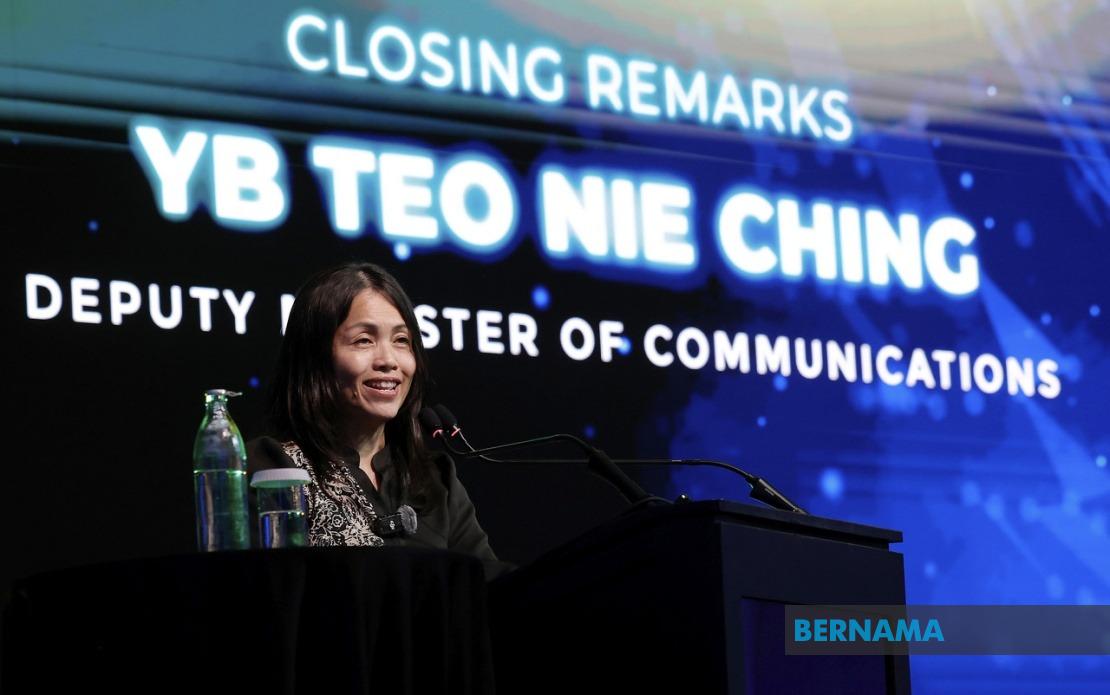
Malaysia's digital landscape is undergoing rapid transformation, but ensuring that technological advancement serves the public interest rather than undermining it remains a central challenge. Speaking at the conclusion of the International Regulatory Conference (IRC) 2026 in Kuala Lumpur, Deputy Communications Minister Teo Nie Ching placed accountability and citizen-focused governance at the heart of the nation's digital future, signalling a shift towards measuring progress beyond mere technological prowess to encompass safety, fairness and public confidence.
Teo's remarks signal recognition that technological capability alone cannot justify digital systems. Instead, she argued that communities must judge innovations by their capacity to protect users, distribute benefits equitably, and justify public trust. This framing represents a departure from purely innovation-driven narratives that have dominated technology policy discussions globally. For Malaysia, increasingly integrated into regional and global digital economies, this stance carries particular weight as the nation navigates tensions between enabling business growth and protecting vulnerable populations from online harms.
The scale of content moderation challenges facing Malaysia underscores the urgency of this debate. Between January 2022 and mid-July 2026, the Malaysian Communications and Multimedia Commission (MCMC) submitted 1.2 million removal requests to social media platforms, resulting in the takedown of 1.138 million pieces of harmful content. These figures demonstrate both the volume of problematic material circulating on Malaysian networks and the reactive capacity of regulators working within existing frameworks. More strikingly, the pace of removal requests has accelerated dramatically. In the first half of 2026 alone, MCMC issued 377,502 requests—nearly equivalent to 78 percent of the entire 2025 tally—averaging approximately 1,900 daily submissions. Platforms successfully removed 350,332 items during this compressed timeframe.
This acceleration raises questions about whether harmful content is proliferating faster than platforms and regulators can manage, or whether enhanced detection and reporting mechanisms are simply capturing previously invisible problems. Either scenario suggests that Malaysia faces an expanding challenge requiring more sophisticated solutions than traditional content removal processes can provide. The data also highlights a structural dependency: Malaysian digital safety currently relies heavily on platform cooperation with regulatory requests, a model vulnerable to policy shifts by corporations operating from distant jurisdictions.
Teo's emphasis on technology and accountability evolving together reflects awareness that regulatory frameworks designed for earlier internet eras may be inadequate for contemporary challenges. As artificial intelligence, algorithmic recommendation systems, and encrypted communications reshape digital environments, traditional approaches centred on removing individual pieces of content appear insufficient. The deputy minister's framing suggests the need for upstream governance—embedding safety and accountability into platform design, algorithmic training, and business models from inception rather than treating online harms as problems to be managed reactively after they spread.
Crucially, Teo rejected the notion that regulation alone can secure digital spaces. This position aligns with emerging global consensus that platform accountability, online safety, child protection, and community resilience require coordinated action across multiple stakeholders. Malaysian schools, community organizations, industry bodies, and civil society groups must all contribute to creating digital environments where citizens—particularly young people—can participate safely. This distributed responsibility model acknowledges that regulators, however well-intentioned and well-resourced, cannot monitor billions of interactions or anticipate every emerging threat.
The principle of embedding safety into design from inception carries significant implications for Malaysian technology adoption and digital commerce. As the nation pursues digital transformation across government services, financial systems, and education, design choices made during development stages will determine whether resulting ecosystems empower users or expose them to exploitation. This principle extends beyond content moderation to encompass data privacy, cybersecurity, algorithmic transparency, and the concentration of market power among dominant platforms.
The IRC 2026 conference, now in its third iteration and themed "Shaping the Next Digital Era: Regulation, Resilience and Trust", positions Malaysia as a convening space for global digital governance conversations. By bringing together regulators, industry executives, and subject matter experts, the MCMC has established a platform for sharing experiences across jurisdictions facing similar challenges. For a nation situated between developed markets with established regulatory frameworks and developing economies still establishing digital infrastructure, this positioning offers strategic value. Malaysia can learn from international experience while contributing insights from the Southeast Asian context to broader discussions about digital governance models suited to diverse economic and social conditions.
The emphasis on resilience within the conference theme reflects recognition that digital systems face persistent, evolving threats—from coordinated disinformation campaigns to state-sponsored cyber operations to criminal exploitation of platform vulnerabilities. Building resilience requires not only technical defences but also educated citizenries capable of recognizing manipulation, platforms willing to prioritize user safety over engagement metrics, and regulators equipped with expertise and resources to oversee complex technological systems. For Malaysia, developing such multi-layered resilience capacity represents a long-term institutional challenge requiring sustained investment and political commitment.
Teo's intervention into digital governance conversations demonstrates how accountability frameworks are gradually moving from peripheral policy concerns into central strategic positions. As digital systems increasingly mediate economic activity, social interaction, and access to essential services, the question of who holds power and to whom they answer becomes fundamental. Malaysian policymakers appear to be recognizing that a secure digital future cannot be built on technological advancement alone, but requires sustained attention to governance structures ensuring that innovation serves broad public interests rather than narrow corporate or state objectives. This perspective, if sustained and deepened through concrete policy implementation, could position Malaysia as a thoughtful voice in regional and global debates about balancing innovation with protection.

