Novak Djokovic enters the U.S. Open with perhaps his most promising opportunity in years to capture a record 25th Grand Slam title and break clear of Margaret Court on tennis's all-time major championship list. The convergence of circumstances has shifted in the 37-year-old Serbian champion's favour: Jannik Sinner, who has dominated the professional circuit alongside Carlos Alcaraz, sits out with a knee injury, while the defending champion Alcaraz returns from an extended absence that has cast doubt on his competitive readiness. Yet despite this seemingly favourable draw, Djokovic faces formidable obstacles, most notably Alexander Zverev, who has emerged as a legitimate contender following his breakthrough major triumph at the French Open and subsequent Wimbledon final appearance.
The landscape of men's tennis has shifted dramatically since Djokovic's last U.S. Open victory in 2023. In the intervening period, Alcaraz and Sinner have demonstrated a stranglehold on Grand Slam tennis, combining to capture ten of the previous eleven major titles. This dominance has repeatedly thwarted Djokovic's efforts to edge past Court's long-standing record, with the Spanish and Italian tandem defeating him five times across their last six encounters at the sport's biggest tournaments. The challenge Djokovic has faced transcends mere competition; it represents a generational shift in which younger players have seized the momentum that defined so much of the recent tennis landscape.
Djokovic's most recent opportunity to ascend the historic leaderboard ended disappointingly at this year's Australian Open, where he fell to Alcaraz in the final. Nevertheless, the veteran competitor displays unwavering self-belief as he pursues a fifth U.S. Open crown, a confidence he attributes to a particularly Serbian quality he calls "inat"—a stubborn force that activates when doubters multiply and opposition circles gather. This mentality, rooted in his cultural heritage, has sustained him through previous comebacks and unlikely triumphs. Even with physical concerns lingering and minimal preparation time in his build-up to Flushing Meadows, Djokovic embodies the defiance that has characterised his career during pivotal moments.
Legendary Swiss competitor Roger Federer, observing from courtside, reinforced the notion that Djokovic remains a genuine contender. Federer's assessment of the Serbian's capabilities stems from decades of direct competition and intimate knowledge of what Djokovic can accomplish on tennis's grandest stages. The former champion emphasised that Djokovic's mere presence in any draw creates genuine possibility, a testament to his proven ability to perform consistently at the highest levels across multiple surfaces and venues. This perspective carries weight given Federer's own unparalleled success and his understanding of the mental fortitude required to succeed repeatedly in major competitions.
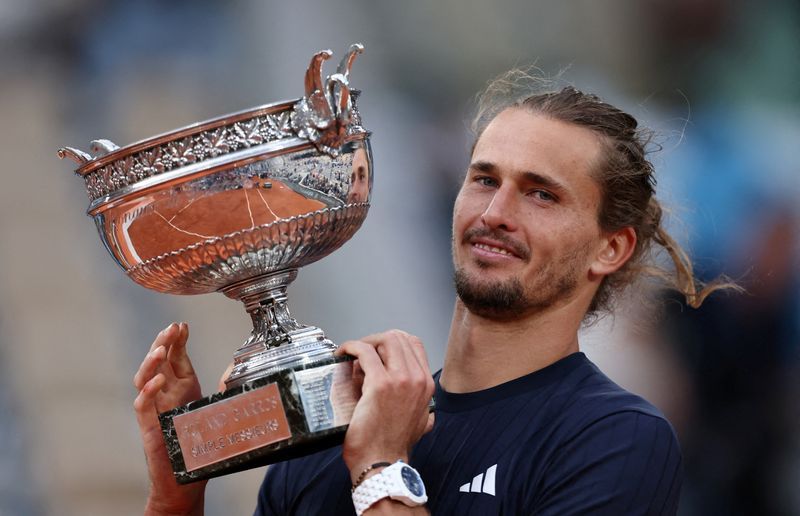
Zverev's elevation to genuine contender status represents perhaps the tournament's most significant narrative shift. The German's breakthrough at Roland Garros, followed by his run to the Wimbledon final, establishes him as a formidable obstacle not merely to Djokovic but to any potential champion. Zverev's comprehensive game, combining power with tactical acumen, creates a complex challenge that demands excellence across multiple dimensions. His trajectory suggests a player entering his prime championship years with the experience and confidence necessary to perform under the intense pressure of major tournaments.
Alcaraz's position presents considerable ambiguity heading into the tournament. The defending champion's four-month absence due to a wrist injury naturally raises questions about whether he has fully recovered the timing, confidence, and match sharpness essential for major success. However, Alcaraz has consistently demonstrated an ability to elevate his performance when stakes reach their highest level, suggesting that underestimating his prospects despite the layoff would prove unwise. His pedigree as a defending champion and proven big-match performer cannot be dismissed, even amid legitimate concerns about his preparation.
The American contingent represents another significant dimension to the tournament narrative. Ben Shelton, having captured the Canadian Open in Montreal following a disappointing Wimbledon campaign, has positioned himself as a serious contender through his demonstrated capacity to perform across different surfaces. Fellow Americans Frances Tiafoe, a Cincinnati runner-up, and defending finalist Taylor Fritz both carry realistic aspirations of breaking a 23-year drought in men's U.S. Open championships. Former champion Andy Roddick identified a critical threshold for Shelton's progression: the American must navigate the opening week successfully to maintain championship credentials through the tournament's business end, a challenge that has eluded him in previous majors this season.
Shelton's profile encapsulates the broader challenge facing emerging American talents in the modern era. His victory on clay in Montreal demonstrated versatility across surfaces, yet early exits in subsequent events have introduced scepticism about his ability to sustain peak performance over tournament length. The concentration of matches within a two-week window, combined with the mental and physical demands of the U.S. Open specifically, creates a test that extends beyond single-surface excellence. Roddick's observations reflect the complex assessment necessary when evaluating whether tournament-winning credentials translate into major championship potential.
Beyond the established contenders, the draw features rising talents including Arthur Fils and Rafael Jodar who will seek to announce themselves on tennis's biggest American stage. Felix Auger-Aliassime, who reached the semi-finals in the previous year's edition, represents another player pursuing the progression necessary to legitimise major championship aspirations. These secondary narratives add texture to the tournament beyond the headline confrontations involving Djokovic, Zverev, and Alcaraz, reflecting tennis's depth and the emergence of players capable of producing sustained excellence against the sport's elite practitioners.
The convergence of Djokovic's determination, the absence of Sinner, and Alcaraz's uncertain condition creates a rare window in which the Serbian veteran's record-chasing ambitions possess genuine traction. Yet tennis majors remain unpredictable, multivariate competitions where surface conditions, momentum, tactical preparation, and mental resilience interact in complex ways. Zverev's breakthrough credentials and the strengthened American presence ensure that the tournament extends well beyond a two-player narrative. For Malaysian and Southeast Asian tennis observers, the tournament demonstrates how elite sport remains fundamentally open, requiring complete excellence rather than mere status or pedigree to succeed.
Djokovic's pursuit of the 25th major represents far more than personal achievement; it encapsulates a broader narrative about championship longevity in modern professional tennis. The question animating this U.S. Open involves whether experience, mental fortitude, and proven major-championship experience retain sufficient value against younger competitors representing the sport's present generation. The answer that emerges across New York's two-week competition will illuminate broader patterns about athletic excellence, generational transitions, and the enduring rewards of sustained competitive commitment across extended professional careers.

