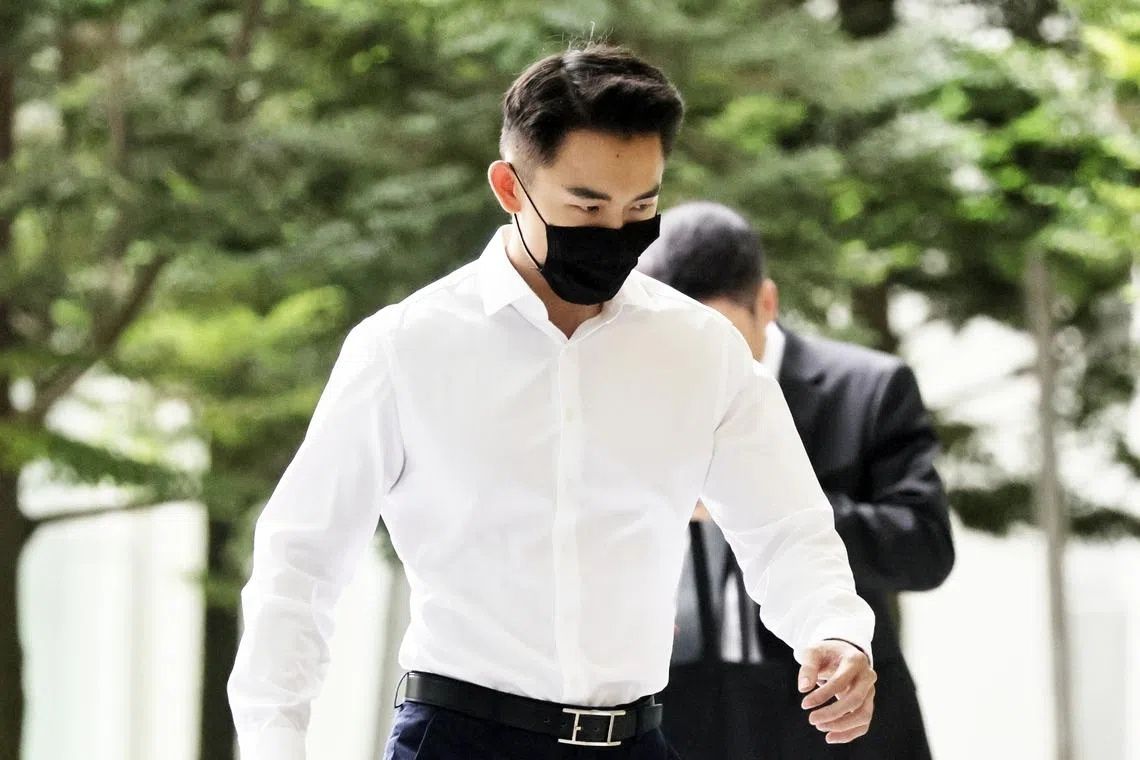
A medical professional in Singapore has been found guilty of drug consumption following a high-profile police operation at a luxury hotel in Sentosa. Rayson Lee Rui Sheng, 36, was among 49 men arrested when authorities descended on a private villa gathering at the Sofitel Singapore Sentosa in August last year. The conviction, handed down on Tuesday, marks another significant outcome from what became one of the island's notable drug-related enforcement actions.
Lee and a 29-year-old associate, Tan Li Ming, both faced charges of consuming MDMA, commonly known as ecstasy. District Judge A Sangeetha found them guilty on a single count each, determining that evidence from their biological samples conclusively demonstrated drug use. The Health Sciences Authority's analysis revealed traces of MDMA in their urine samples, while hair testing showed consumption of both ecstasy and ketamine, substances known to produce hallucinogenic and dissociative effects respectively. The findings proved decisive in establishing culpability despite the defendants' protestations of innocence.
The August 9, 2023 incident unfolded in the early morning hours when police, acting on prior intelligence, conducted checks at the hotel premises shortly after 5.30am. Officers discovered substances suspected to be controlled drugs at the scene, prompting them to request the Central Narcotics Bureau's involvement. The subsequent search uncovered multiple controlled substances including ecstasy and ketamine, alongside associated paraphernalia. The scale of the operation reflected the coordinated nature of the gathering and the substances present, leading to the arrests of all attendees whose ages ranged from 21 to 46 years old.
The prosecution's case against Lee and Tan centred on the incontrovertible nature of the scientific evidence. Rather than contesting the HSA findings, both men acknowledged the test results but advanced an alternative narrative: they claimed that unknown individuals had spiked their drinks without their knowledge or consent. This defence strategy proved unconvincing to the court. The judge noted that the pair continued consuming additional beverages throughout the evening despite supposedly recognising that their initial drinks had been tampered with—a contradiction the court found fundamentally undermined their credibility.
The hair sample evidence proved particularly damaging to their defence. Judge Sangeetha observed that the analysis revealed patterns consistent with prior drug use, not merely isolated exposure. This finding suggested habitual consumption rather than a single occasion of unwitting ingestion. The judge's assessment that "neither man was a stranger to drug use" reflected the cumulative weight of evidence pointing to voluntary participation in recreational drug consumption rather than victimisation.
Lee's account to the court outlined his movements on the night in question. He had initially attended a birthday celebration at the villa around 8pm on August 8, where he spent time socialising before departing for a nightclub in Clarke Quay. There he encountered Tan, and the two subsequently returned to the villa in the early morning hours. Upon arrival, Lee discovered that the gathering had expanded significantly, with numerous attendees he did not recognise present. He testified that he had consumed three drinks provided by individuals unknown to him, claiming he observed no pills or drug-related paraphernalia and witnessed no one actively using substances.
Tan's version of events introduced a more detailed narrative of suspicious activity. He claimed to have observed a group of four to five unidentified men in a pantry area drawing liquid from a bottle using a syringe and injecting the contents into plastic cups. After consuming from one of these cups, Tan said he noticed white residue at the bottom. When he questioned an unidentified person about the procedure, he received an explanation that the substance was "G-water," purportedly designed to produce intoxication. Tan insisted he was unfamiliar with this substance and unaware of its properties or effects.
The prosecution team of Deputy Public Prosecutors Jocelyn Teo and Dhiraj G Chainani dismantled this defence with methodical precision. They argued that the pair's account relied excessively on hypothetical scenarios and vague possibilities rather than concrete evidence. Critically, neither man could identify specific individuals allegedly responsible for the drink-spiking. The DPPs highlighted that Lee had referenced consuming a pill from an unknown stranger during a trip to Thailand in June 2023—evidence the prosecution used to demonstrate his prior drug exposure and willingness to consume substances from unreliable sources.
The defence team, led by lawyer Tania Chin, had attempted to challenge the prosecution's case by raising questions about police procedure. They contended that authorities had failed to seize certain plastic cups that might have contained drug residue and could have supported their spiking narrative. However, the prosecutors countered that even if such cups had tested positive for controlled substances, this would merely confirm that the defendants had consumed drug-laced beverages—not that they had done so unknowingly. The absence of credible evidence identifying any specific individual responsible for allegedly tampering with their drinks proved insurmountable.
The conviction carries broader implications for drug enforcement in Singapore, where the authorities maintain stringent policies against recreational substance use. The case exemplifies how scientific evidence, particularly hair and urine analysis, provides objective documentation that can override subjective testimony, particularly when accounts appear internally inconsistent or lack corroboration. The judge's findings that the defendants continued drinking despite their claims of adulteration suggest awareness and acceptance of the risks involved in consuming beverages in such environments.
For regional observers, the case underscores the sophisticated nature of modern drug enforcement operations in major Southeast Asian financial centres. The coordination between local police and specialist agencies like the CNB demonstrates institutional capacity to identify, intercept, and prosecute drug-related offences. The involvement of a medical professional among those arrested also reflects how substance use crosses professional and socioeconomic boundaries, challenging assumptions about who engages in recreational drug consumption.
The conviction of Lee and Tan represents a significant enforcement outcome, but it also highlights the challenges facing individuals attempting to mount credible defences in drug cases where biological evidence clearly demonstrates consumption. The judicial determination that neither man possessed credibility in their accounts—combined with evidence of prior drug use patterns—effectively closed avenues for reasonable doubt. As Singapore continues its war on drugs, this case exemplifies how comprehensive investigative protocols and rigorous scientific analysis translate into successful prosecutions.

