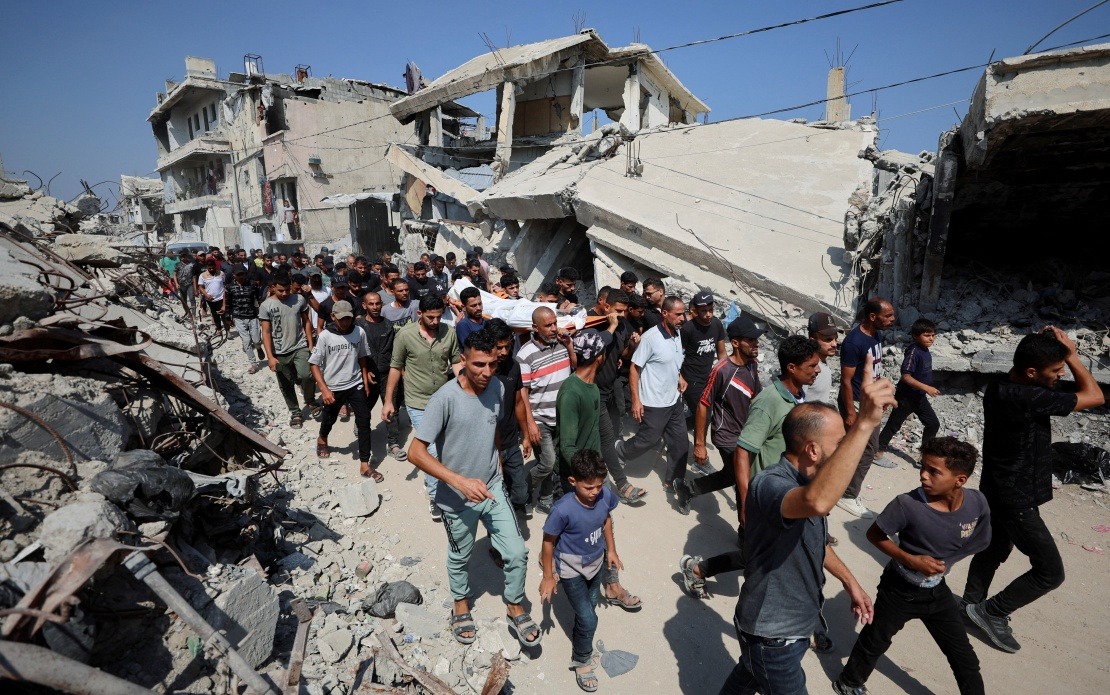
Doctors Without Borders (MSF) has levelled serious criticism at the Israeli military establishment for closing investigative files related to the deaths of its personnel and their family members in Gaza, without initiating formal criminal proceedings into the incidents. The announcement, made on Thursday, represents a significant point of frustration for the humanitarian organisation, which has spent nearly two years pressing for proper inquiries into a series of fatal attacks directed at its operations and workers in the besieged territory.
The decision by Israeli authorities to close these cases comes after MSF's protracted efforts to secure investigations and, ultimately, after the organisation took the extraordinary step of petitioning Israel's High Court to compel the Military Advocate General to respond to their formal requests. The closure of these files without substantive criminal investigation marks, in MSF's assessment, a fundamental failure of the Israeli legal system to provide accountability for actions that the group contends may constitute war crimes. This development carries significant implications for humanitarian organisations operating in conflict zones worldwide, raising questions about the adequacy of military self-investigation mechanisms in ensuring justice for civilian casualties.
According to MSF, it had consistently communicated the identities and locations of its personnel to Israeli armed forces and had ensured its operational vehicles were prominently and distinctly marked for identification. Despite these precautions—standard practice for humanitarian missions to prevent mistaken targeting—the organisation alleges that its staff and associated individuals have remained vulnerable to lethal force. The group maintains that the evidence overwhelmingly points toward deliberate or reckless action by Israeli military units, with all available indicators suggesting institutional responsibility rather than isolated incidents of mistaken identity.
One particularly troubling incident cited by MSF involved a November 2023 strike on an MSF convoy that resulted in the deaths of two individuals connected to the organisation's staff. Among the casualties was Alaa Al Shawa, who served both as a volunteer assisting MSF medical operations at Al-Shifa Hospital and as a relative of an MSF employee. A separate attack occurred in February 2024, when Israeli forces struck an MSF shelter located in Khan Younis, killing the wife and daughter-in-law of an MSF staff member and leaving six others wounded, including five individuals who were women or children. These incidents underscore the pattern of harm affecting not only the organisation's direct personnel but also their immediate family members.
The human toll of the conflict on healthcare workers extends far beyond MSF's own ranks. The organisation has documented that fifteen of its staff members have been killed by Israeli forces since October 2023 began. This figure sits within a broader catastrophe affecting the medical profession across Gaza, where approximately 1,700 healthcare workers have lost their lives during the same timeframe. The targeting or killing of medical personnel—a protected category under international humanitarian law—represents a particularly grave concern for the global healthcare community and raises questions about compliance with fundamental laws of armed conflict.
MSF's core contention in closing this matter is that the Israeli military system, investigating itself without external oversight, has demonstrated its fundamental inadequacy in addressing potential violations of international law. The organisation explicitly stated that the case closures reveal the absence of any genuine pathway toward accountability through Israeli institutional mechanisms. This assessment reflects a broader concern among international observers regarding the transparency and effectiveness of military justice systems in investigating conduct during armed conflict, particularly when the investigating authority is part of the same chain of command responsible for the challenged actions.
The humanitarian group has called for these cases to be examined by an independent and impartial investigative body, rejecting the notion that internal military review processes can satisfy international standards for accountability. MSF contends that military organisations cannot simultaneously serve as investigator, prosecutor, judge, and defendant in matters involving allegations of their own personnel's conduct. The organisation's position aligns with long-standing international law principles emphasising the necessity of genuine independence in investigating potential war crimes or crimes against humanity.
MSF has framed these specific incidents within a larger context, linking the pattern of harm to what it characterises as Israel's conduct in Gaza broadly. The organisation has employed terminology—specifically referencing genocide—that reflects the most serious accusations available in international legal discourse. This language choice, while politically charged, reflects MSF's assessment that the scale and nature of civilian casualties constitute conduct rising to the threshold of systematic intent to destroy a protected group, a legal definition that carries profound implications for international accountability mechanisms.
Central to MSF's argument is the principle that military objectives, however defined or justified, cannot warrant the indiscriminate or disproportionate harm to civilian populations. The organisation stated plainly that no legitimate combat aim justifies what it describes as the wholesale sacrifice of civilians. This formulation presents a direct challenge to arguments that might attempt to contextualise the killings within operational necessity, asserting instead that humanitarian protections remain binding regardless of tactical or strategic considerations.
The broader humanitarian crisis in Gaza continues to deepen, with Gaza's Health Ministry reporting that 10 Palestinians were killed and 25 injured over a single 24-hour period at the time of MSF's statement. Since October 2023, the ministry has documented a death toll of 73,417 individuals, with an additional 174,360 persons sustaining injuries throughout the conflict. The Health Ministry has separately attributed 1,283 deaths and 4,248 injuries to what it characterises as Israeli violations of ceasefire arrangements, indicating that hostilities have persisted even during periods nominally designated as truces or humanitarian pauses.
For Malaysian and Southeast Asian observers, MSF's stand carries important implications regarding humanitarian access, medical neutrality, and the treatment of civilian medical infrastructure during armed conflict. The case raises fundamental questions about how international humanitarian organisations can operate safely in conflict environments and whether existing accountability mechanisms provide sufficient deterrence against attacks on protected persons and facilities. As Malaysia and other regional nations engage with global humanitarian and peace-building initiatives, these developments underscore the practical challenges facing organisations attempting to provide medical assistance in active war zones and the persistent gaps in enforcement of international humanitarian law protections.

