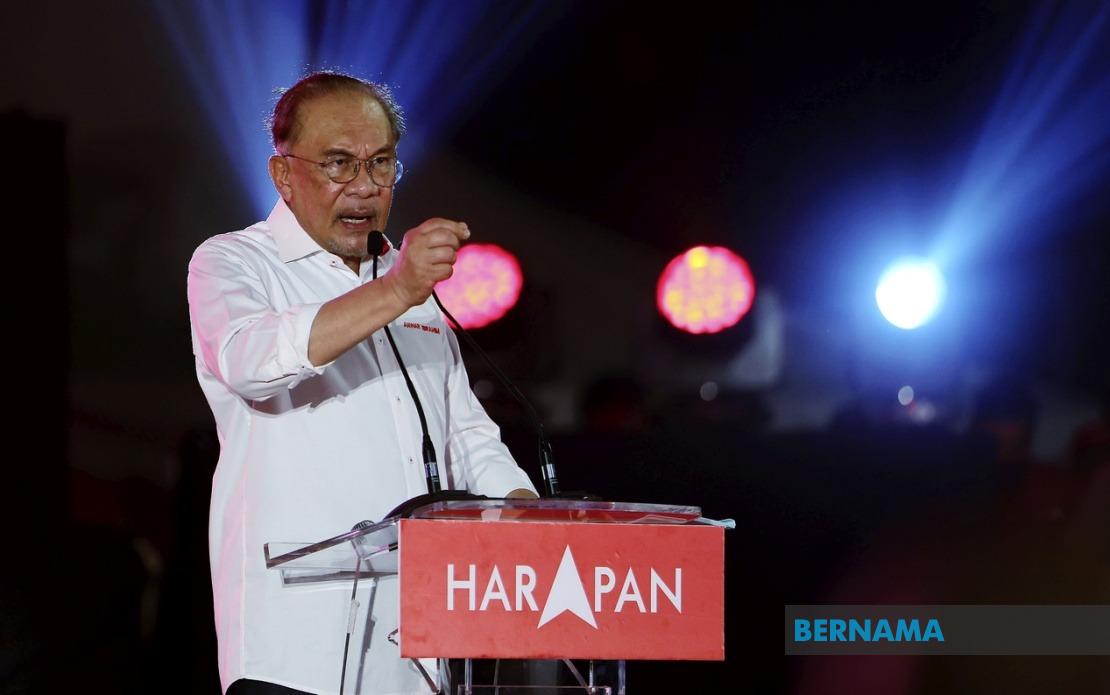
Prime Minister Anwar Ibrahim has issued a pointed warning to all participants in the forthcoming 16th Negeri Sembilan State Election, urging them to refrain from weaponising topics related to the country's royal establishments and constitutional framework. Speaking at a candidate announcement ceremony in Kuala Pilah on July 14, the Pakatan Harapan chairman emphasised that while electoral competition forms a legitimate pillar of democratic governance, such contests must unfold with integrity and restraint.
Anwar's cautionary remarks underscore growing anxiety among federal leadership that state-level campaigns risk inflaming sensitivities around institutions that enjoy constitutional protection and broad public reverence across Malaysia. The timing of his intervention—delivered as the ruling coalition prepares its slate for a crucial state contest—suggests concern that hardening political divisions could spill into territory traditionally considered off-limits in Malaysian political discourse. His message was directed at all camps, though the emphasis on constitutional propriety carries particular weight given historical instances where state elections have tested the boundaries of acceptable political rhetoric.
The Prime Minister articulated a distinction between vigorous political contestation and the crossing of lines that erode institutional trust. He acknowledged that differing political viewpoints are natural and necessary features of competitive democracy, yet insisted that such disagreements cannot be pursued through slander, misinformation, or tactics designed to fragment social cohesion. This formulation seeks to preserve space for robust debate while protecting foundational structures upon which Malaysia's political system rests.
Packatan Harapan unveiled 36 candidates for the state election, blending newcomers with seasoned figures from its three component parties: PKR, DAP, and Amanah. The lineup included incumbent Menteri Besar Datuk Seri Aminuddin Harun contesting the Linggi seat, alongside DAP secretary-general Anthony Loke seeking the Chennah state seat. The candidate slate reflects the coalition's effort to project both continuity in executive leadership and fresh energy in legislative representation. Anwar's endorsement of Aminuddin as a collaborative and effective administrator signals confidence in the incumbent's stewardship and the government machinery's alignment across federal and state levels.
Negeri Sembilan's electoral contest carries implications extending beyond the state itself. As one of Malaysia's crucial swing states, its outcome influences the broader balance of power and serves as a barometer of public sentiment regarding the federal government's performance. A strong showing by the PH-led alliance would consolidate federal authority and validate the coalition's governance model, while a weakened position could embolden opposition forces and complicate the ruling coalition's legislative agenda at the national level. Anwar's emphasis on Negeri Sembilan remaining aligned with federal development priorities reflects this strategic significance.
The Prime Minister articulated a vision of clean governance centred on integrity and capable administration. His framing positions the election as a referendum not merely on party loyalty but on fundamental questions of leadership quality and commitment to progressive development. By linking electoral choice to tangible state advancement rather than ideological abstractions, Anwar attempts to elevate the campaign discourse and ground political competition in practical governance outcomes that ordinary voters can assess and evaluate.
Anwar's specific concern about protecting royal institutions reflects their elevated status within Malaysia's constitutional architecture. The Sultan of Negeri Sembilan occupies both ceremonial and substantive constitutional roles, and the institution commands deep respect across the state's communities. Attempts to politicise the monarchy or constitution risk generating backlash that could damage a political party's standing far more severely than in other democracies where such targets are more routine campaign territory. This reality shapes the boundaries of acceptable rhetoric in Malaysian elections in ways foreign observers sometimes overlook.
The coalition's campaign messaging thus emphasises constructive partnership with state institutions rather than confrontation. By positioning Pakatan Harapan as the guardian of constitutional propriety and institutional respect, while implicitly suggesting that opponents might be tempted toward recklessness, the ruling alliance claims higher moral ground. This rhetorical strategy attempts to preempt criticism of the federal government's record by making institutional preservation itself a campaign issue where the ruling coalition claims automatic advantage.
Anwar's appeal to PH machinery to work intensively toward delivering development and generational progress sets an ambitious standard for the coalition's campaign activities. Rather than relying primarily on negative messaging targeting opponents, the ruling coalition signals intention to compete on the basis of positive accomplishments and future-oriented promises. This approach carries risks, as incumbent coalitions may be judged harshly if voter perception diverges from governmental self-assessment regarding performance.
The presence of senior federal figures including DAP secretary-general Loke, Amanah president Mohamad Sabu, and PH communications chief Fahmi Fadzil underscores the national significance the ruling coalition attaches to the Negeri Sembilan outcome. This concentration of federal leadership at a state-level event signals that PH views the election as consequential for its broader political fortunes and federal mandate. The intensive engagement of federal machinery in state campaigns has become increasingly characteristic of Malaysian electoral politics, blurring traditional distinctions between state and federal political spaces.
For Malaysian readers and regional observers, Anwar's intervention illuminates how sophisticated political systems navigate the tension between democratic competition and institutional protection. His warnings acknowledge that electoral politics operates within parameters set by constitutional arrangements and public expectations about proper conduct. The Negeri Sembilan election will test whether all participants respect these boundaries or whether campaign pressures push parties toward rhetoric that tests institutional tolerance, with implications extending well beyond the state's borders into Malaysia's broader political equilibrium.

