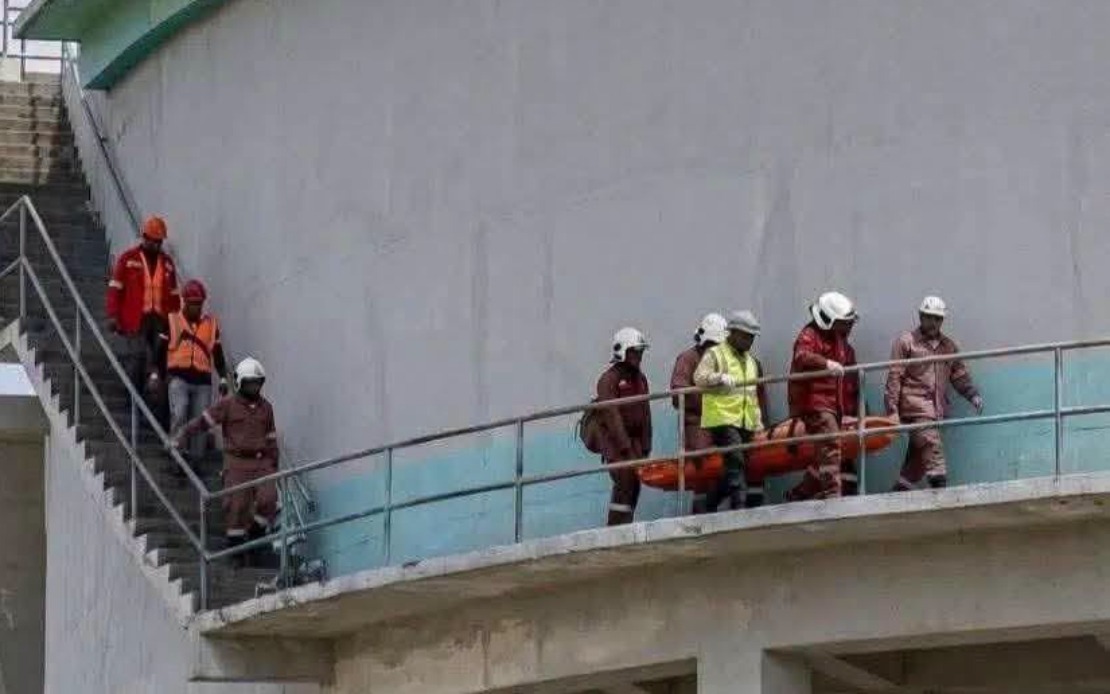
The Department of Occupational Safety and Health (DOSH) has commenced investigations into a fatal workplace incident that claimed the life of an industrial trainee during water tank cleaning operations at Menara Saujana Perdana 1 in Sungai Buloh, Selangor, last June 16. Director-general Hazlina Yon confirmed that the regulator's Selangor office has already inspected the accident site and implemented measures to preserve evidence, including issuing a notice that prohibits unauthorised disturbance of the location while investigations continue.
The incident underscores recurring safety challenges in Malaysia's industrial sector, particularly in high-risk operations involving confined spaces. Water tank cleaning represents one of the most hazardous maintenance activities, combining multiple dangers including limited air circulation, exposure to chemical residues, slipping hazards, and the psychological stress of working in tight, enclosed environments. For Malaysia's growing contingent of industrial trainees entering the workforce, inadequate safety protocols can prove catastrophic. The involvement of a trainee in this fatality raises immediate questions about supervision standards and whether the worker possessed sufficient experience and training for such dangerous operations.
Hazlina stated that investigators are actively recording witness statements and gathering evidence to determine whether occupational safety and health violations occurred. The investigation falls under Sections 15, 17 and 18 of the Occupational Safety and Health Act 1994, which delineate the legal duties of employers, self-employed operators, and other responsible parties to maintain safe, healthy working conditions and protect both employees and any individuals who might be affected by workplace activities. Should investigators identify breaches of these provisions, DOSH is empowered to pursue enforcement action, potentially including citations, fines, or criminal prosecution depending on the severity of violations discovered.
The regulatory framework governing confined space work in Malaysia establishes clear mandatory requirements that employers must observe before authorising personnel to enter such environments. Proper procedures demand that companies obtain relevant work permits, conduct comprehensive risk assessments, implement engineering controls to eliminate or minimise hazards, and establish emergency rescue protocols. These safeguards exist because deaths in confined spaces often occur in rapid succession—initial victims lose consciousness, and untrained rescuers who attempt rescue without proper equipment become secondary fatalities. Malaysia's regulatory approach mirrors international best practices, yet compliance remains inconsistent across industries and company sizes.
Hazlina's statement emphasised the employer's responsibility to identify and evaluate risks associated with every work operation before commencement, with particular attention to activities classified as high-risk. This obligation extends beyond simply recognising general hazards; employers must conduct site-specific assessments that account for the particular conditions at individual locations. For water tank cleaning, this includes evaluating tank contents, residual chemicals, structural integrity, ventilation capacity, access points, and atmospheric conditions. Many incidents occur because employers rush through or entirely omit these preliminary assessments, proceeding directly to execution without proper planning.
A critical deficiency highlighted by this fatality concerns the training and supervision of industrial trainees. Malaysia's vocational training system produces thousands of trainees annually who enter workplaces with theoretical knowledge but limited practical experience. Hazlina stressed that employers must ensure trainees involved in hazardous activities receive comprehensive occupational safety and health training covering both general principles and work-specific procedures. Equally important is adequate supervision by competent individuals who possess the knowledge, training, and experience to identify emerging risks and intervene before incidents occur. When trainees are assigned to confined space operations, they require close oversight by supervisors familiar with that specific work environment.
The broader context for this investigation reflects Malaysia's ongoing struggle to reduce workplace fatalities in industrial and service sectors. While the country has developed sophisticated occupational safety frameworks, enforcement gaps persist, particularly among smaller enterprises with limited safety resources. Contractors and subcontractors—common in maintenance operations like tank cleaning—sometimes operate with minimal oversight from primary employers, creating liability ambiguities. Workers and trainees may feel pressure to proceed with unsafe practices rather than delay operations, and some employers prioritise speed and cost reduction over rigorous safety compliance.
For Malaysian industrial operators and contractors, this incident represents a critical reminder that confined space work demands exceptional diligence. The regulations are explicit: no shortcuts are permissible, no assumptions about risk are acceptable, and no production deadline justifies circumventing safety protocols. Employers must ensure that all personnel involved in confined space operations—whether permanent employees, contractors, or trainees—understand the lethal potential of these environments and the specific procedures necessary to prevent tragedy. This includes atmospheric testing, ventilation requirements, personal protective equipment specifications, and standby rescue personnel stationed outside the confined space.
The implications extend to Malaysia's regulatory environment and how DOSH enforces compliance across diverse industrial sectors. This investigation will likely produce findings and recommendations that inform guidance for other companies conducting similar operations. If evidence emerges that the employer failed to implement required safeguards or that training was inadequate, the enforcement action taken could establish precedents affecting how other Malaysian firms approach confined space work. The outcome may also influence industry associations and larger contractors to strengthen their own safety cultures and subcontractor management protocols.
Hazlina's statement concluded with an appeal to Malaysian employers to prioritise worker safety as a fundamental responsibility. She emphasised that this obligation encompasses not only permanent employees but also vendors and contractors—an important clarification given how outsourced maintenance creates supervision gaps. Industrial trainees represent a particularly vulnerable population, often lacking the experience and confidence to challenge unsafe instructions from supervisors. Creating a workplace culture where safety concerns are taken seriously, where workers can raise questions without fear of reprisal, and where trainees receive genuine mentorship remains essential for preventing similar tragedies across Malaysia's manufacturing, infrastructure, and service industries.

