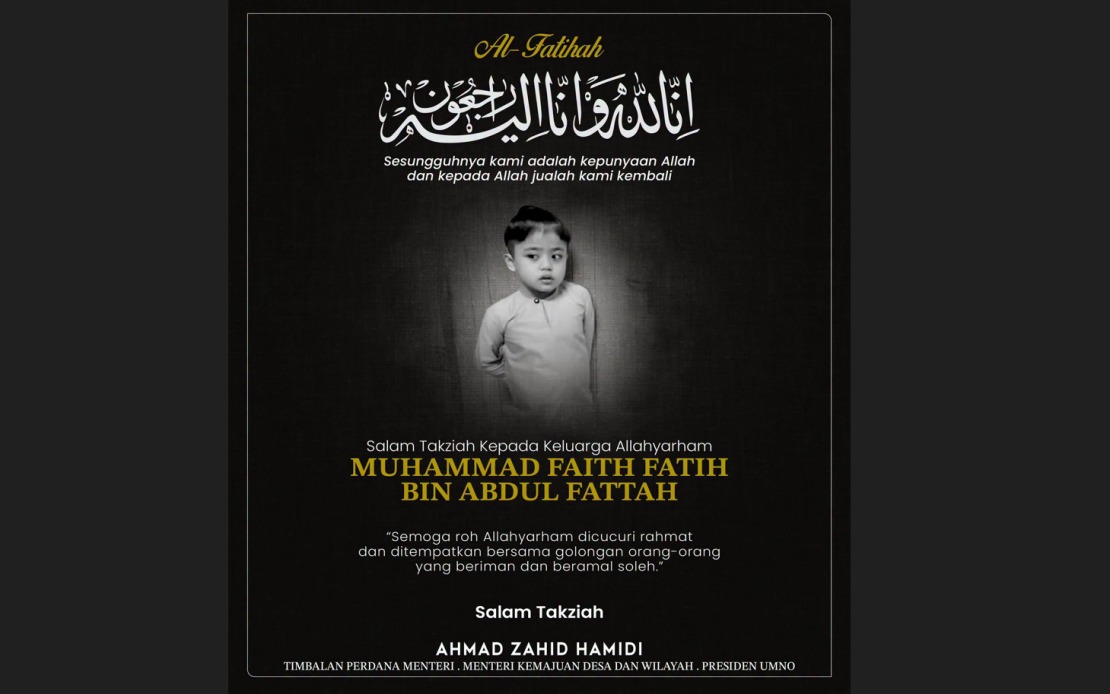
Deputy Prime Minister Datuk Seri Dr Ahmad Zahid Hamidi has offered condolences to the family of Muhammad Faith Fatih Abdullah Fattah, a six-year-old child with autism, whose body was discovered in an oil palm plantation near Sungai Sumun in Hutan Melintang, Perak, on the evening of June 30.
Ahmad Zahid, who represents the parliamentary constituency of Bagan Datuk, shared his sympathies through a social media statement, describing the loss as particularly devastating given the child's young age and special needs. The incident underscores the vulnerabilities faced by children with developmental disabilities and their families, raising critical questions about safeguarding measures in residential settings and community awareness of autism spectrum disorder in Malaysia.
The child had been reported missing on June 30 before being located during a search and rescue operation at approximately 10.08 pm in a drainage area within the plantation zone. Police received the initial missing persons report at around 4.54 pm, with officers informed that the boy had last been seen in the living room of his residence. The timeline between the report and discovery highlights both the swift response of emergency services and the tragic outcome despite coordinated search efforts.
In his public statement, Ahmad Zahid emphasised the profound emotional toll such a loss inflicts on parents, reflecting on the unique challenges faced by families raising children with special needs. His remarks touch upon a broader societal issue in Malaysia—the lack of comprehensive support systems for caregivers of children with autism and other developmental conditions. Many families struggle with limited respite care options, inadequate public awareness, and insufficient community infrastructure to assist in supervision and daily management.
The Deputy Prime Minister's invocation of religious consolation, calling upon the community to recite Al-Fatihah and seek divine mercy for the deceased, reflects the predominantly Muslim Malaysian context in which such tragedies are processed and grieved. This approach also serves to engage the wider community in acknowledging the family's suffering, fostering collective compassion during their period of acute distress.
Bagan Datuk police chief Supt Mohammad Ali Mohd Jali indicated that the discovery came during an organised search operation, suggesting that authorities mobilised resources promptly following the missing persons report. The location of the body within an oil palm plantation raises concerning questions about the accessibility of such industrial agricultural areas to children, and whether adequate safety barriers or warning systems exist to prevent unintended entry by vulnerable individuals.
This incident reflects a critical gap in Malaysia's child protection framework, particularly for children with autism and other disabilities who may be more susceptible to wandering behaviour, disorientation, or difficulty communicating their location during distress. Autism spectrum disorder encompasses a wide range of presentations, and some individuals experience heightened flight risk or difficulty understanding danger, making environmental safeguards and active supervision paramount.
The loss resonates within a broader context of child welfare challenges across Southeast Asia, where rapid urbanisation and agricultural development sometimes proceed without adequate consideration of safety implications for surrounding communities. Malaysian policymakers and child protection advocates are increasingly recognising that specialised support—including sensory-friendly environments, trauma-informed responses, and community education—must accompany general child safety measures.
Families of children with autism in Malaysia often navigate their responsibilities with minimal institutional support, limited specialist services, and social stigma that can isolate parents from wider community networks. The tragedy underscores the urgent need for enhanced collaboration between government agencies, healthcare providers, educational institutions, and community organisations to establish comprehensive safety protocols and support mechanisms tailored to the needs of children with developmental disabilities.
Ahmad Zahid's public acknowledgment of the incident, while primarily an expression of condolence, also signals political awareness of child welfare as a pressing public concern. Such statements from senior officials can catalyse increased scrutiny of existing safeguarding practices and prompt discussions about legislative or policy improvements necessary to prevent similar tragedies.
The circumstances surrounding the child's disappearance and subsequent discovery will likely prompt investigations into potential preventive measures, environmental modifications, and enhanced supervision protocols that could be implemented in residential areas adjacent to industrial plantations. Authorities may also consider whether public awareness campaigns regarding autism and child safety could assist families and community members in recognising warning signs and responding appropriately to at-risk children.

