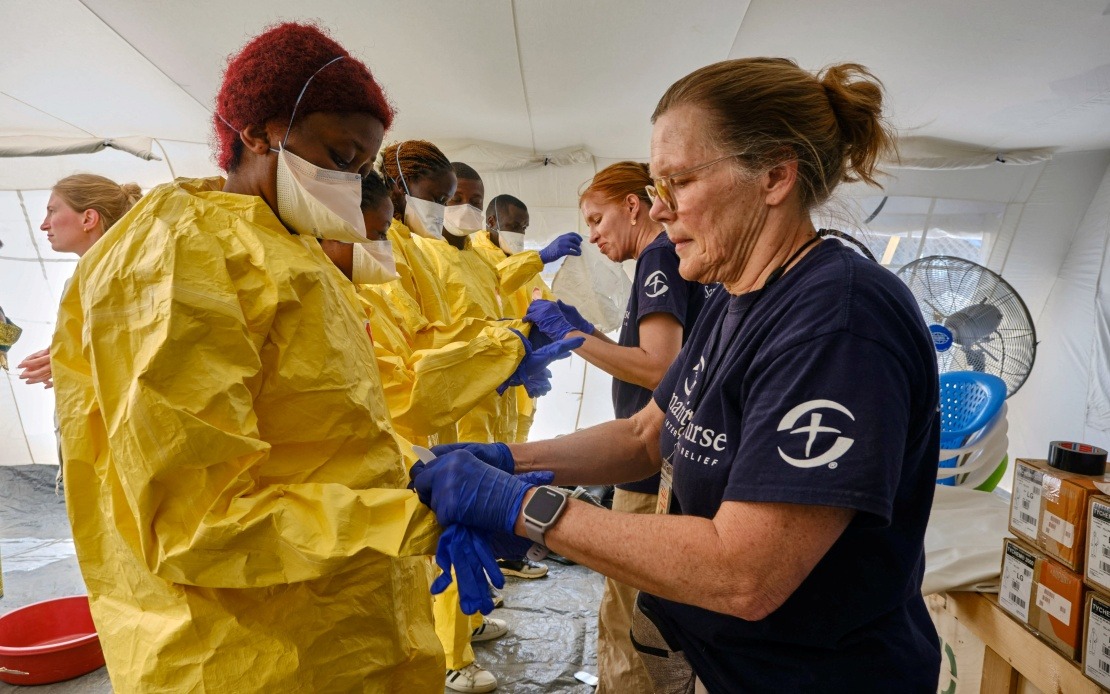
The Ebola outbreak ravaging the eastern Democratic Republic of the Congo has claimed 1,269 lives among 2,905 confirmed cases, according to the country's health ministry. While the figures represent a substantial escalation from previous counts, officials have cautioned that the dramatic surge largely reflects administrative rather than epidemiological factors—a reality that reveals both the scale of the crisis and the logistical challenges hampering the response.
The sharp uptick in case numbers stems primarily from the integration of previously separate disease surveillance systems on Wednesday, when the eastern provinces of Ituri and North Kivu synchronized their records with the national database. This consolidation brought thousands of previously uncounted cases into the official tally, demonstrating how data fragmentation across conflict-affected regions has masked the true dimensions of the outbreak. The health ministry emphasised that Wednesday's reported 97 new cases and 62 deaths reflect ongoing transmission, not merely administrative discovery, yet the larger picture underscores persistent gaps in surveillance capacity across remote and insecure territories.
Among the thousands afflicted, prospects for recovery remain limited but tangible: 519 patients have recuperated, while 722 others continue isolation and treatment in overwhelmed health facilities. These figures highlight a critical bottleneck in the outbreak response. Prime Minister Judith Suminwa Tuluka visited Kisangani, the capital of Tshopo province—one of the newly identified affected areas—and identified a fundamental barrier to survival: patients are arriving at medical centres only after developing severe symptoms, when therapeutic options have already narrowed considerably and mortality risk peaks sharply.
This delayed presentation reflects multiple reinforcing obstacles endemic to Central Africa's health landscape. Community mistrust of authorities, geographic isolation, limited health literacy, and competing infectious disease burdens all conspire to keep vulnerable populations away from clinics until disease progression becomes undeniable. The Prime Minister accordingly pledged that the government would accelerate community education initiatives and grassroots awareness campaigns aimed at shifting behaviour—encouraging suspected cases to present early, when antiviral treatments and supportive care offer better prospects for survival.
Financial commitment to the crisis response has materialized, with the DRC government allocating US$50 million to the Ebola containment effort. These resources are being strategically distributed across clinical and epidemiological infrastructure: laboratory capacity, medical equipment, decentralized community surveillance networks, and direct patient care services. For a nation already strained by multiple concurrent crises, this expenditure represents a substantial mobilization, though observers question whether the sum adequately addresses the scale of need across vast, underdeveloped territory.
On the global health front, a potential game-changing development has emerged from academic and pharmaceutical collaboration. The University of Oxford announced that the first volunteer has received an experimental vaccine specifically designed to counter the Bundibugyo ebolavirus species responsible for this outbreak. The candidate vaccine, designated ChAdOx1 BDBV, represents the culmination of research by Oxford's Vaccine Group and its Pandemic Sciences Institute, and marks a historic milestone: the initiation of the world's first human clinical trial for a Bundibugyo-targeted immunisation.
Manufacturing capacity has been pre-positioned strategically: the Serum Institute of India, a massive vaccine manufacturer headquartered in Pune, has already manufactured and stockpiled approximately 620,000 doses of the vaccine. Of these, 4,000 doses have been allocated specifically for the ongoing investigational trial, signalling confidence in the candidate's potential and providing a supply buffer should regulatory and safety assessments prove favourable. This forward-thinking manufacturing commitment reflects lessons learned from previous Ebola emergencies, where vaccine shortages delayed response efforts.
The initial trial phase is deliberately cautious in design, recruiting approximately 50 healthy adult volunteers in a carefully controlled setting. The primary objectives—assessing safety and measuring immune response—reflect the foundational requirements that must be satisfied before the vaccine can be deployed in outbreak-affected populations. This deliberate pace contrasts with the urgency of the ongoing transmission, illustrating the inherent tension between rigorous safety standards and epidemiological emergency.
Looking ahead, Oxford and its partners have already begun preparing subsequent clinical studies contingent on regulatory approval, with planned implementation in Uganda and potentially other regional locations. This forward-planning suggests confidence in the candidate vaccine's potential, whilst Uganda's inclusion reflects both its geographic proximity to the DRC and its experience managing Ebola outbreaks in recent years. For Southeast Asian observers, the Bundibugyo vaccine development exemplifies how regional manufacturing capacity—particularly India's vaccine production ecosystem—can address emerging infectious disease threats affecting vulnerable populations across Africa and potentially globally.
The convergence of mounting case counts, delayed-care patterns, finite resources, and nascent vaccine prospects encapsulates the Ebola crisis's defining dynamics. While the Oxford-Serum Institute partnership offers hope, the outbreak's continued acceleration across weakly resourced provinces underscores the region's ongoing vulnerability. For Malaysia and the broader Southeast Asian region, the DRC situation serves as a sobering reminder of pandemic preparedness imperatives: surveillance systems must be integrated and robust, vaccine manufacturing capacity must be cultivated regionally, and community engagement strategies must address cultural and structural barriers to healthcare-seeking behaviour.

