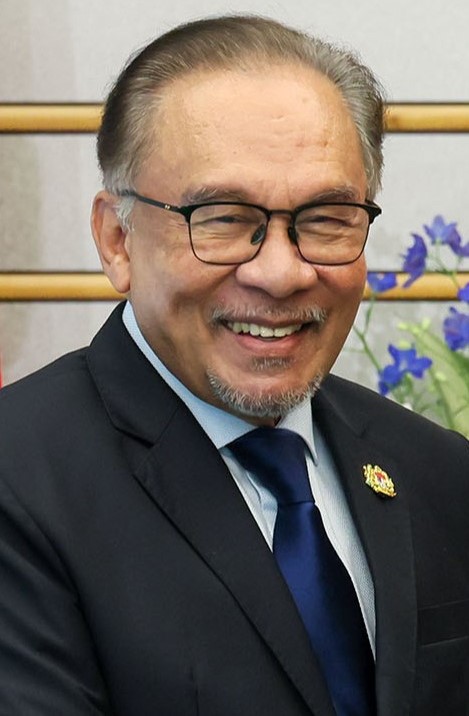
Dr Maszlee Malik, who previously served as Malaysia's education minister, has surfaced as a likely prospect to represent PKR in the looming Johor state election, according to sources close to the party machinery. The development has generated considerable interest within political circles in the southern state, as PKR continues to scout experienced figures capable of competing in what promises to be a fiercely contested electoral cycle.
The former minister's potential candidacy reflects PKR's broader strategy of fielding prominent personalities with established public recognition and track records in ministerial office. Such an approach aims to strengthen the party's electoral standing in Johor, a state where the political landscape has undergone significant shifts in recent years. By deploying personalities of Maszlee's stature, PKR seeks to enhance its appeal among voters while demonstrating institutional depth beyond its conventional support base.
Maszlee's background in education policy positions him as a candidate capable of resonating with constituencies concerned with schooling standards, curriculum development, and youth engagement. His tenure in the education portfolio, though ultimately brief, exposed him to complex policy challenges and earned him visibility in national discourse. This experience could prove valuable in a state election context where local issues intertwine with broader national concerns, particularly among younger voters and families prioritising educational advancement.
For PKR, the nomination of established figures serves a dual purpose. It bolsters the party's credibility among swing voters who may harbour reservations about opposition politics, while simultaneously signalling to the party base that leadership development remains a central concern. Fielding candidates with ministerial experience also establishes a clear narrative that PKR possesses the capacity to govern effectively should electoral outcomes favour the opposition coalition.
The timing of this speculation coincides with intensifying preparations across various political formations for the Johor election. State-level politics in Malaysia have become increasingly consequential, as victories in key states reshape the overall political balance at federal level. Johor, as the second-most populous state and a traditionally competitive arena, holds outsized importance in national political calculations. Parties are therefore investing substantial effort in candidate selection, seeking combinations of local appeal and national prominence.
PKR's consideration of Maszlee also reflects demographic realities within Johor's electorate. The state encompasses urban constituencies with educated, relatively cosmopolitan populations alongside rural areas with distinct concerns. A candidate perceived as intelligent, reform-minded, and equipped with substantive policy knowledge might successfully straddle these divides, communicating effectively with diverse voter segments. Maszlee's public articulation of policy positions has historically appealed to educated, middle-class audiences who increasingly shape electoral outcomes in developed constituencies.
The nomination process within PKR typically balances various considerations beyond simple competence or visibility. Party leadership weighs factional dynamics, regional representation, and the probability of electoral success in specific constituencies. That Maszlee is reportedly being discussed for candidacy suggests the party leadership views him as satisfying multiple criteria simultaneously—possessing both the stature to elevate the ticket and realistic prospects of securing victory in a targeted seat.
For Malaysian political observers, the potential candidacy underscores PKR's evolution from a party predominantly associated with street-level activism toward one increasingly capable of attracting establishment figures. This transition carries implications for how opposition politics develop across Southeast Asia more broadly, as it demonstrates pathways through which experienced professionals can transition into electoral politics outside traditional governing coalitions. Maszlee's possible move also illustrates how individual political trajectories intersect with party strategy, particularly when figures exit high office and seek alternative platforms for continued influence.
The Johor election, whenever it materialises, will test whether voters reward parties for deploying nationally recognised candidates. Recent Malaysian electoral history suggests mixed results on this question—high-profile figures sometimes generate enthusiasm but do not automatically translate recognition into victory, particularly if local issues predominate or if voters perceive candidates as parachuted into constituencies lacking deep roots. How Maszlee would navigate such dynamics, should he indeed secure nomination and contest, remains an open question that could shape perceptions of his political future and PKR's strategic wisdom.
As deliberations around candidate lists continue behind closed doors, the emergence of Maszlee's name represents one data point among many indicating how Malaysian parties are positioning themselves for the electoral contests ahead. Whether he ultimately receives the nomination, competes in a marginal seat or a relatively safer one, and how voters respond will collectively constitute a minor chapter in Johor's ongoing political narrative, while contributing to broader observations about opposition party development and the persistence of personality-driven politics in Malaysian democracy.