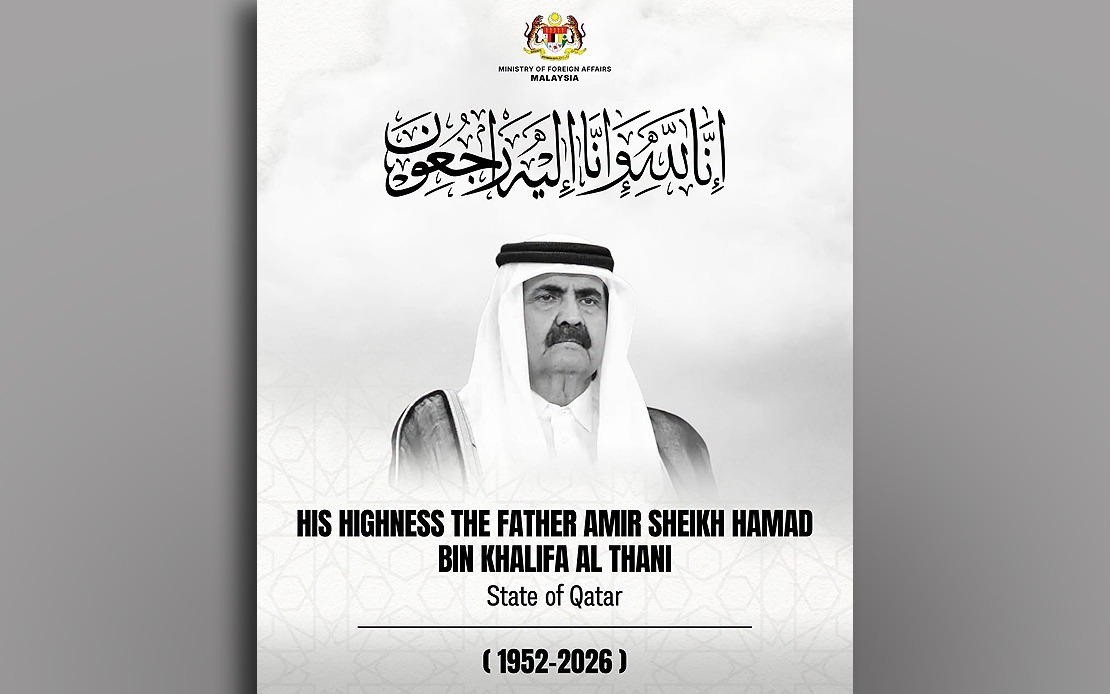
Malaysia's Higher Education Minister Datuk Seri Dr Zambry Abdul Kadir has been designated as the official representative of the Malaysian government to pay final respects to Qatar's late Amir, Sheikh Hamad bin Khalifa Al Thani, during a two-day mourning period beginning July 13. The diplomatic mission underscores Malaysia's commitment to maintaining robust bilateral relations with the Gulf state at a moment of significant national transition in Doha.
The current Amir of Qatar, Sheikh Tamim bin Hamad Al Thani, will receive international condolences at Lusail Palace from July 13 through July 15, welcoming foreign heads of state, members of the ruling Al Thani family, and dignitaries from around the world. This ceremonial reception represents a critical moment in Qatar's diplomatic calendar and reflects the international stature of the late Father Amir, whose passing marks the end of an era in the emirate's modern history.
Quatar's Foreign Ministry released a formal statement expressing Malaysia's profound grief at the loss and affirming the nation's solidarity with Qatar's leadership and citizens during this period of national mourning. The language of the statement, carefully calibrated to reflect both respect and genuine sympathy, demonstrates the depth of the Malaysia-Qatar relationship, which extends across political, economic, and cultural dimensions that have been cultivated over decades.
The Qatari government has declared four consecutive days of official mourning throughout the country, commencing on Sunday, July 12. This declaration represents the highest order of ceremonial respect in the Qatari state apparatus and signals the magnitude of the late Amir's significance to the nation's identity and governance. During this extended period, all government ministries, public institutions, and official agencies across Qatar will remain closed, effectively halting routine administrative operations to allow the entire nation to participate in collective remembrance.
The selection of Dr Zambry as Malaysia's representative carries particular significance given his portfolio and standing within the government hierarchy. As the Minister of Higher Education, his presence symbolizes Malaysia's respect for Qatar's intellectual and institutional legacy, particularly the partnerships that have developed between Malaysian and Qatari universities and research institutions. These educational connections have fostered substantial people-to-people exchanges and knowledge-sharing initiatives that benefit both nations.
Qatar holds considerable importance in Malaysia's broader regional and international strategy. Beyond bilateral ties, the two countries share common interests within the Organisation of Islamic Cooperation, ASEAN's growing engagement with the Gulf Cooperation Council, and various multilateral forums. The late Amir's tenure witnessed significant developments in Qatar's regional influence and soft power initiatives, making this transition period particularly notable for neighboring and allied nations monitoring political developments in the Gulf.
Malaysia's diplomatic presence at Qatar's state mourning serves multiple purposes within the framework of international relations. It demonstrates respect for a fellow Muslim-majority nation during a sensitive period of leadership succession, reinforces Malaysia's commitment to strengthening ties with Gulf partners, and ensures continuity in diplomatic engagement as Qatar navigates the transition to the next chapter of its governance. Such gestures, though ceremonial in appearance, carry substantial weight in the calculus of international diplomacy and alliance-building.
The timing and composition of Malaysia's delegation will likely be closely observed by other regional players and international observers as an indicator of how various nations are positioning themselves relative to Qatar's evolving political landscape. For Malaysia specifically, the decision to send a senior minister rather than a lower-ranking official reflects the seriousness with which Kuala Lumpur views both its relationship with Qatar and the moment of transition the Gulf state is experiencing.
Bilateral cooperation between Malaysia and Qatar extends across multiple sectors including investment, trade, defense, and cultural exchange. Qatari investors have taken stakes in Malaysian real estate and infrastructure projects, while Malaysian professionals have contributed expertise to Qatar's ambitious economic diversification initiatives. The mourning period and subsequent reception provide an opportunity to reinforce these multifaceted connections and signal Malaysian commitment to deepening engagement under the new Amir's leadership.
For Malaysian readers, this diplomatic development reflects the broader principle that maintains Malaysia's foreign policy: the cultivation of respectful relationships with nations across the Islamic world and beyond. The government's measured response to Qatar's loss, channeled through the formal representation of a cabinet-level minister, exemplifies how Malaysia navigates the complexities of international relations while honoring the customs and sensitivities of fellow states. As Qatar proceeds through this period of transition, Malaysia's presence at the mourning ceremonies signals both continuity and readiness to engage constructively with Doha's future direction.

