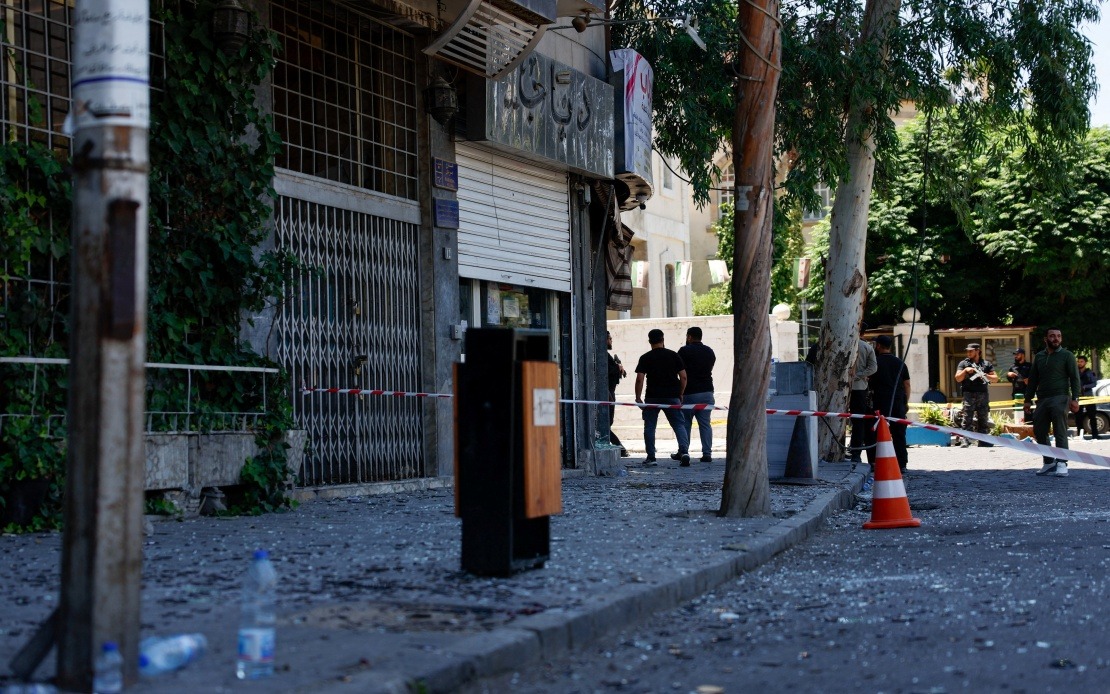
Two improvised explosive devices detonated in Damascus on Tuesday, injuring at least 18 people including four police officers, according to Syria's Interior Ministry. The twin blasts struck near the accommodation where French President Emmanuel Macron was lodging during his significant diplomatic mission to the country. The Élysée Palace confirmed that Macron remained unharmed throughout the incident, and he continued with his scheduled bilateral talks at the presidential palace as planned.
The explosions unfolded in rapid succession, with initial reports from the Syrian Observatory for Human Rights indicating that a first blast was swiftly followed by a considerably more powerful detonation. The proximity of these incidents to Macron's hotel raised immediate security concerns, though the French leader's protective detail had ensured his safety during the assault. The timing appeared deliberate, suggesting a coordinated effort to disrupt or make a statement during one of Syria's most prominent international engagements in recent years.
Macron's visit represents a watershed moment for Syria's diplomatic standing. He became the first European Union leader to set foot in the country since 2010, marking a significant thaw in international relations following years of isolation over the Syrian conflict. His arrival on Monday evening signalled Europe's gradual re-engagement with Damascus, a development watched closely across the Middle East and beyond. The explosions, whatever their origin, threatened to overshadow this carefully orchestrated diplomatic breakthrough.
Emergency services mobilised swiftly following the blasts, with ambulances and medical personnel converging on the affected area within minutes. Syrian security forces rapidly cordoned off the surrounding neighbourhood, establishing a perimeter to prevent further access and contain the scene. The swift response reflected the heightened security posture already in place due to Macron's presence, though it also underscored the ongoing vulnerability of Damascus to such attacks despite claims of improved stability.
The incident illuminates the complex security environment persisting in Syria even as the country's political leadership seeks rehabilitation on the international stage. Improvised explosive devices have remained a persistent threat throughout the post-conflict period, wielded by remnant opposition factions, criminal networks, or groups opposed to ongoing political developments. The target selection—proximity to a visiting dignitary—suggested either a sophisticated operation with specific political messaging, or an attempt to undermine the legitimacy of Macron's engagement.
For Malaysia and other Southeast Asian nations maintaining diplomatic relations with Syria, the incident serves as a reminder of the unpredictable security environment surrounding official visits to Damascus. Malaysian businesses and citizens with interests in Syria must continue exercising heightened caution, particularly during high-profile international events that might attract attention from hostile actors. The Interior Ministry's handling of the situation and swift security response indicated institutional capacity to manage crises, though vulnerabilities clearly remain.
Macron's deliberate continuation with bilateral discussions following the explosions represented a calculated political message—that France's commitment to re-engaging Syria would not be deterred by security incidents. The detailed talks between French and Syrian delegations proceeded at the presidential palace, allowing both governments to advance their negotiated agenda. This resilience in the face of attack demonstrated the seriousness with which Paris approaches its renewed involvement in Syrian affairs, though critics might argue such determination risks endorsing engagement regardless of security realities.
The explosions raised broader questions about the sustainability of Syria's reintegration into the international community. While Arab League readmission occurred in May and diplomatic visits are resuming, the persistence of security threats suggests that normalization remains incomplete. International investors and partners considering deeper involvement in Syria's reconstruction must weigh the tactical security improvements against the demonstrated capacity for coordinated attacks in the capital itself. The incident suggests that Syria's security situation, while improved from conflict-era chaos, has not yet stabilized sufficiently to guarantee safety for high-level diplomatic engagements.
Macron's presence in Damascus represented a European pivot that carries implications for global alignments in the region. France's willingness to lead EU re-engagement with Syria potentially signals a shift in Western approaches to the Assad government, moving away from isolation toward pragmatic dialogue. Whether subsequent explosions would accelerate or decelerate this trend remained uncertain, though the French leader's refusal to curtail his visit suggested that a single security incident would not derail the strategic recalibration. For smaller nations like Malaysia navigating complex relationships across the Middle East, France's actions establish important precedents regarding how to balance security concerns against diplomatic engagement.

