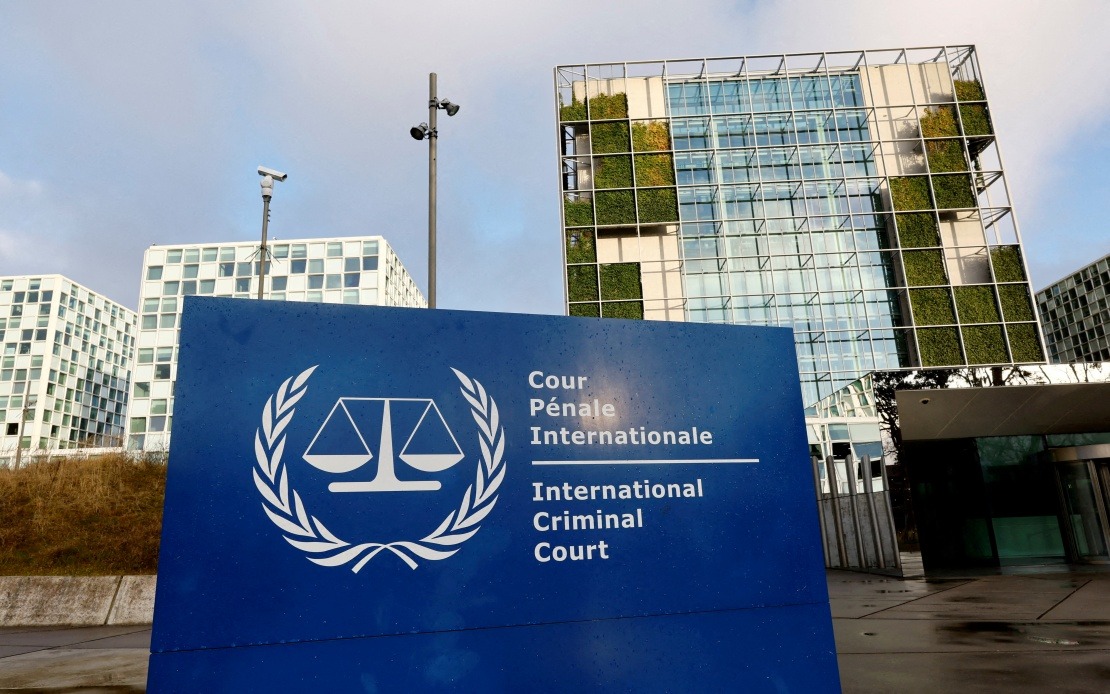
The Netherlands' academic legal community has issued a stark warning about the United States' escalating confrontation with the International Criminal Court, arguing that Washington's strategy threatens the very foundations of international justice and the rules-based global system. The criticism comes as the Dutch government itself weighs how to respond to American pressure, given The Hague's historical role as a seat of international law and arbiter of disputes between nations.
The US State Department launched its latest offensive against the ICC on July 13, framing the Hague-based tribunal as posing "an intolerable threat" to American interests. According to Washington's assessment, the court's claim to investigate and prosecute American service members and government officials—even when they act in pursuit of US policy—represents an unacceptable infringement on national sovereignty. This rhetorical and diplomatic manoeuvre has intensified what was already a contentious relationship between America and the institution it helped establish more than two decades ago.
Alette Smeulers, professor of international crimes at the University of Groningen, rejected the American framing as fundamentally misguided. Speaking to international media, Smeulers emphasised that the ICC operates within strict jurisdictional constraints, prosecuting only the gravest offences and only when crimes are committed on territory belonging to member states or by citizens of those states. She underscored that the court cannot simply pursue whomever it wishes; rather, its mandate is bounded by the Rome Statute, the treaty that established it. This technical reality, she argued, exposes the hollowness of American claims about ICC overreach.
What troubles Smeulers most is the philosophical direction the US campaign represents. If powerful nations succeed in dismantling multilateral institutions designed to hold all states accountable equally, the world would inevitably shift toward a system where military and economic strength determines justice rather than consistent legal principles. Such an outcome would mark a fundamental departure from the post-1945 international order built on the premise that smaller and weaker nations deserve the same legal protections as superpowers. The consequences for Malaysian and Southeast Asian countries, which have historically relied on international law to constrain more powerful neighbours, would be severe.
Kyra Wigard, an assistant professor of law at Utrecht University, focused her criticism on a particularly troubling element of American policy: the imposition of sanctions against ICC judges. Wigard characterised these measures as "absurd," noting that sanctions are conventionally reserved for state and non-state actors engaged in terrorism or warfare. Using such economic coercive tools against members of the judiciary represents an extraordinary escalation and a form of pressure that subverts judicial independence. When governments sanction judges for their official conduct, they effectively signal that legal decisions they dislike can be punished through state power, fundamentally compromising the rule of law.
The December 2024 sanctions against two ICC judges, which the United States justified on grounds of alleged "politicised actions" against Israel, exemplified this troubling trend. By punishing judges for their judicial decisions—rather than for personal corruption or criminal conduct—America was sending a message that the bench should consider geopolitical consequences when interpreting international law. This dynamic is particularly destabilising for countries like Malaysia and other Southeast Asian nations that depend on impartial application of international legal norms to protect their interests against larger powers.
Smeulers highlighted another dimension of American strategy that carries profound implications for global governance: Washington's reported intention to pressure other nations to withdraw from the Rome Statute and terminate their membership in the ICC. If successful, such a campaign would hollow out the institution from within, depriving it of legitimacy and resources. For Malaysia, which has not ratified the Rome Statute, this pressure campaign presents a dilemma—remaining outside the system insulates the country from potential ICC jurisdiction but also means foregoing a seat at the table where international criminal justice rules are made and enforced.
The timing of the American campaign reflects deeper anxieties about ICC investigations into various conflicts and situations, particularly regarding alleged Israeli conduct in Palestine. However, using the Palestinian situation as justification for dismantling the entire institution risks throwing out a mechanism that many nations, particularly smaller ones, view as essential protection against great power impunity. The contrast between America's founding role in establishing international justice institutions and its current campaign to weaken them illustrates how geopolitical interests can override institutional commitments when perceived threats emerge.
For Southeast Asia and the broader Global South, the stakes are extraordinarily high. These regions contain numerous fragile states and developing economies vulnerable to intervention by wealthier, militarily superior powers. The ICC, despite its limitations and criticisms, represents one of few mechanisms through which victims of mass atrocities might seek justice when their own governments cannot or will not prosecute perpetrators. If the United States successfully undermines this institution, it sends a message that powerful nations will ultimately reject international constraints on their conduct, leaving smaller countries without recourse.
The Dutch scholars' intervention reflects broader European unease about American actions that appear to privilege national interest over international institutional health. As a country that hosts both the ICC and the International Court of Justice, the Netherlands has strong institutional and diplomatic interests in defending international law's credibility and independence. Yet even accounting for Dutch institutional interests, the fundamental point remains valid: if the rules-based international system is selectively applied, it ceases to function as a genuine constraint on powerful actors and becomes merely a tool for advancing particular interests.
Smeulers warned that the cumulative impact of American pressure could fundamentally alter how international law functions, not merely weakening the ICC but signalling to other governments that institutional commitments are expendable when convenient. If that signal takes hold, the consequence would be a world progressively less governed by legal principle and increasingly determined by raw power. For Malaysia and most countries lacking America's military and economic dominance, such a transition represents a catastrophic loss of the limited protections that international law currently affords.

