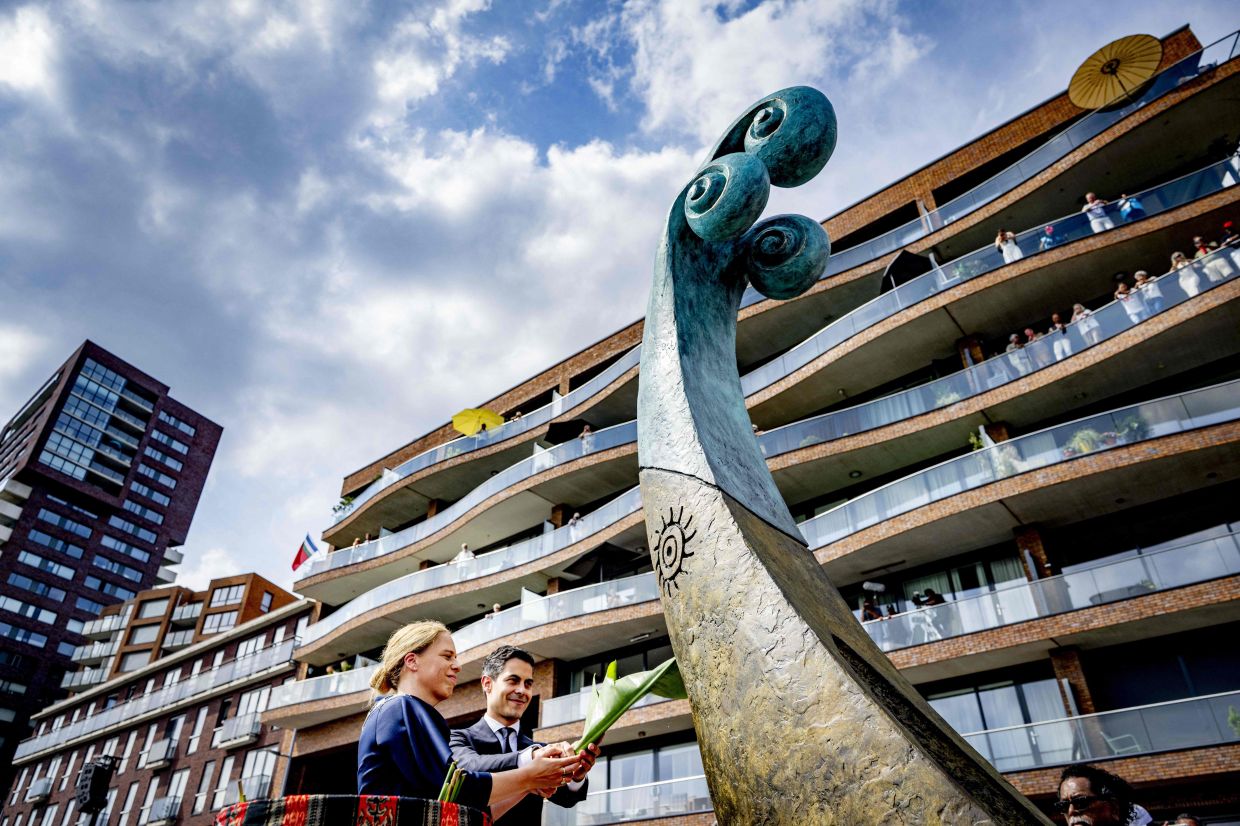
Dutch Prime Minister Rob Jetten has issued a formal state apology to members of the Moluccan community, addressing a historical injustice that has haunted Dutch-Indonesian relations for more than seven decades. Speaking at a monument unveiling in Rotterdam on Sunday, Jetten acknowledged the systematic neglect and broken commitments that defined the experience of thousands of people from Indonesia's eastern spice islands who were transported to the Netherlands after World War II.
The Moluccans' predicament stemmed from their service in the Dutch colonial military during Indonesia's struggle for independence following the Second World War. As fighters loyal to the Dutch crown, they faced an uncertain future when Indonesia secured independence in 1949, having sided with the departing colonial power. To prevent likely reprisals from newly independent Indonesia, the Dutch government orchestrated a state-organised transfer programme that brought approximately 12,500 Moluccans to the Netherlands, ostensibly as a temporary measure until circumstances permitted their safe return home.
The temporary arrangement, however, became a permanent condition of abandonment. Dutch authorities never fulfilled their commitment to repatriate the community, leaving them stranded in a country that made little effort to welcome them. Those who had served in the military were summarily discharged upon arrival, their years of service to the Dutch cause abruptly terminated. The authorities then housed many in former concentration camps that had been used by Nazi occupiers to imprison Jews during the Holocaust—a deeply traumatic choice that compounded the psychological damage already inflicted on a displaced and betrayed population.
Conditions for the Moluccan community throughout the postwar decades reflected systematic institutional indifference. They were confined to inadequate housing, left without meaningful employment opportunities, and effectively excluded from mainstream Dutch society through policies and practice that prevented integration. Families were separated, livelihoods were denied, and the community's profound longing to return to their homeland was met with official silence and bureaucratic stonewalling. For people who had sacrificed their standing in an independent Indonesia out of loyalty to Dutch colonial authority, the treatment represented a profound betrayal.
This abandonment created intergenerational trauma that erupted into violence during the 1970s, when second-generation Moluccans who had grown up in limbo began taking direct action against the Dutch state. These youth, born after the war or brought as small children, had never known the spice islands their parents yearned for, yet they inherited their elders' sense of injustice. Several violent incidents during that decade demonstrated the depths of alienation and anger within the community, a consequence of broken promises and institutional neglect that Dutch authorities had failed to address through any meaningful reconciliation or redress.
The monument unveiled on Lloydkade in Rotterdam carries symbolic weight precisely because of its location. The Rotterdam waterfront was where the first ships carrying Moluccans arrived in the late 1940s, the point where temporary displacement began its transformation into permanent exile. Unveiling a memorial at this site represents an acknowledgment that the Dutch state recognizes this location as marking the beginning of a historical wrong that required formal recognition and apology.
In his address to hundreds of Moluccans gathered for the ceremony, many holding photographs of first-generation community members now deceased, Jetten articulated the scope of the injustice with unusual directness. His apology encompassed the failure to provide adequate reception and housing, the systematic invisibility imposed on the community, the constant abandonment and absence of official recognition, and the grief that accumulated across family networks as decades passed without resolution. The Prime Minister's visible emotion during the address suggested genuine acknowledgment of the weight of historical failure.
Jetten was careful, however, to maintain realistic expectations about what symbolic gestures could accomplish. He explicitly stated that an apology, however formal and heartfelt, cannot retrospectively undo the decades of suffering or instantly repair the psychological and social damage inflicted on the community. The words spoken on Lloydkade cannot restore lost decades to those who died in exile, cannot return stolen time to families separated by bureaucratic indifference, and cannot simply erase the legacy of institutional betrayal that shaped the Moluccan experience in the Netherlands.
Yet Jetten framed the apology as an act of historical justice—a formal state recognition that wrongs were committed and that the community's suffering was neither accidental nor inevitable, but rather the product of deliberate policy choices and subsequent refusals to rectify them. For a nation that prides itself on progressive values and human rights commitments, acknowledging colonial-era failures and their postwar consequences represents a significant, if belated, step toward accountability. The apology implicitly recognizes that the Moluccan experience contradicts narratives about Dutch tolerance and enlightenment that have long been central to national self-conception.
For Malaysian and Southeast Asian observers, the Moluccan case illuminates enduring tensions in postcolonial geopolitics. The treatment of Moluccans who remained loyal to colonial authority after independence reflects broader regional patterns in how successor states and former colonial powers managed populations caught between competing sovereignties. The decades-long failure to resolve the Moluccan situation also demonstrates how historical injustices can persist without formal state acknowledgment and apology, festering across generations and producing social dysfunction and alienation.
The Dutch government's apology comes as countries across Southeast Asia continue grappling with colonial legacies and their contemporary manifestations. The formal recognition of institutional wrongdoing, even when it cannot undo historical damage, establishes an important precedent for accountability and creates space for communities to process collective trauma. For the Moluccan community in the Netherlands, the apology may offer some measure of dignity and validation, even as it arrives too late for many who suffered the full weight of postwar displacement and abandonment.

