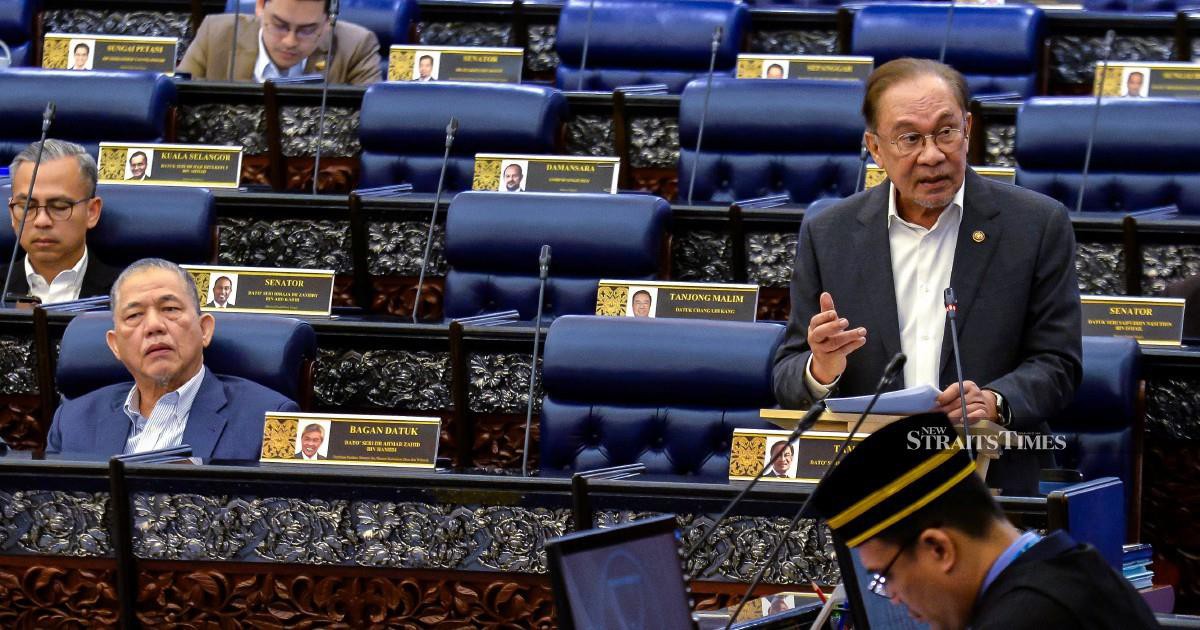
Prime Minister Anwar Ibrahim has imposed a strict liability framework on Malaysia's e-wallet industry, requiring providers to assume financial responsibility for compensating fraud victims whenever they fail to deploy fraud prevention systems mandated by Bank Negara Malaysia (BNM), regardless of whether customer negligence played a role in the scam. The requirement mandates that eligible issuers process full refunds to affected individuals within seven working days of receiving a formal complaint, establishing one of the region's most consumer-protective standards for digital payment incidents.
This directive represents a significant shift in how Malaysia approaches fraud accountability in the fintech sector. Rather than distributing blame between consumers and service providers based on individual circumstances, the government has effectively placed the burden of prevention squarely on e-wallet companies themselves. The policy signals that while users may bear some responsibility through poor security practices, the onus remains firmly on financial intermediaries to erect technological barriers robust enough to stop fraudsters from accessing customer funds in the first instance. By coupling this with swift compensation timelines, the framework aims to protect consumer confidence in digital payment systems during a period when e-wallet adoption has accelerated across Malaysia.
The Malaysian fintech landscape has expanded dramatically over the past five years, with e-wallets becoming integral to daily commerce from hawker stalls to highway toll payments. This growth has inevitably attracted sophisticated fraud operators who exploit both technological vulnerabilities and human psychology to perpetrate increasingly elaborate scams. The previous regulatory posture often required consumers to prove they had exercised reasonable care before qualifying for compensation, a burden that disadvantaged less tech-savvy users and created administrative friction in dispute resolution. Anwar's announcement inverts this presumption, treating fraud prevention primarily as a technical and operational responsibility of service providers rather than a shared burden between commercial entities and individuals.
Bank Negara Malaysia, already at the forefront of regional financial regulation, had previously established specific fraud prevention standards that e-wallet firms were expected to meet. These safeguards likely encompass multi-factor authentication protocols, transaction velocity checks, device fingerprinting, and real-time anomaly detection systems. However, the central bank's prior framework lacked explicit consequences when issuers neglected to implement these measures or maintained inadequate versions. The Prime Minister's pronouncement essentially weaponises compliance by creating a concrete financial penalty, transforming regulatory expectations from advisory guidance into a binding obligation backed by customer refunds. This approach recognises that technology companies often treat compliance as a cost-minimisation exercise unless explicit consequences materialise.
The seven-day settlement window carries particular importance for Malaysian consumers. In fraud situations, rapid fund restoration can prevent cascading financial hardships, particularly affecting individuals living paycheck to paycheck or small merchants managing tight cash flows. This accelerated timeline also incentivises e-wallet firms to maintain robust systems and swift verification procedures, since delays could expose them to regulatory scrutiny or consumer backlash. The requirement further differs markedly from traditional banking systems in some jurisdictions, where fraud resolution can stretch across several weeks, leaving victims in financial limbo.
The provision's specific language addressing user negligence reflects sophisticated policymaking. Scams frequently involve elaborate psychological manipulation where even technologically savvy individuals fall victim to convincing phishing schemes, impersonation tactics, or social engineering. By explicitly stipulating that customer negligence cannot eliminate the issuer's compensation obligation, regulators acknowledge that preventing fraud increasingly depends on institutional capacity rather than individual vigilance alone. A perfectly security-conscious consumer cannot defend against compromised merchant websites or app store fraud if the underlying payment system lacks proper authentication checks. This recognition aligns with emerging global best practices, where financial regulators increasingly hold payment processors accountable as the parties best positioned to prevent unauthorised transactions.
For Malaysia's e-wallet ecosystem, the directive creates both challenges and competitive opportunities. Well-capitalised firms with substantial technology investments will find compliance manageable and potentially market-differentiating, as they can advertise superior fraud protection without customer liability. Smaller or less sophisticated operators may face substantial costs upgrading infrastructure to meet BNM standards, potentially triggering consolidation within the sector as weaker players struggle with compliance expenses. This competitive dynamic could ultimately strengthen the industry by removing marginal operators and concentrating services among providers with genuine capacity to protect customer assets.
The policy also addresses a transparency gap that has plagued Malaysia's digital payment sector. Previously, scam victims often remained uncertain whether their losses stemmed from their own actions, security failures by the e-wallet firm, or criminal sophistication beyond reasonable prevention. The new framework eliminates much of this ambiguity by establishing that if a provider has not implemented prescribed safeguards, compensation follows automatically. This clarity enables consumers to make informed choices about which platforms to trust and pressures issuers to publicly demonstrate their compliance with BNM standards, fostering competitive differentiation around security credentials.
Implementing this directive will require Bank Negara Malaysia to establish efficient monitoring mechanisms to verify that e-wallet firms actually maintain mandated fraud prevention systems and process compensation claims within specified timeframes. The central bank will likely need to establish complaint handling infrastructure, audit procedures to confirm safeguard deployment, and potentially penalties for issuers that fail to compensate victims promptly. These administrative requirements represent meaningful resource commitments but reflect the seriousness with which authorities view fraud protection in a rapidly digitising economy.
From a regional perspective, Malaysia's stance may influence fintech regulation across Southeast Asia, where countries are grappling with similar challenges as digital payments proliferate. Thailand, Indonesia, and the Philippines all face growing fraud complaints as e-wallet usage expands, and regulators in these jurisdictions may view the Malaysian framework as a blueprint for balancing innovation encouragement with consumer protection. The approach also demonstrates that emerging markets need not simply adopt wholesale regulatory models from developed nations but can innovate consumer protections tailored to local circumstances, where payment systems often leapfrog traditional banking infrastructure.
The directive's ultimate effectiveness depends on implementation rigour and the government's willingness to sanction non-compliant issuers. If Bank Negara Malaysia enforces the requirement consistently and publicises enforcement actions, e-wallet firms will prioritise fraud prevention investments. Conversely, if the policy becomes performative—announced but unevenly enforced—firms may calculate that occasional compensation costs remain cheaper than comprehensive system upgrades. Consumer advocacy groups will likely monitor compliance closely, and transparent public reporting of fraud claims and resolution statistics would strengthen the framework's credibility and ensure genuine protection rather than merely regulatory theatre.

