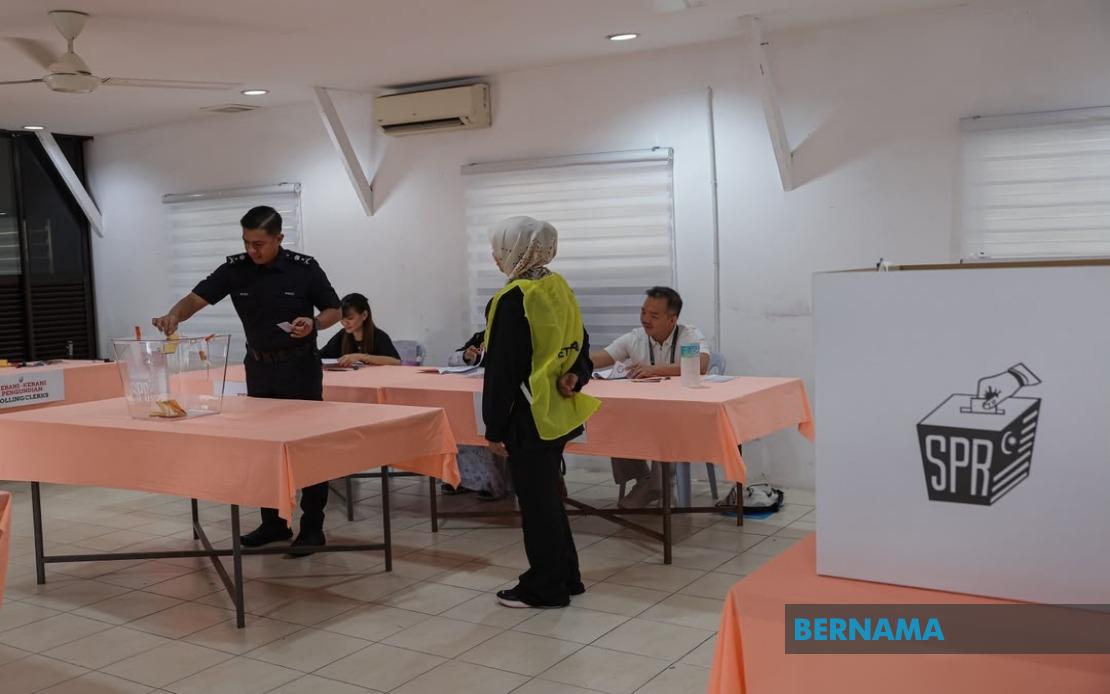
Early voting commenced across Negeri Sembilan on July 28 as the Election Commission facilitated the casting of ballots by security forces and their spouses ahead of the general election scheduled for August 1. The 38 polling centres opened at 8 am to accommodate 22,339 eligible voters from the armed forces and law enforcement agencies, completing the staggered closure process between noon and 5 pm according to the commission's predetermined schedule.
The contingent of security personnel and their families represents a significant voter bloc whose early participation is crucial to Malaysia's electoral system. The Malaysian Armed Forces contributed the largest component to this early vote, with 16,884 personnel and spouses utilising eight designated polling centres nationwide. This arrangement reflects the institutional recognition that military and police personnel require accommodation within the electoral calendar due to operational commitments and deployment considerations.
The Royal Malaysia Police fielded the second-largest group within this early voting phase, with 5,455 members and their families distributed across 30 polling centres. The geographic spread of these facilities underscores the logistical complexity of managing security force voting, which necessarily reflects the dispersed nature of police deployments throughout the peninsula. The staggered centre closures facilitated orderly voting while accommodating shift patterns and duty rosters.
Weather conditions favoured the voting process on Sunday, with observations across most areas reporting bright, clear conditions. Such favourable meteorological circumstances typically support voter participation, removing environmental barriers that might otherwise discourage attendance at polling facilities. The operational success of early voting depends substantially on such practical considerations beyond the formal machinery of elections.
The Negeri Sembilan State Election represents a significant political contest with the state assembly comprising 36 seats contested by 103 candidates spanning multiple political formations. Pakatan Harapan leads the candidate count with 36 nominees, positioning the coalition with representation in every constituency. Barisan Nasional fielded 25 candidates, while Perikatan Nasional's component party Bersatu stood 24 hopefuls, indicating the major coalitions' strategic investments in the state contest.
The diverse political landscape extends beyond the major coalitions, with Perikatan Nasional itself fielding 11 candidates separately from its Bersatu component, suggesting complex internal negotiations within the opposition alliance. Four independent candidates seek election, while smaller parties including Berjasa, ASLI, and PSM each nominated single candidates. This fragmented field reflects both the competitive nature of state politics and the challenges facing smaller political entities in building critical electoral mass.
Approximately 889,490 ordinary voters will exercise their franchise when the general poll opens on August 1, making this one of Malaysia's larger state elections in terms of electorate size. The substantial voter population underscores Negeri Sembilan's significance within Malaysia's federal system and its economic importance as the home of Port Dickson and a manufacturing hub. The election outcome will influence not only state governance but carries implications for the broader national political balance.
The dissolution of the state assembly on June 5 initiated the electoral process, removing the previous legislative body and triggering the machinery for selecting its successor. This interim period between dissolution and election represents a critical juncture when political parties mobilise support, candidates campaign, and voters assess competing visions for the state's direction. The compressed campaign timeline following the assembly's dissolution concentrates political activity within a defined period before the August 1 voting date.
For Malaysian voters and regional observers, the Negeri Sembilan election provides a barometer of political sentiment within a crucial peninsular state. The performance of Pakatan Harapan, the Barisan Nasional, and Perikatan Nasional in converting their respective candidate numbers into electoral representation will offer insights into evolving voter preferences and coalition strength. Early voting by security personnel, while logistically necessary, also carries symbolic significance as these highly disciplined constituencies frequently demonstrate distinct voting patterns that analysts monitor closely for trend indicators.
The management of security force voting through dedicated centres and early balloting represents established Malaysian electoral practice designed to balance operational necessity with democratic participation principles. The systematic accommodation of armed forces and police personnel within the electoral calendar acknowledges their constrained availability while ensuring their franchise participation. This institutional arrangement has become routine within Malaysian elections, though the numbers involved—over 22,000 voters in this single state election—illustrate the substantial military and paramilitary presence integrated within the electoral system.
The August 1 election will determine not only the composition of the Negeri Sembilan State Legislative Assembly but also establish the political leadership directing state administration for the ensuing electoral term. The early voting process conducted on July 28 represents merely the initial stage of this democratic exercise, with the general poll offering the broader electorate their opportunity to determine the state's political future.

