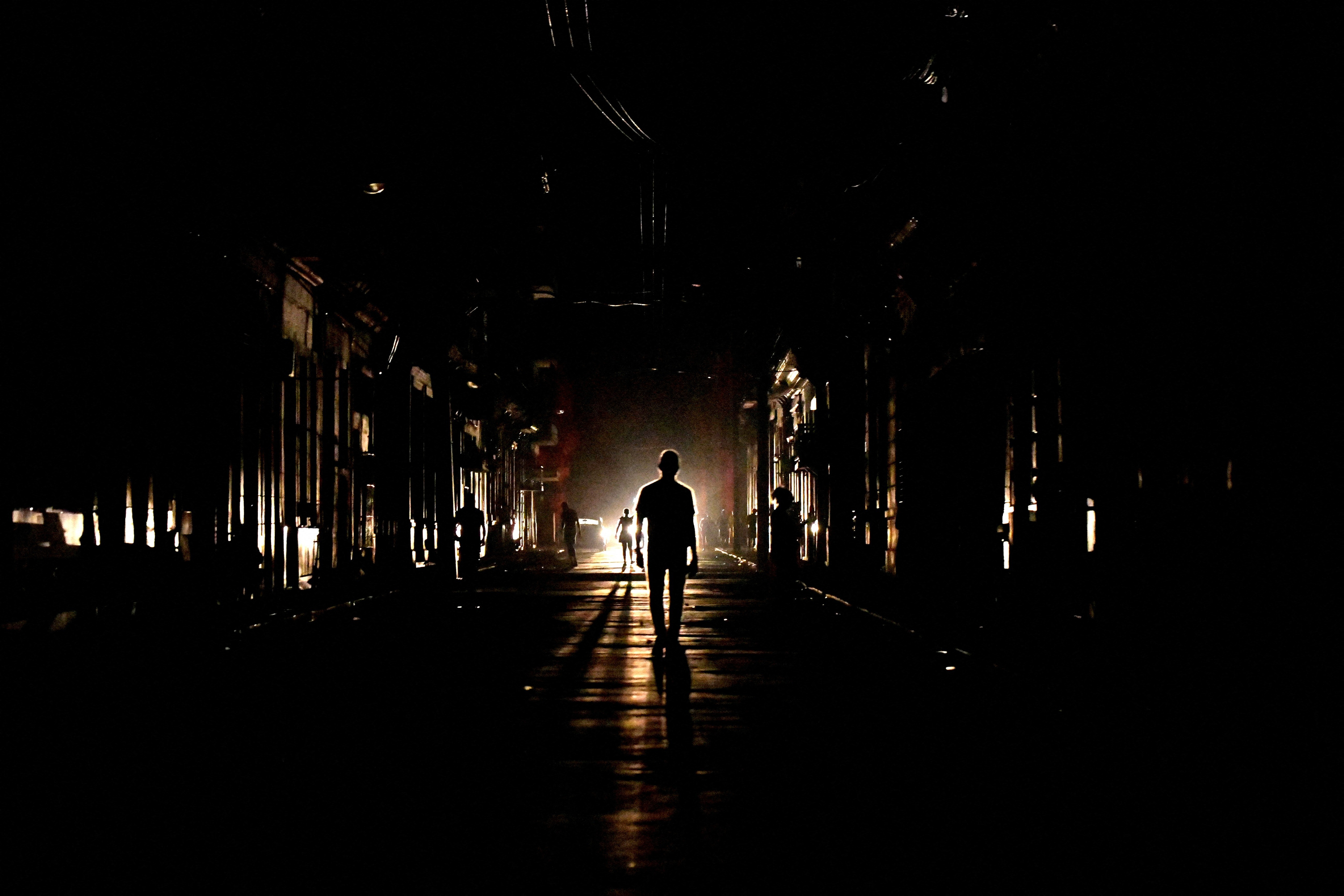
Eastern Libya descended into darkness late Thursday when a widespread blackout swept through the region, leaving millions without power and exposing the fragility of critical infrastructure amid the country's deepening political crisis. Major population centres including Benghazi and the town of Marj experienced complete electrical failures, with streets and residential neighbourhoods plunged into darkness according to local media reports and footage from affected areas. The outage underscored Libya's vulnerability to infrastructure collapse at a time when the nation grapples with competing authorities and ongoing security challenges.
The blackout came as Libya's electricity crisis has reached critical levels, compounding public frustration with essential services. The eastern region, which falls under the jurisdiction of the House of Representatives-appointed government based in Benghazi and led by Osama Hammad, depends heavily on aging generation and distribution networks that have deteriorated over years of conflict. The timing of the outage highlighted how Libya's political paralysis has prevented the investment and maintenance needed to keep basic services operational for ordinary citizens across both eastern and western territories.
Within hours of the outage, the Electricity Ministry operating under the eastern government announced that several power generation units had been brought back online, allowing a gradual restoration of supply to affected areas. Priority was given to essential services, with electricity restored first to Benghazi's 1,200-bed hospital—a critical facility serving a city of roughly 700,000 people—and subsequently to multiple neighbourhoods in the southern part of the city. This phased approach reflected the ministry's attempt to stabilise the overall power grid while preventing new failures that could result from sudden demand surges.
Technical teams mobilised across generation, transmission and distribution networks to identify and repair the source of the blackout while managing the careful restoration of electricity loads. Authorities deliberately brought power back gradually rather than rapidly, a standard procedure designed to prevent cascading failures that could plunge the system into even greater darkness. Officials acknowledged that work would continue for some time to restore full service to all affected communities, suggesting that complete recovery could take hours or potentially days depending on infrastructure damage.
Libya's predicament reflects broader Middle Eastern and North African challenges around governance and service delivery, matters that resonate across the region including Southeast Asia's own experiences with infrastructure vulnerability. Since the 2011 overthrow of Muammar Gaddafi, Libya has remained fractured between competing administrations, each claiming legitimacy but neither possessing the coherence or resources to rebuild the institutions necessary for state functioning. Prime Minister Abdul Hamid Dbeibah's internationally recognised Government of National Unity operates from Tripoli and controls western Libya, while the House of Representatives' appointed government administers the east from Benghazi, creating dual power structures that prevent unified policy implementation.
This administrative schism has proven catastrophic for infrastructure. Electricity systems require coordinated planning, unified investment strategies and consistent technical standards across entire territories. The division of Libya into competing jurisdictions means neither government can implement comprehensive reforms, prioritise maintenance systematically or secure financing for upgrades. The result is a deteriorating network increasingly susceptible to unexpected failures that, once they occur, take longer to repair due to fragmented response capabilities.
Recent weeks have witnessed cascading security and service crises that compound the electricity challenge. Western cities including Zawiya and Sorman have experienced armed conflicts, while drone attacks have struck oil production facilities in Zawiya, threatening the energy sector revenues essential for funding infrastructure. These security incidents create environments hostile to technical work and further divert scarce resources from civilian infrastructure toward military needs. The combination produces a spiral where security deterioration worsens public services, which erodes state legitimacy and creates conditions for further instability.
The United Nations Support Mission in Libya has invested significant diplomatic effort attempting to mediate between the rival governments and create conditions for national elections that Libyans widely view as essential for political reunification. UNSMIL recognises that without electoral processes and constitutional frameworks, the current standoff will perpetuate—preventing the unified governance required for infrastructure restoration. However, the competing governments have repeatedly delayed elections due to disputes over electoral systems, constitutional issues and representations of power, leaving ordinary Libyans in limbo without the services or political direction they require.
For regional observers including those in Southeast Asia, Libya's experience offers cautionary lessons about the consequences of political fragmentation on basic service delivery. While Malaysia and other ASEAN nations have generally maintained more unified governance structures, the Libyan case demonstrates how political division can degrade even systems that once functioned adequately. The blackout affecting hospitals, homes and businesses exposes how quickly modern infrastructure becomes unreliable without consistent central authority and unified investment frameworks.
The electricity crisis also carries implications beyond Libya's borders. As the region's largest economy and a significant energy producer before recent conflicts, Libya's infrastructure collapse affects not only its own citizens but also impacts regional and global energy markets. Instability in Libyan electricity systems mirrors broader concerns about Middle Eastern infrastructure vulnerability, something that has implications for energy security discussions that extend to Asian markets dependent on regional stability.
For Libyans, the blackout represents another reminder that their country's political stalemate produces tangible daily hardship. Without electricity, hospitals struggle to maintain life-saving equipment, water systems fail, businesses close and families endure uncomfortable nights. These realities create pressure for political resolution, yet without external support and genuine commitment from rival leaders to compromise, the crisis deepens. Until Libya achieves unified governance capable of implementing coherent infrastructure policies, blackouts will likely become increasingly common rather than aberrations.

