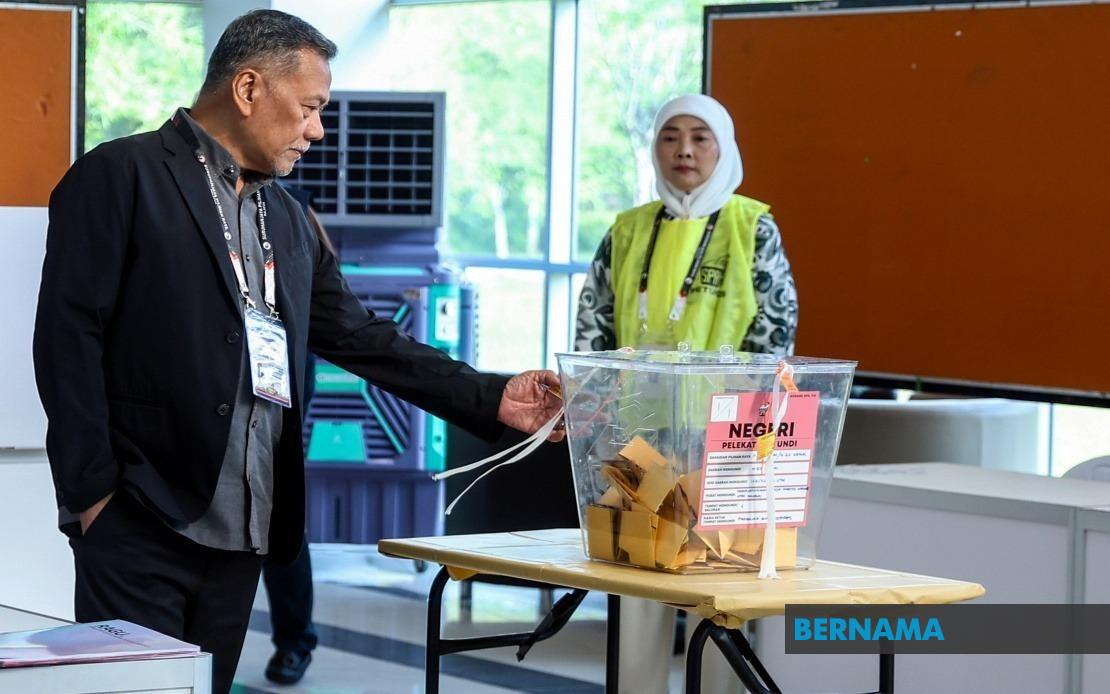
Datuk Seri Ramlan Harun, the chairman of the Election Commission, undertook a comprehensive inspection tour of multiple polling stations across Johor Bahru on July 11, demonstrating the electoral authority's commitment to overseeing the 16th Johor state election. The visits to four separate voting locations throughout the city formed part of the EC's quality assurance measures, aimed at guaranteeing that balloting operations remained efficient, transparent, and conducted according to established procedures.
The inspection commenced at approximately 8.50 am at the Dewan Raya Taman Ungku Tun Aminah polling centre, which served voters in the Skudai constituency. This particular location had been configured with seven separate polling streams to manage voter flow and maintain social distancing protocols. The Skudai constituency represents a significant urban area in Johor, traditionally witnessing substantial voter participation during state and federal elections.
Following his initial assessment, Ramlan proceeded to the Raja Zarith Sofiah Library at Universiti Teknologi Malaysia in the Senai constituency. This academic institution served as a polling venue, benefiting from its central location and adequate facilities to accommodate the voting process. The university's library had been set up with two polling streams to facilitate the casting of ballots by both students and staff members, as well as registered voters from the surrounding constituency. The utilisation of educational facilities as polling centres reflects a broader strategy by electoral authorities to ensure accessibility while leveraging existing infrastructure.
The Election Commission chairman subsequently visited Sekolah Agama Taman Bukit Mewah, which covered the Kempas constituency polling district. This school-based centre had been organised with six separate polling streams, reflecting the population density and expected voter turnout in that area. Religious schools frequently serve as polling venues across Malaysia, as they typically possess adequate space, security features, and community trust that facilitate smooth electoral operations.
Ramlan's final stop took him to Sekolah Menengah Kebangsaan Bandar Uda Utama in the Perling constituency, which had been configured with nine polling streams—the highest number among the four inspected locations. This allocation underscores the anticipated voter volume in the Perling area and the EC's effort to prevent congestion and lengthy queues on polling day.
During each of his visits, Ramlan engaged directly with election officials responsible for managing the polling centres. He was briefed comprehensively on the day's voting procedures, including verification processes, ballot security measures, and voter authentication systems. Such operational briefings allow the EC leadership to identify any logistical challenges, equipment malfunctions, or procedural inconsistencies that might require immediate intervention.
Beyond procedural discussions, the chairman also examined the physical facilities and amenities provided at each location. This inspection encompassed assessments of voting booths, queue management infrastructure, accessibility arrangements for elderly and disabled voters, and the work environment for election personnel including poll workers and observers. Adequate facilities are essential for sustaining the integrity of the electoral process and ensuring that all voters—regardless of physical capability—can participate without undue hardship.
The inspection tour reflects the EC's broader supervisory responsibilities during state elections. As the constitutional body tasked with administering Malaysia's electoral framework, the commission maintains continuous oversight throughout polling day to address emerging issues and maintain public confidence in the voting process. Such visible engagement by senior leadership sends a message to election staff and stakeholders that the EC prioritises operational excellence and transparency.
For Malaysian observers of state-level elections, the conduct and efficiency of polling operations directly impacts public perception of democratic legitimacy. Johor, as Malaysia's second-largest state by population and an economically significant region, attracts particular attention during electoral exercises. Smooth and well-managed voting procedures enhance electoral credibility and encourage citizen participation in future elections.
The inspection also serves a preventive function, allowing the EC to identify potential problems before they escalate into more serious complications that could affect voting outcomes or trigger disputes. By touring facilities early in the polling day, Ramlan's team could address staffing issues, equipment problems, or procedural ambiguities while remedial action remained feasible.
The chairman's hands-on approach demonstrates the commission's commitment to maintaining electoral standards across all constituencies, regardless of their political leanings or population demographics. This impartiality is crucial for preserving the credibility of electoral institutions in a diverse democracy like Malaysia, where public trust in the electoral process remains fundamental to political stability.
Following the completion of his inspection circuit, Ramlan was scheduled to address the media at a press conference, providing an opportunity to communicate findings to the public and address any concerns arising from the polling process. Such transparent communication helps maintain accountability and enables real-time correction of procedural issues that observers might identify.

