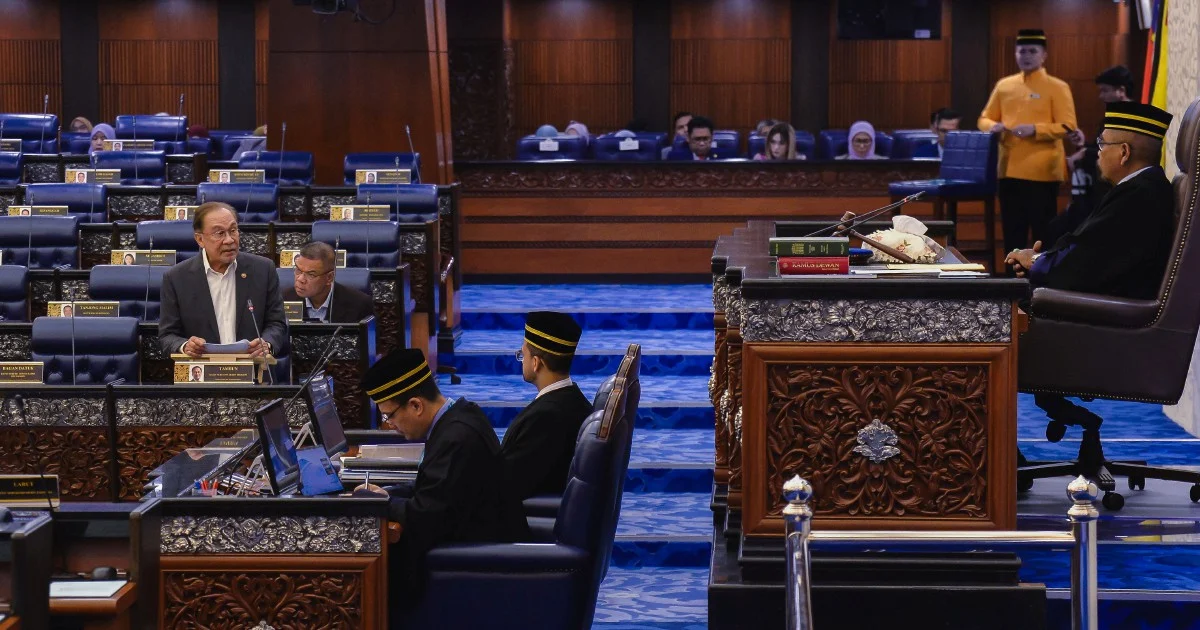
Prime Minister Datuk Seri Anwar Ibrahim has confirmed that Malaysia's Election Commission will pursue enforcement action against caretaker administrations that overstep election protocols by issuing policy announcements or implementing decisions carrying substantial financial implications. This declaration underscores growing concerns about governmental overreach during transitional periods when electoral processes are underway and administrations operate under constrained authority.
The announcement addresses longstanding tensions between the need for continuity in government operations and the imperative to maintain a level playing field during elections. Caretaker governments, by constitutional design, are meant to manage routine affairs while major policy commitments and spending decisions are deferred until a new administration takes office following electoral results. The Prime Minister's statement signals renewed commitment to enforcing these boundaries, which have occasionally been tested by outgoing administrations seeking to implement initiatives before losing power.
For Malaysian voters and political observers, this clarification carries significant implications. Election guidelines exist to prevent incumbent advantages that could unfairly influence electoral outcomes. When caretaker governments announce major projects, commit substantial budgets, or introduce new policies, such actions can sway public perception and voter behaviour in ways that compromise the democratic principle of impartial elections. The EC's empowerment to act represents an attempt to police these boundaries more rigorously than has occurred historically.
The timing of this pronouncement reflects Malaysia's evolving electoral architecture and governance standards. The nation has held multiple elections across different levels since the 2018 political transition, each generating technical and procedural lessons. Earlier caretaker periods have witnessed controversial decisions that drew criticism from opposition parties and civil society observers, suggesting the need for clearer deterrents and enforcement mechanisms. By explicitly stating the EC's enforcement capacity, the government aims to establish more predictable expectations for future electoral cycles.
The scope of "decisions with financial implications" remains crucial to interpretation. This category encompasses obvious examples such as announcing major infrastructure projects, allocating emergency funds, or commencing procurement processes. However, grey areas persist. Routine government spending required for daily operations, emergency responses to natural disasters, or critical public health measures may carry financial elements yet fall outside the spirit of electoral restrictions. The EC will likely develop interpretive guidelines distinguishing between necessary governance functions and discretionary political decisions aimed at generating electoral advantage.
For regional observers, Malaysia's approach offers comparative context amid broader Southeast Asian concerns about electoral integrity. Several nations in the region struggle with caretaker period governance, where outgoing administrations attempt to consolidate power or extract resources before transitioning. Malaysia's institutional mechanisms, including the Election Commission's regulatory role, demonstrate one approach to constraining such behaviour. However, the effectiveness ultimately depends on consistent enforcement and political will across successive administrations regardless of party affiliation.
The Prime Minister's statement also reflects internal coalition dynamics within Malaysia's government. Different political factions and parties maintaining the current administration may hold divergent interests in how strictly caretaker restrictions are applied. Clear public commitments from the Prime Minister help establish standards that apply equally, reducing scope for selective enforcement accusations. This uniformity of application remains essential for maintaining institutional credibility across electoral cycles.
Looking forward, the EC faces practical challenges in implementation. Determining whether an announcement constitutes a policy decision with financial implications versus a routine operational statement requires consistent interpretation. The commission will need to develop transparent criteria accessible to the general public, enabling Malaysia's media, civil society organisations, and political parties to assess compliance independently rather than relying solely on EC determinations. Such transparency builds public confidence in electoral fairness.
The administrative mechanisms for EC action also warrant consideration. The statement mentions action but specifies neither the sanctions available nor the procedural steps involved. Potential remedies might include reversing decisions, imposing penalties on officials, or filing complaints to appropriate oversight bodies. Clarifying these mechanisms would help caretaker officials understand the consequences of violations and enable the commission to enforce standards consistently and predictably.
For businesses and investors, this development introduces additional variables affecting government decision-making timelines. Major contracts or policy initiatives may face delays if announcements risk triggering EC action during caretaker periods. Forward-planning becomes more complex when significant decisions require waiting for a newly-constituted government, potentially extending uncertainty for stakeholders dependent on government actions. Industries relying on government procurement or regulatory approvals may experience disruptions across electoral cycles.
The statement aligns with international best practices regarding electoral impartiality and caretaker governance. Many established democracies enforce comparable restrictions, recognising that electoral credibility depends on preventing incumbent abuse of governmental resources and authority. Malaysia's position on this issue reflects maturation of its electoral institutions and increased standards for governance conduct.
Moving beyond the immediate announcement, sustained attention to enforcement will determine whether this commitment translates into meaningful change. Caretaker governments will test boundaries, and the EC's willingness to act consistently against violations from administrations of all political complexions will establish whether these guidelines become binding norms or advisory suggestions. The coming electoral cycles will reveal whether this pronouncement represents institutional strengthening or primarily rhetorical positioning.

