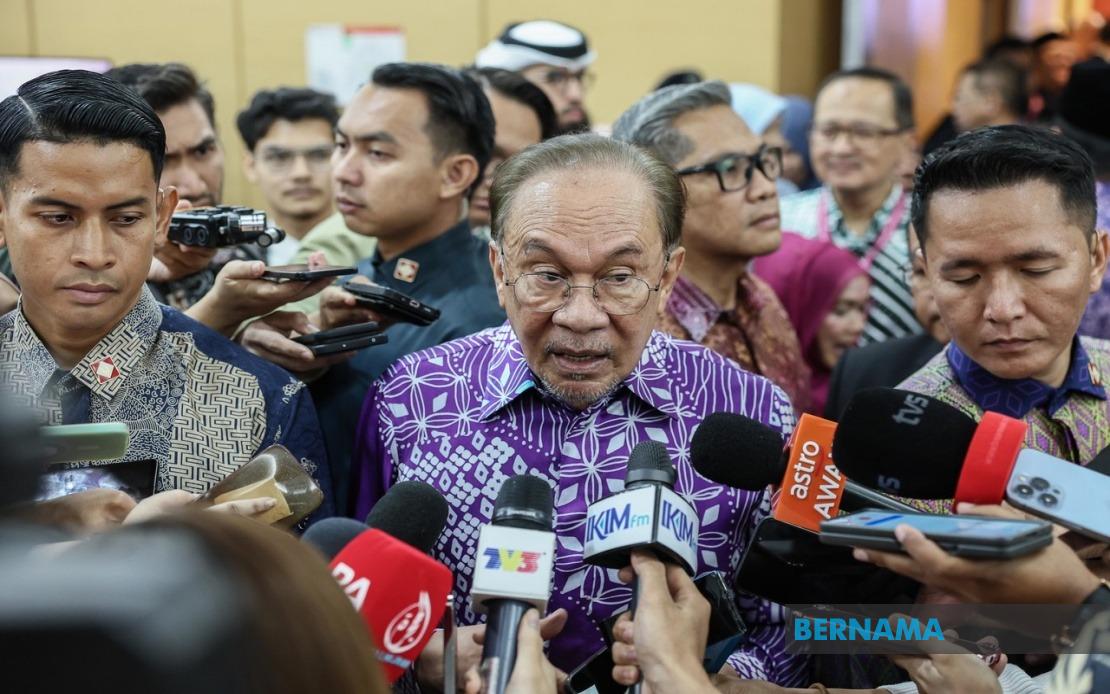
Prime Minister Datuk Seri Anwar Ibrahim has issued a pointed reminder to policymakers and business leaders that Malaysia's pursuit of economic prosperity must ultimately serve humanity rather than become an end in itself. Speaking at the Humane Economy Global Discourse (HEGD) 2026 in Kuala Lumpur, Anwar articulated a vision of development that transcends conventional measures of growth, insisting that the nation's approach to technological advancement, investment, and governance be underpinned by a commitment to elevating human dignity and social well-being.
The Prime Minister's intervention comes as Malaysia navigates a period of significant technological disruption and economic transformation. Anwar identified artificial intelligence, renewable energy, advanced manufacturing, and biotechnology as the defining forces reshaping the global economy. These sectors represent both tremendous opportunity and considerable risk for developing economies like Malaysia. Without careful moral anchoring, he implied, the pursuit of these technologies could exacerbate inequality, displace workers, and degrade social cohesion—outcomes that would ultimately undermine genuine development even as headline growth figures climbed.
Anwar's framing of "reclaiming humanity" addresses a tension that has long vexed developing-world economists and policymakers. Malaysia has achieved remarkable material progress since independence, lifting millions from poverty and establishing itself as a regional economic hub. Yet contemporary challenges—including rising living costs, concerns about social mobility, and anxieties about technological displacement—suggest that GDP expansion alone provides insufficient guidance for policy. The Prime Minister's language reflects growing recognition, evident across Southeast Asia and beyond, that sustainable prosperity requires alignment between economic activity and broader social objectives.
The emphasis on moral purpose in economic policy carries particular resonance in the Malaysian context. The nation's federal constitution and founding principles assert development's ultimate aim as the betterment of all citizens. However, the gap between these ideals and their realisation has periodically widened, particularly during periods of intense focus on industrialisation or trade liberalisation. By invoking this moral dimension at a major international forum, Anwar positions Malaysia as a voice advocating for what some economists term "inclusive growth"—expansion that deliberately strengthens opportunity and security for lower-income and vulnerable populations.
The Humane Economy Global Discourse itself represents an institutionalisation of this philosophical stance. The presence of Minister in the Prime Minister's Department (Religious Affairs) Dr Zulkifli Hasan and Forum Ekonomi Manusiawi Chairman Prof Datuk Dr Saadiah Mohamad at the keynote address underscores the convergence of religious, academic, and governmental perspectives on this question. The event signals that Malaysia's leadership views the integration of ethical considerations into economic decision-making not as tangential or aspirational, but as central to the nation's strategic direction.
For Malaysian readers and policymakers, Anwar's remarks implicitly challenge certain prevailing assumptions about development priorities. The past two decades have witnessed significant policy emphasis on attracting foreign direct investment, achieving fiscal targets, and maintaining international competitiveness—objectives that remain important. However, the Prime Minister's language suggests a recalibration: these conventional targets should be pursued in ways that demonstrably enhance human flourishing. This might mean prioritising investments and technologies that create quality employment, ensuring that transition costs during structural change are borne equitably, and measuring policy success not merely by aggregate output but by improvements in educational access, healthcare, social security, and economic opportunity across regions and communities.
The timing of this emphasis on moral economy also reflects regional and global trends. Across Southeast Asia, governments face growing public demands for development models that address inequality, environmental degradation, and the dislocating effects of rapid technological change. Thailand, Indonesia, and the Philippines have all experienced political movements demanding more inclusive or socially conscious approaches to growth. By articulating this framework explicitly, Anwar positions Malaysia as thoughtfully grappling with these challenges rather than simply pursuing expansion regardless of social consequences.
The practical implications of this worldview extend across multiple policy domains. In education, it suggests prioritising skills development aligned with emerging sectors while ensuring no region or income group is left behind. In labour policy, it implies proactive management of transitions as automation advances, protecting workers through training and social support rather than allowing markets alone to determine outcomes. In environmental regulation, it reinforces commitments to sustainable resource use and climate action as integral to development rather than as constraints upon it. In technology governance, it suggests deliberate efforts to ensure that AI and other innovations enhance rather than diminish human agency and dignity.
For Malaysia's business community and foreign investors, the Prime Minister's message offers both clarity and challenge. Malaysia remains committed to remaining "competitive, productive and open to investment," as Anwar emphasised. However, this openness operates within a framework that increasingly demands alignment with social and ethical standards. Multinational corporations and domestic businesses alike must demonstrate not merely profitability but contribution to broader development objectives. This approach, while potentially creating compliance obligations, also offers long-term stability by embedding business activity within social legitimacy and public support.
The concept of moral economy that Anwar invoked also acknowledges the limits of purely market-driven solutions to social problems. Markets excel at allocating resources efficiently but do not inherently distribute benefits fairly or account for effects on vulnerable populations. By explicitly invoking moral purpose, the Prime Minister signals that government has a responsibility to shape market outcomes through regulation, investment, and policy design. This represents a deliberate counterbalance to decades of economic orthodoxy that emphasised minimal state intervention and market supremacy.
Looking forward, the articulation of this framework at an international discourse serves multiple functions. It communicates Malaysia's values and vision to foreign investors and partners, potentially attracting those aligned with sustainable and inclusive development models. It provides domestic legitimacy for policies that might otherwise appear to constrain short-term growth—environmental regulations, labour protections, or investment requirements—by rooting them in fundamental principles. And it positions Malaysia as a potential intellectual contributor to global discussions about development alternatives, aligning the nation with growing international momentum toward models that prioritise human well-being alongside economic expansion.

