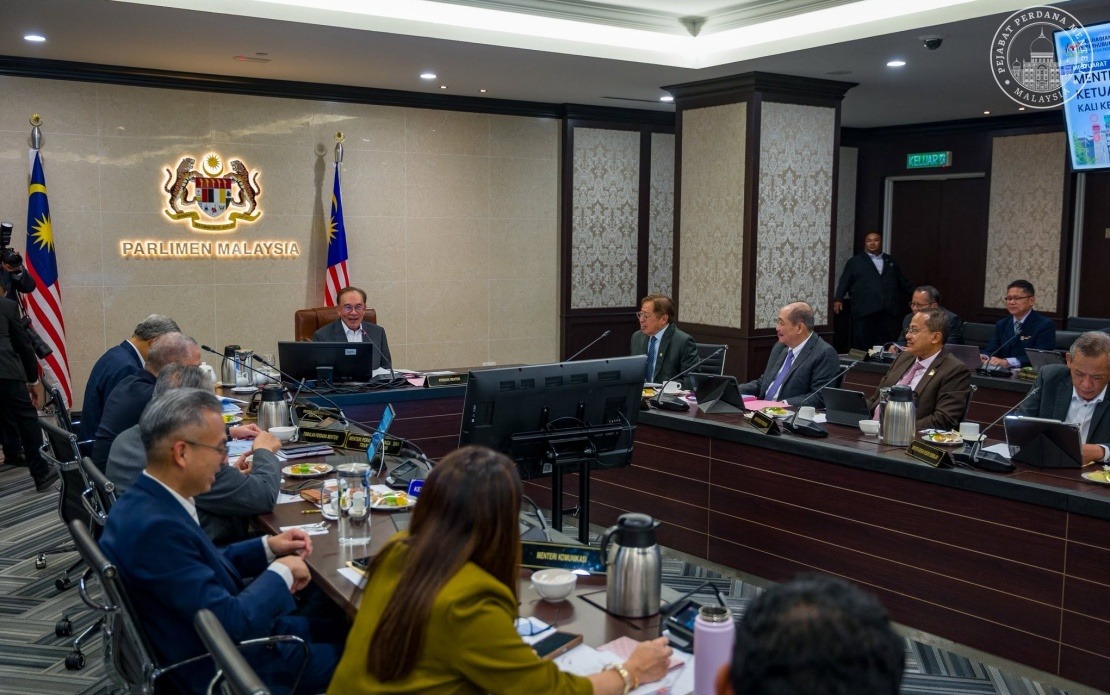
Prime Minister Datuk Seri Anwar Ibrahim brought together the nation's state leaders at Parliament Building for the 149th Meeting of Menteris Besar and Chief Ministers, positioning economic strengthening as the central priority for Malaysia's near-term governance agenda. The gathering, held in the capital on June 23, served as a critical forum for aligning federal and state strategies amid a complex global environment characterised by regional instability and climate-related challenges.
The geopolitical backdrop loomed large over proceedings, with Anwar emphasising how conflicts in West Asia continue reverberating through global markets and supply chains. Malaysia, as a trade-dependent economy with significant exposure to shipping routes and regional commerce, faces tangible risks from prolonged Middle Eastern tensions. The collective acknowledgment of these external headwinds reflected a unified recognition across government tiers that proactive economic measures are essential to insulate Malaysian businesses and workers from international shocks.
Climate preparedness emerged as a parallel concern commanding serious attention from state administrators and federal planners alike. The anticipated El Niño phenomenon represents a multifaceted threat to Malaysia's development trajectory, with implications stretching far beyond immediate weather disruptions. Water supply vulnerabilities could constrain urban and industrial operations, while agricultural productivity faces direct pressure from altered precipitation patterns and temperature extremes. Food security—a critical concern for a nation where rice production falls short of domestic consumption—required explicit governmental focus given El Niño's historical correlation with reduced regional harvests.
Anwar articulated a comprehensive vision extending beyond crisis management to encompass structural policy improvements. The emphasis on integrated implementation across government departments signalled frustration with siloed decision-making that had historically hampered Malaysia's policy effectiveness. By mandating greater coordination between federal agencies and state governments, the meeting sought to eliminate redundancies and ensure that development initiatives reached Malaysian communities with maximum efficiency and responsiveness to local needs.
The commitment to people-centric governance represented more than rhetorical positioning, reflecting instead an acknowledgment that broad-based prosperity underpins political legitimacy in Malaysia's federal system. State governments, as closer administrators of local constituencies, bring essential ground-level perspective on how national policies translate into lived experience. Their participation in high-level economic deliberations ensures that macro-level initiatives remain tethered to community-level realities, from rural agricultural concerns to urban employment dynamics.
Investment attraction surfaced as a strategic imperative requiring coordinated state participation. Malaysia's competitiveness for quality foreign direct investment depends partly on regulatory clarity and efficient approval processes, areas where federal-state coordination proves crucial. By convening menteris besar and chief ministers, Anwar signalled that competing provincial interests must yield to collective competitive positioning, essential for drawing multinational corporations and high-value industries that generate employment across regional boundaries.
The spirit of consensus forged during the meeting carries particular significance in Malaysia's coalition-dominated political landscape, where state governments span multiple ruling parties with distinct priorities. That federal and state leaders converged on shared economic objectives suggests a pragmatic willingness to transcend partisan considerations when national economic interests align. This collaborative posture becomes especially valuable when confronting challenges like El Niño or global market volatility that affect all Malaysians regardless of state political affiliation.
Broad economic revival necessarily encompasses diverse sectors requiring differential attention across states. Anwar's insistence on integrated policymaking addresses the reality that manufacturing clusters in Selangor, agricultural zones in Kedah and Perlis, and petrochemical facilities in Terengganu and Sarawak require tailored support mechanisms coordinated within a coherent national framework. State leaders possess granular knowledge of sectoral dependencies and supply chain interdependencies that must inform federal economic planning.
The meeting underscores Malaysia's vulnerability to interconnected global and regional disruptions that single-entity governance cannot adequately address. Whether navigating West Asian conflicts affecting insurance costs and shipping premiums, or preparing for climatic shifts threatening water and food systems, the nation's resilience depends on institutional mechanisms ensuring rapid information sharing and coordinated response. The 149th menteris besar assembly represents Malaysia's attempt to institutionalise such coordination at the highest governmental level.
Moving forward, the effectiveness of this conclave will be measured not in the rhetoric of togetherness but in tangible policy adjustments emerging across federal and state administrations. Implementation frameworks translating consensus into coordinated action, resource allocation mechanisms supporting weaker-capacity states, and accountability mechanisms tracking progress on agreed initiatives will determine whether this meeting catalyses genuine improvement in Malaysia's economic resilience and administrative efficiency.

