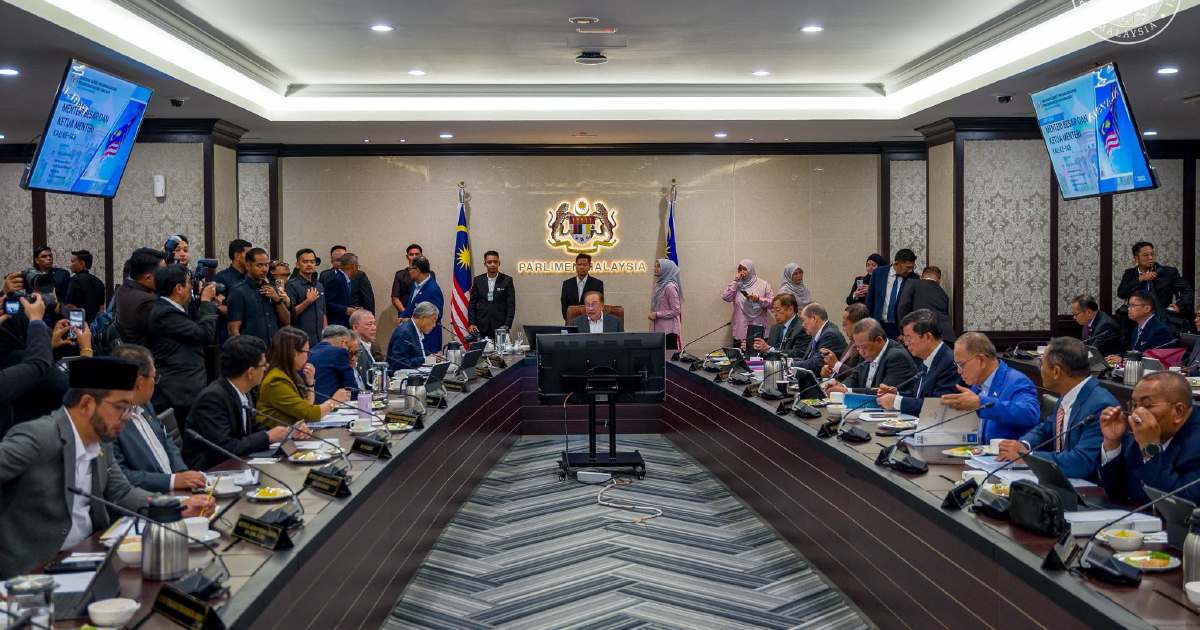
Prime Minister Datuk Seri Anwar Ibrahim brought together the nation's state leaders on Wednesday for the 149th Meeting of Menteris Besar and Chief Ministers at Parliament, positioning economic revival as the central concern amid volatile global conditions. The gathering underscored growing anxieties within Malaysia's political leadership about external shocks to the domestic economy, particularly from escalating tensions in the Middle East that threaten international trade flows and investor confidence across the region.
The timing of the convocation reflects a calculated effort by the federal government to demonstrate unity and coordinated action among the ruling coalition's state administrations. By assembling the country's chief executives under one roof, the Prime Minister signalled that economic recovery would require collaborative effort spanning federal and state jurisdictions. This approach acknowledges a fundamental reality of Malaysia's federal structure: major economic initiatives require alignment between Kuala Lumpur and state governments, from infrastructure spending to investment attraction and business regulation.
Global uncertainties stemming from Middle Eastern conflicts represent a material threat to Malaysia's economic outlook. As a trading nation heavily dependent on international commerce, Malaysia faces potential disruptions to shipping lanes, spikes in energy costs, and reduced demand from key trading partners embroiled in or affected by regional instability. The nation's manufacturing and export sectors, which anchor employment and government revenues, remain vulnerable to supply chain interruptions and diminished investor appetite for Asian exposure during periods of geopolitical stress.
The emphasis on economic strengthening suggests the government recognises that domestic demand alone cannot offset external headwinds. Regional competitors in Southeast Asia are simultaneously pursuing aggressive growth strategies, and Malaysia risks losing ground if it fails to present a coherent and competitive economic narrative. The meeting therefore served partly as a platform to align state governments with federal economic priorities, ensuring that local-level policies do not contradict or undermine national recovery objectives.
State-level implementation proves critical to any nationwide economic strategy. Menteris Besar and Chief Ministers control substantial fiscal resources, regulatory environments, and development planning within their jurisdictions. Disparities in execution across states can create inefficiencies and unequal outcomes, potentially widening the prosperity gap between developed and developing states. A coordinated approach, articulated at the parliamentary gathering, aims to prevent such fragmentation and ensure that recovery initiatives resonate uniformly across the federation.
Malaysia's experience during previous episodes of external economic stress—the 1997 Asian financial crisis, the 2008 global recession, and the 2020 pandemic—demonstrates both the resilience and fragility of the economy depending on policy response. The current gathering signals that leadership recognises the need for preemptive rather than reactive measures. By consulting with state executives early and building consensus around recovery strategies, the federal government positions itself to implement decisions swiftly should conditions deteriorate further.
The meeting also carries political significance within Malaysia's complex coalition dynamics. The current administration comprises multiple parties with varying interests and regional power bases. A visible demonstration of cohesion on economic matters reinforces the governing coalition's legitimacy and suggests it can deliver tangible results for citizens, a narrative that strengthens the ruling alliance ahead of future electoral contests. Conversely, visible discord among state leaders could signal weakness and invite opposition challenges.
International investors and Malaysian businesses monitoring state of play in Kuala Lumpur will interpret the gathering through the lens of policy clarity and execution capacity. Markets reward jurisdictions that demonstrate institutional readiness to adapt to changing circumstances. The parliamentary assembly of state chiefs provides an occasion to project exactly this message—that Malaysia's leadership, across all governmental levels, remains alert to challenges and committed to data-driven, collaborative problem-solving.
Looking forward, the substantive outcomes of this meeting will matter more than its symbolic value. State leaders will return to their jurisdictions carrying directives and strategic guidance that must translate into concrete policies and spending decisions. The efficacy of Malaysia's economic recovery will ultimately depend on whether state governments execute these directives effectively, whether they command sufficient fiscal space to implement programmes, and whether the broader external environment permits growth even with optimal domestic positioning.

