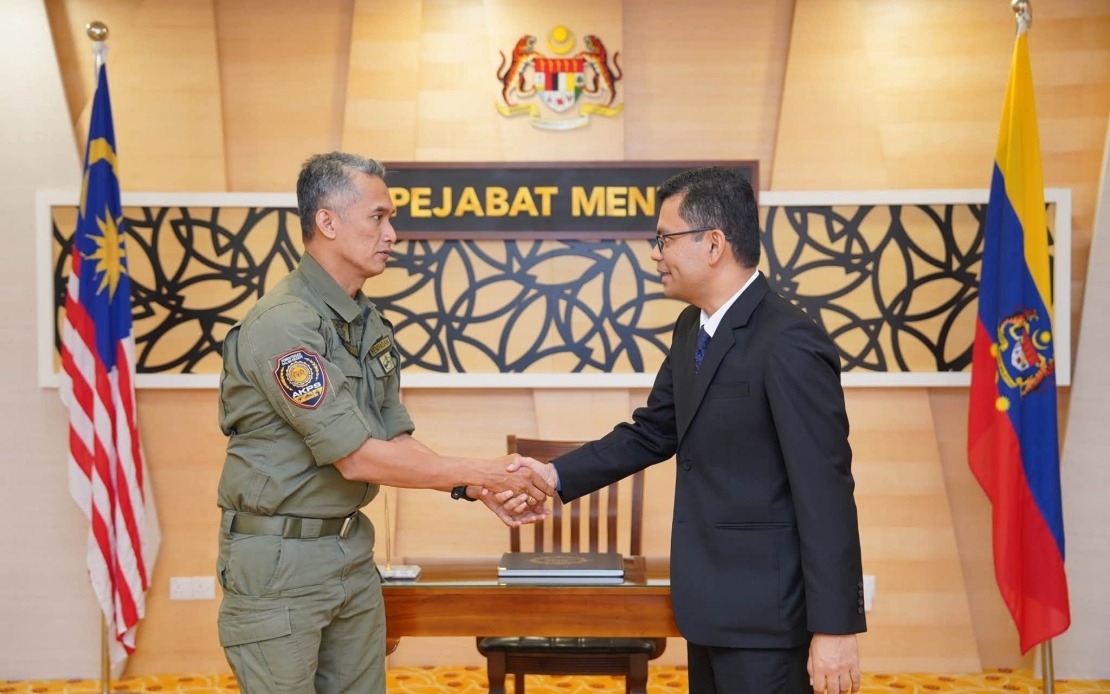
Malaysia's Economy Ministry and the Malaysian Border Control and Protection Agency (AKPS) are intensifying efforts to modernise the nation's border infrastructure and operational systems, reflecting growing recognition that efficient frontier management underpins both security and economic competitiveness. A recent courtesy meeting between AKPS director-general Datuk Seri Mohd Shuhaily Mohd Zain and Economy Minister Akmal Nasrullah Mohd Nasir in Putrajaya centred on identifying and securing development budget allocations necessary to implement these upgrades, signalling government commitment to transforming how Malaysia manages its entry and exit points.
The discussions underscore a critical strategic imperative for Southeast Asia's third-largest economy. As a regional trading hub with multiple land borders, maritime boundaries, and major air and sea gateways, Malaysia's border efficiency directly affects not only national security but also the speed and cost of commerce. Delays or inefficiencies at checkpoints impose hidden tariffs on traded goods, deter foreign investment, and erode Malaysia's competitive advantage in attracting multinational supply chains. By concentrating on structural improvements now, the ministry and AKPS are attempting to address a longstanding challenge that has periodically frustrated businesses and regional partners.
The development strategy encompasses four interconnected pillars. Infrastructure upgrades will modernise physical facilities at border posts, reducing bottlenecks and improving the working conditions of border personnel. Technology adoption represents perhaps the most transformative element, with AKPS prioritising the deployment of smart border systems including integrated biometric identification, automated cargo scanning platforms, and real-time data analytics powered by artificial intelligence. These investments promise to dramatically compress processing times while simultaneously enhancing detection capability. Strategic asset development refers to bolstering the equipment, vehicles, surveillance systems, and other tools that frontline officers require. Enhanced operational capacity covers staffing, training, and procedural improvements that enable personnel to work more effectively within upgraded environments.
AKPS itself remains a relatively nascent institution, having formally commenced operations on January 1, 2025. Its establishment consolidated border control functions previously fragmented across six separate government bodies: the Immigration Department, Royal Malaysian Customs Department, Malaysian Quarantine and Inspection Services Department, Health Ministry, Department of Wildlife and National Parks, and Road Transport Department. This consolidation represents an overdue reorganisation, as coordinating border security and trade facilitation across multiple agencies inevitably created gaps, duplications, and procedural friction. By unifying these functions under a single director-general and operational command structure, the government has created the institutional apparatus necessary for comprehensive border management.
However, the consolidation's success hinges on securing adequate resources and executing disciplined implementation. The discussions between the Economy Ministry and AKPS reflect awareness that structural reorganisation alone cannot deliver results without corresponding investments in personnel, equipment, and systems. Datuk Seri Mohd Shuhaily has publicly stated that AKPS is simultaneously focused on building organisational integrity and operational efficiency while formulating its strategic direction and long-term development roadmap. This balancing act—establishing institutional culture and capacity while planning major modernisation—requires sustained attention and funding over multiple budget cycles.
The emphasis on smart border technology aligns with regional and global trends. Singapore's ICA (Immigration and Checkpoints Authority), widely regarded as operating one of Asia's most efficient border systems, has invested heavily in biometric systems, automated processing, and real-time intelligence integration. Thailand and Indonesia have similarly pursued technology-driven border modernisation. Malaysia's commitment to comparable technological standards suggests the government recognises that border efficiency has become a competitive necessity rather than a peripheral concern. The specific mention of AI-powered data integration is particularly significant, as it enables predictive risk analysis and dynamic resource allocation rather than merely processing information after the fact.
For Malaysia's trading partners and multinational enterprises, the implications are substantial. Companies dependent on swift goods movement—automotive suppliers, electronics manufacturers, pharmaceutical distributors, and perishable agricultural exporters—all suffer when border delays accumulate. Shaving minutes from processing times at major crossings like Johor Bahru-Singapore, the Port of Port Klang, or Kuala Lumpur International Airport yields measurable cost savings and reliability improvements. Regional supply chain managers, when considering where to base distribution hubs or manufacturing facilities, factor in border friction as part of their total landed cost calculations. Malaysia's push to reduce such friction therefore represents a form of economic diplomacy and competitiveness enhancement.
The discussions also carry implications for the civil service more broadly. Border work is often demanding, involving shift work, exposure to public contact, and responsibility for high-stakes decisions affecting individuals' entry or goods clearance. By investing in better facilities, modern equipment, and enhanced training, the government signals that it values border personnel and recognises their critical role. This should improve recruitment and retention in a sector that has occasionally struggled to attract and maintain quality staff. The establishment of AKPS as a dedicated agency, rather than leaving these functions scattered across multiple departments, similarly elevates the perceived status and career prospects of border specialists.
The road ahead will test implementation capacity. Converting discussions and development plans into functioning systems requires sustained coordination between AKPS, the Economy Ministry, and other agencies controlling budgets and infrastructure assets. Procurement of biometric systems, cargo scanning equipment, and data platforms involves international sourcing and local integration. Training thousands of officers across dozens of border posts to operate new systems demands time and resources. Political and bureaucratic attention spans in Malaysia, as elsewhere, fluctuate with government priorities and election cycles. Maintaining momentum over the multi-year timeframe necessary for comprehensive border modernisation requires more than initial enthusiasm.
Nevertheless, the dialogue between the Economy Ministry and AKPS represents a constructive signal that border management has risen in the government's strategic consciousness. Trade facilitation and security need not be opposing objectives; modern, technology-enabled borders can enhance both. By securing development budget commitments and articulating a coherent modernisation strategy, Malaysia's leadership is positioning the nation to address a genuine weakness in its infrastructure and competitive positioning. Whether execution matches ambition remains to be seen, but the willingness to undertake this conversation and commitment of resources suggests the government understands what is at stake.

