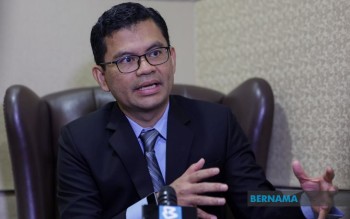
The Economy Ministry has mapped out a RM58 billion development expenditure blueprint for 2027, signalling continued government commitment to infrastructure investment as a cornerstone of Malaysia's growth strategy. Economy Minister Akmal Nasrullah Mohd Nasir unveiled the projections during a press conference in Putrajaya on July 27, emphasizing that the allocation reflects careful planning to maintain momentum in the country's physical development agenda. The proposal remains under internal refinement within the ministry's leadership before formal submission to the Finance Ministry, indicating that the final figures may yet undergo adjustment during the budgetary approval process.
At the heart of the 2027 allocation lies a strategic emphasis on foundational development, with 70 per cent of the total RM58 billion earmarked specifically for basic infrastructure projects. This allocation philosophy reflects a deliberate policy choice to concentrate resources on essential systems and facilities that underpin economic activity and public service delivery. By maintaining this 70-30 split between basic and discretionary development spending, the government demonstrates consistency in its approach to resource deployment, signalling to markets and development partners that infrastructure priorities remain stable regardless of broader economic fluctuations.
The proposed spending represents a marginal increase from 2026's baseline. According to Finance Ministry data, basic development expenditure in 2026 reached RM57.6 billion, constituting 71 per cent of total development spending. This means the 2027 projection of RM58 billion in core infrastructure investment—roughly equivalent to the previous year's figure—suggests the government expects broadly comparable development momentum despite evolving macroeconomic conditions. The consistency speaks to institutional confidence in sustaining infrastructure programmes even as global uncertainties persist.
Akmal Nasrullah positioned the development spending as essential for ensuring continuity of ongoing projects, maintaining economic growth momentum, and accelerating Malaysia's physical transformation. This framing acknowledges that infrastructure investment operates on multi-year timescales; interrupting or significantly reducing allocations creates cascading inefficiencies and delays. For Malaysian businesses and investors, predictable development spending provides critical visibility for supply chain planning and workforce deployment linked to construction and infrastructure sectors.
The 2027 development plan carries particular significance given Malaysia's economic performance trajectory. The economy expanded 5.8 per cent in the second quarter of 2026, surpassing Bank Negara Malaysia's forecast range of 4 to 5 per cent and bringing first-half growth to 5.6 per cent. This outperformance, however, comes with caveats. Akmal Nasrullah acknowledged that the strong growth base established in the first half will create substantial headwinds for matching similar expansion rates in the third and fourth quarters, a dynamic familiar to economists tracking higher-base effects in year-on-year comparisons. Furthermore, external factors including El Niño weather patterns pose risks to economic activity, suggesting the ministry views development spending as a tool to buffer potential slowdowns.
The global economic environment remains fraught with uncertainty, prompting the minister to emphasize that government vigilance persists despite strong domestic performance. Ongoing international crises create an unpredictable backdrop for long-term planning, yet Malaysian policymakers appear resolved to maintain infrastructure investment momentum as a stabilizing force. This stance reflects an understanding that infrastructure spending carries multiplier effects throughout the economy, supporting employment and private sector activity even when external shocks occur.
The relationship between development expenditure planning and broader budget considerations emerged in discussions of oil price benchmarking for Budget 2027. Akmal Nasrullah clarified that while petroleum prices represent a significant variable in overall fiscal planning, the Economy Ministry's remit focuses narrowly on development expenditure projections. The Finance Ministry, under Prime Minister Datuk Seri Anwar Ibrahim's oversight, bears responsibility for assessing global oil price trends and calibrating fiscal instruments accordingly. This division of labour reflects the compartmentalized nature of Malaysian budget preparation, where multiple agencies contribute specialized inputs to a comprehensive annual spending plan.
The trajectory from 2025 to 2027 illustrates gradual refinement of government development strategy. Basic development expenditure stood at RM55.67 billion in 2025, representing 65 per cent of total development spending. The 2026 figure climbed to RM57.6 billion at 71 per cent, and the 2027 projection maintains this elevated allocation level at roughly RM58 billion at 70 per cent. This progression suggests the government has consciously shifted spending composition toward foundational infrastructure, a reorientation that may reflect lessons learned from previous budget cycles or changing diagnostic assessments about growth-enabling investments.
For Southeast Asian observers and Malaysia's trading partners, the development expenditure trajectory signals a government determined to invest in competitive infrastructure despite global headwinds. Neighbouring economies watching Malaysian policy will note this commitment to sustained capital spending, particularly as currency volatility and geopolitical tensions create pressure for fiscal retrenchment across the region. Malaysia's willingness to maintain development allocations at 70 per cent of budgets distinguishes it from more austere regional peers and positions the country as attempting to sustain infrastructure-led growth models.
The formal budget presentation looms on October 9, 2026, when Prime Minister Anwar Ibrahim will table Budget 2027 in the Dewan Rakyat. This formal submission will translate the Economy Ministry's projections into concrete legislative proposals, at which point Parliament and the public will scrutinize the full fiscal framework. The intervening months allow for final negotiations and adjustments to the RM58 billion development proposal, though the preliminary projection provides essential groundwork for that public process. Malaysian businesses planning capital investments and infrastructure suppliers tendering for contracts will await the formal October announcement to confirm funding availability and project timelines.
The development spending framework also carries implications for Malaysia's medium-term competitiveness. As the country navigates towards high-income status and manages demographic shifts, infrastructure quality becomes increasingly critical for attracting high-value manufacturing and services. Sustained development expenditure at RM58 billion annually helps maintain and upgrade transport networks, digital infrastructure, and utilities systems essential for supporting sophisticated economic activity. The government's projection thus serves not merely as a budgetary exercise but as a statement about Malaysia's economic ambitions and commitment to foundational investments that enable long-term prosperity.

