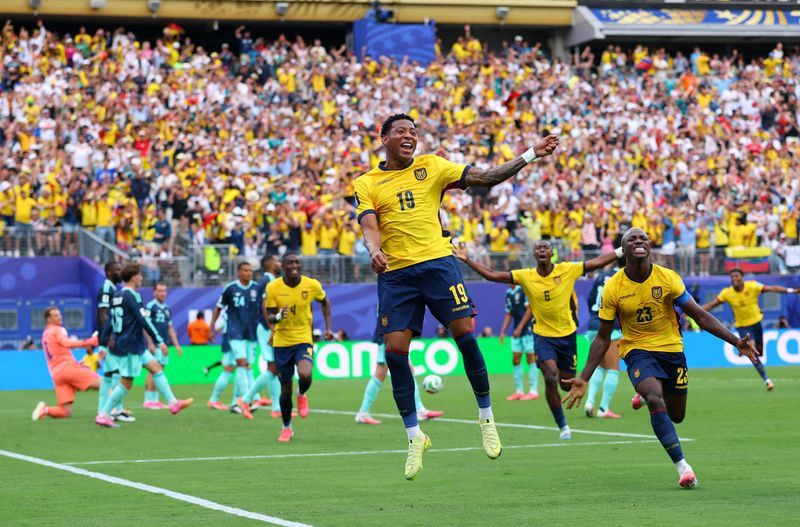
Ecuador pulled off one of the tournament's most unlikely victories on Thursday evening, overwhelming an increasingly vulnerable Germany 2-1 in their Group E climax at the Meadowlands Stadium in East Rutherford, New Jersey. The result transformed what had been a disastrous World Cup campaign for the South Americans into an improbable passage through to the round of 32, handing the European giants their first group-stage defeat and exposing defensive frailties that could prove costly in the knockout rounds ahead.
The stakes could hardly have been higher for Ecuador as they took to the pitch requiring nothing short of victory to keep alive their tournament ambitions. Their opening two matches had yielded just one point from a loss to Ivory Coast and a draw against Curacao, leaving them at the brink of elimination. Compounding their misery was a glaring inability to breach opposing defences, having fired 39 shots without finding the back of the net. Germany, by contrast, arrived as group leaders with qualification already secured, their three-point advantage seemingly insurmountable, yet the South Americans were desperate enough to believe in the impossible.
The match began disastrously for Ecuador when Germany struck with clinical efficiency just 120 seconds into proceedings. Florian Wirtz seized upon a swift throw-in to locate Leroy Sane, whose composed left-footed finish from the edge of the penalty area gave Manuel Neuer no chance. The goal held particular significance for Sane, marking his first major international tournament strike in his 15th appearance at such level—a statistic that underscored both his quality and the rarity of his breakthrough moment. Ecuador protested vehemently that defender Aleksandar Pavlovic had committed a foul with a raised foot catching opponent Pedro Vite in the head during the build-up, but referee Tori Penso ruled the protests invalid and allowed the goal to stand.
Yet Ecuador's response came with remarkable swiftness, suggesting reserves of resilience that had been absent in their previous outings. In the ninth minute, Nilson Angulo collected the ball at the edge of Germany's box and curled a strike of genuine class beyond Neuer, who appeared uncommonly sluggish in his positioning. The goal broke Ecuador's agonising 40-shot drought and unleashed an outpouring of emotion from their supporters, reinvigorating a team that had seemed destined for early elimination. Suddenly, the match had transformed from a coronation of German supremacy into a genuine contest, with momentum swinging decidedly toward the underdogs.
The second half introduced fresh controversy when referee Penso pointed to the penalty spot after Felix Nmecha launched Kai Havertz down the right flank. Havertz appeared to stumble under a challenge from Joel Ordonez, triggering immediate appeals for a penalty kick. However, a VAR review proved decisive in Ecuador's favour—Penso, consulting the pitchside monitor, identified a German infraction in the build-up and overturned his initial decision. The moment proved psychologically significant, suggesting that fortune was turning in Ecuador's direction and that their recovery from near-certain elimination remained possible.
Clear-cut opportunities proved elusive through much of the second period as both teams wrestled for control, yet Ecuador's attacking intent never wavered. The decisive moment arrived in the 78th minute when Gonzalo Plata, demonstrating sharp predatory instincts, latched onto a near-post corner flick by substitute Kevin Rodriguez and stabbed the ball past Neuer with clinical precision. The goal sent the sold-out stadium into pandemonium, confirming Ecuador's passage through to the knockout rounds and handing Germany an unexpected and sobering defeat.
The result carries considerable significance beyond the immediate match context. Germany finished atop Group E with six points, yet their record of conceding in all three group matches suggests defensive vulnerabilities that more formidable opponents may exploit. Their bid for a 12th consecutive victory was ended by a team that had arrived under intense pressure, underlining the unpredictability that characterises football's greatest stage. Meanwhile, Ecuador qualified as one of the tournament's eight best third-placed teams, a remarkable redemption after appearing destined for elimination following their opening matches.
Ivory Coast's 2-0 victory over Curacao had initially positioned the African nation as potential challengers to Germany's group supremacy, but the German squad's failure to overcome Ecuador meant the Ivorians joined them in advancement based on superior goal difference. For Ecuador, this outcome represents far more than mathematical qualification—it represents a complete psychological transformation, a team resurrected from the ashes of their opening-match struggles into unlikely tournament survivors carrying genuine momentum into the knockout stages. The implications for their continued campaign remain substantial; having demonstrated the capacity for fighting comeback football under maximum pressure, they enter the last 32 as potential giant-slayers rather than resigned also-rans.

