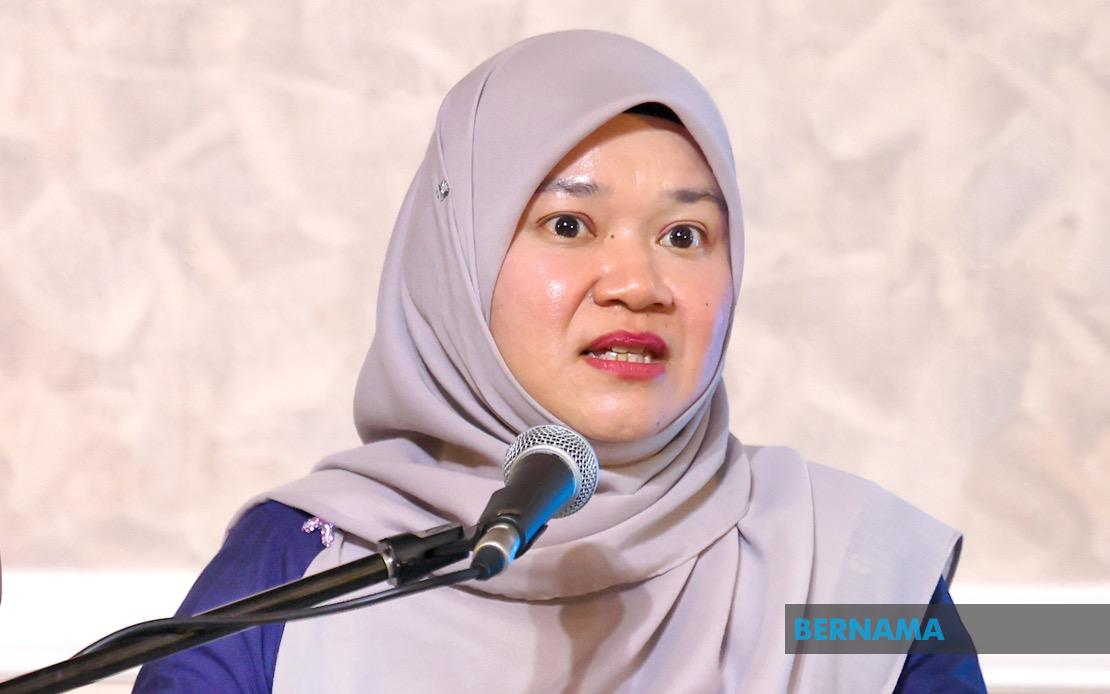
Education Minister Fadhlina Sidek has escalated her response to an artificially generated defamatory video by filing a formal police complaint, marking a significant moment in Malaysia's ongoing struggle with deepfake technology and online misinformation targeting public figures. The PKR Wanita chief made the announcement on June 24, expressing deep concern about the nature and intent behind the circulation of the manipulated content that falsely represented her.
The emergence of the video underscores the growing challenge posed by AI-generated content in Malaysian politics and public discourse. Deepfakes and synthetic media have become increasingly sophisticated, making it difficult for citizens and even technology platforms to distinguish between authentic and fabricated material. Fadhlina's decision to involve law enforcement signals that senior government officials are treating such incidents as serious threats requiring immediate legal intervention rather than dismissive social media responses.
In her statement, Fadhlina characterised the dissemination of the video as deliberately malicious and aimed at destroying her personal reputation and character. She emphasised that the conduct went beyond mere criticism or political disagreement, crossing into the realm of coordinated character assassination designed to undermine her credibility and standing. The targeted nature of attacks against women in political office has long been documented by civil society organizations, who note that female politicians face disproportionately higher levels of harassment compared to their male counterparts.
The Education Minister's action carries particular symbolic weight given her prominent position within the party and government. As both a cabinet member and head of PKR's women's wing, Fadhlina represents a growing cohort of Malaysian women advancing through the political establishment. Her willingness to pursue legal remedies sets a precedent for how senior officials should respond when facing coordinated disinformation campaigns, potentially emboldening other female politicians to take similar action rather than endure such attacks in silence.
Fadhlina's call for a unified stance against slander and character assassination targeting women politicians extends the conversation beyond her individual case. She specifically highlighted three interconnected forms of online abuse: slander through false allegations, deliberate character assassination designed to erode credibility, and sexual harassment. This framing acknowledges that such attacks rarely occur in isolation and often form part of coordinated campaigns intended to drive women from public life or reduce their effectiveness in office.
The police investigation will likely need to examine multiple aspects of the case, including how the video was created, who generated it, and through which channels it was distributed. Malaysian law enforcement agencies have been gradually building capacity to investigate digital crimes, though expertise in handling deepfake technology remains relatively nascent within the force. The case may establish important precedents for how Malaysian courts and police handle AI-generated defamatory material, a gap that currently exists in the jurisprudence of Southeast Asian nations.
From a legal standpoint, Fadhlina's case will test the adequacy of existing legislation to address modern forms of content creation and manipulation. Malaysia's Communications and Multimedia Act provides mechanisms for addressing defamatory material online, but the law was crafted before deepfake technology became widely accessible. Questions will inevitably arise about whether the person who created the AI video, the person who distributed it, or both parties bear legal responsibility, and whether existing statutes provide sufficient deterrent effect.
The broader context involves Malaysia's complex relationship with online regulation. The government has occasionally moved aggressively against online content it deems seditious or defamatory, but critics argue enforcement has sometimes been selectively applied based on political considerations. Fadhlina's case presents an opportunity for authorities to demonstrate consistent, principled application of the law regardless of the victim's political affiliation or the alleged perpetrator's status.
The incident also reflects international trends in how digital authoritarianism and synthetic media intersect with gender-based harassment. Women politicians across Asia, Europe, and North America have reported experiencing targeted deepfake attacks designed to humiliate them or force them to withdraw from public engagement. Research suggests such campaigns are particularly effective in contexts where existing gender bias against women in politics creates receptive audiences predisposed to believe negative characterizations.
Looking forward, Fadhlina's police report will likely trigger broader conversations within Malaysia about digital literacy, platform responsibility, and the adequacy of current legal frameworks. Tech companies operating in Malaysia have so far shown limited initiative in proactively detecting and removing deepfake content, particularly when it involves political figures. The case may prompt calls for clearer policies from platforms regarding synthetic media and coordinated inauthentic behavior.
The Education Minister's role adds another dimension to the controversy. As the official responsible for overseeing Malaysia's education system, she is positioned to influence how digital literacy and critical media consumption are taught in schools. Her experience with defamatory synthetic media could inform curriculum development aimed at equipping students with tools to identify manipulated content and understand the societal implications of deepfake technology.
Fadhlina's insistence that all political actors adopt firm positions against character assassination of women represents a call for solidarity that transcends party lines. Such unity remains elusive in Malaysian politics, where partisan considerations often override broader principles. Nevertheless, the framing of this issue as a matter affecting women in politics generally rather than one politician specifically creates space for cross-party cooperation on digital safety and online integrity standards.

