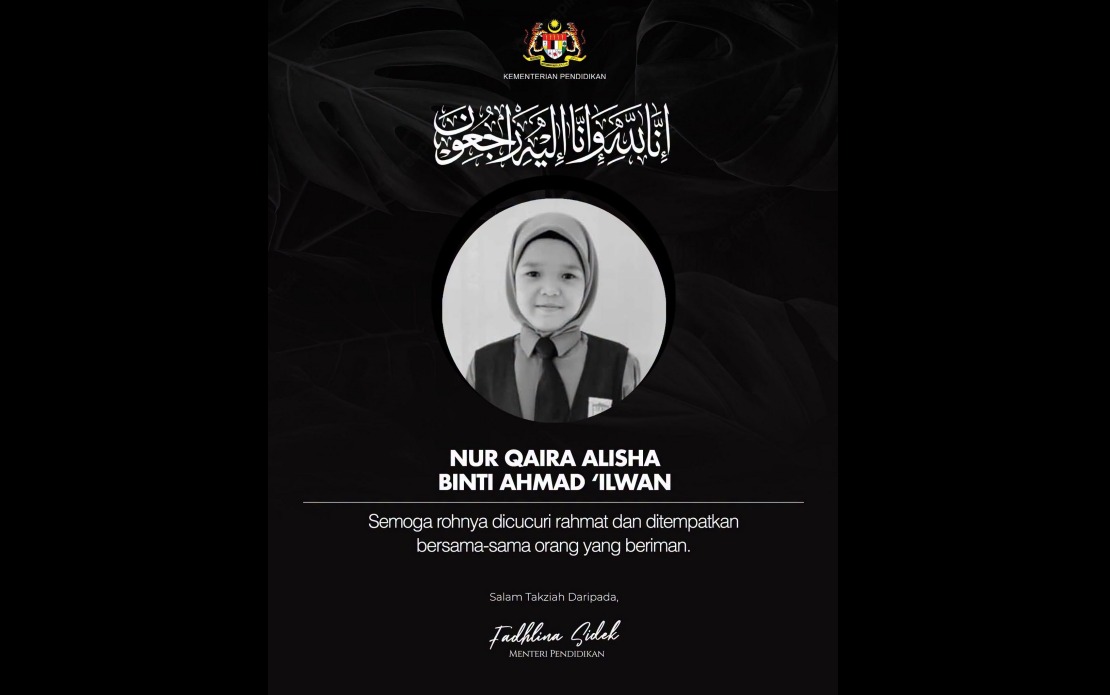
Education Minister Datuk Seri Fadhlina Sidek has directed the Ministry of Education's Integrity Unit to pursue a formal investigation into circumstances surrounding the death of Year Four pupil Nur Qaira Alisha Ahmad Ilwan from Kedah. The directive comes after her family lodged a complaint alleging negligence related to the child's participation in a school sporting activity. The minister emphasised that all investigative measures must adhere to established protocols and maintain equitable treatment of all parties involved in the matter.
Fadhlina noted that the Kedah State Education Department has already conducted preliminary inquiries into the family's grievance. Her statement underscores the ministry's commitment to safeguarding student welfare and safety within educational institutions, while simultaneously acknowledging the profound loss experienced by the bereaved family. The minister extended formal condolences to Nur Qaira's parents and relatives, expressing hope that they find solace and resilience during their period of mourning.
Nur Qaira's case has drawn attention to broader concerns about duty of care in Malaysian schools. The nine-year-old girl had lived with a congenital heart condition since infancy—diagnosed at just three months old—which necessitated medical exemption from strenuous physical activities. Her school held an official medical certificate detailing her cardiovascular limitations, yet according to her family's account, a teacher nonetheless instructed her to participate in a competitive running event held on April 15 as part of the school's annual sports house selection programme.
The consequences of that participation proved tragic. Nine days after the sports day event, Nur Qaira developed severe symptoms including acute vomiting and periorbital swelling—swelling around the eyes—which warranted emergency hospital admission to Sultanah Bahiyah Hospital on April 24. Medical examinations revealed that the physical exertion had precipitated acute heart failure stemming from decompensated dilated cardiomyopathy, a condition where the heart chamber becomes enlarged and weakened. The girl remained hospitalised but ultimately succumbed to her deteriorating cardiac condition.
This incident raises critical questions about institutional accountability and the safeguarding mechanisms within Malaysia's school system. Educational establishments maintain detailed medical records precisely to identify students requiring protective measures, yet evidence suggests these precautions were somehow bypassed in this instance. The apparent disconnect between documented medical guidance and classroom practice points to potential systemic vulnerabilities in how schools communicate health restrictions among staff members and ensure compliance across different departments.
The involvement of the Integrity Unit signals that the Education Ministry recognises the gravity of the allegations. This specialised body typically investigates matters of professional misconduct, regulatory violations, and governance failures within educational institutions. By escalating the case beyond routine administrative review, the ministry demonstrates acknowledgement that fundamental questions about institutional responsibility and professional standards require thorough examination.
For Malaysian families with children facing chronic health conditions, this case carries sobering implications. Parents place inherent trust in educators to respect medical guidance and protect vulnerable students during school hours. When that trust appears to be breached—particularly with fatal consequences—it reverberates through communities and raises legitimate questions about whether existing safeguards prove adequate. The investigation's outcome will likely influence how schools subsequently handle medical documentation and implement restrictions on student participation in physical activities.
The situation also illuminates broader tensions within the education system between competing institutional pressures. Schools organisational culture often emphasises inclusive participation and academic achievement, potentially creating subtle pressure on students with medical conditions to participate despite medical guidance. Teachers may sometimes underestimate the severity of medical restrictions, viewing exemptions as overly cautious rather than medically necessary. Without robust institutional protocols ensuring that all staff consistently apply medical guidance, individual lapses can prove catastrophic.
As the Integrity Unit pursues its investigation, multiple stakeholders await clarity on what transpired. The family seeks accountability and answers about whether their child's death could have been prevented through proper adherence to medical protocols. School management faces questions about staff training, communication systems, and supervision. The teaching profession confronts the sobering reminder that decisions made in routine moments can carry life-or-death consequences for vulnerable pupils. And the broader Malaysian educational community must contemplate whether current systems adequately protect students with chronic health conditions.
Fadhlina's commitment to ensure the investigation follows established procedures while maintaining fairness reflects the delicate balance authorities must strike in sensitive cases. However, many observers will scrutinise whether the investigation proves sufficiently rigorous and whether its findings generate meaningful reforms. The Kedah incident will likely prompt other state education departments to review their own protocols surrounding medical exemptions and staff accountability, potentially catalysing systemic improvements across Malaysian schools.

